mirror of
https://github.com/nextcloud/all-in-one.git
synced 2026-05-21 10:50:10 +00:00
Compare commits
176 Commits
v7.4.1
...
helm-chart
| Author | SHA1 | Date | |
|---|---|---|---|

|
d9cf8de28d | ||
|
|
c99284a7c0 | ||
|
|
78cfe96845 | ||
|
|
ce84eb7bfe | ||
|
|
713d155265 | ||
|
|
1f9055063a | ||
|
|
cdf24a032c | ||
|
|
e272f26f6f | ||
|
|
4614364f20 | ||
|
|
0f5f6c41e3 | ||
|
|
94edf5f671 | ||
|
|
ffe5ba2a1b | ||
|
|
4bca0fec32 | ||
|
|
f2a79f6346 | ||
|
|
d13c88c176 | ||
|
|
2635354137 | ||
|
|
597c8c8c57 | ||
|
|
112c9ad583 | ||
|
|
4b6720436d | ||
|
|
59421d51d2 | ||
|
|
c85bacc940 | ||
|
|
2221cc7f52 | ||
|
|
d121d97683 | ||
|
|
7060cba6c9 | ||
|
|
e4c685c0e7 | ||
|
|
a1bd8b0f07 | ||
|
|
6133e82c14 | ||
|
|
e6b6ec4cfd | ||
|
|
fe00d1dac8 | ||
|
|
38fb544090 | ||
|
|
ee86a9dd72 | ||
|
|
fcfecb737c | ||
|
|
7ffe4fbd5f | ||
|
|
1aa518d19c | ||
|
|
736c40ce30 | ||
|
|
b6a5c7d048 | ||
|
|
dfc8b0e522 | ||
|
|
3a3ddcad2e | ||
|
|
af278e8923 | ||
|
|
1a1b15ecd8 | ||
|
|
7a337f4c89 | ||
|
|
02dde8e94c | ||
|
|
a15cf13119 | ||
|
|
e548e4861f | ||
|
|
f585cc650f | ||
|
|
aec7df53c4 | ||
|
|
7466fb0e58 | ||
|
|
0cf0215d23 | ||
|
|
59d6a319d1 | ||
|
|
7dd3622fd3 | ||
|
|
67fab3111b | ||
|
|
a68717847f | ||
|
|
ebca5442ae | ||
|
|
918afa1a94 | ||
|
|
54c806c960 | ||
|
|
8b0d2b3534 | ||
|
|
9168bdaad5 | ||
|
|
9cbcb93c93 | ||
|
|
b36f71ff74 | ||
|
|
f4ee3ff6b0 | ||
|
|
1937fde61d | ||
|
|
2156e60d18 | ||
|
|
faaee07000 | ||
|
|
a770fc879d | ||
|
|
a80ab8aff2 | ||
|
|
b0b0adf7ce | ||
|
|
3f9f5d1e95 | ||
|
|
deec58be46 | ||
|
|
269731530b | ||
|
|
99b5db03b2 | ||
|
|
2d3b35ed3d | ||
|
|
b9ee292f8a | ||
|
|
dadb57f74f | ||
|
|
69568b0889 | ||
|
|
5da8dc0c15 | ||
|
|
50bdcc7ba6 | ||
|
|
552a7babc4 | ||
|
|
969dca4879 | ||
|
|
db47b9c573 | ||
|
|
c96d56d2f5 | ||
|
|
1abdac9613 | ||
|
|
2e9f48bb11 | ||
|
|
706c8bc1bd | ||
|
|
882cef4b0c | ||
|
|
a90fd4d4aa | ||
|
|
416f50b70c | ||
|
|
782e949742 | ||
|
|
0decfe4900 | ||
|
|
d887ed8de1 | ||
|
|
b7de89ba6a | ||
|
|
5b5f472180 | ||
|
|
6168ea3335 | ||
|
|
b2ca0b0e22 | ||
|
|
00ec781b68 | ||
|
|
c8c6bda76e | ||
|
|
db84d7d486 | ||
|
|
d5ff2fca16 | ||
|
|
3f43f122ee | ||
|
|
c5135e3a4e | ||
|
|
e2b4283067 | ||
|
|
41a4ea7d92 | ||
|
|
d9bbafdd69 | ||
|
|
13966948b0 | ||
|
|
97f66da219 | ||
|
|
461ccb0b3e | ||
|
|
8e9eb59d12 | ||
|
|
51132831e8 | ||
|
|
2bb5e84d83 | ||
|
|
ab044fda96 | ||
|
|
b0eabb8235 | ||
|
|
36acb8e4e6 | ||
|
|
1f68615c8d | ||
|
|
b5577a2909 | ||
|
|
499dccb122 | ||
|
|
9a16b7ea53 | ||
|
|
3e4f946ab9 | ||
|
|
22392b0a94 | ||
|
|
4456e5380f | ||
|
|
3210ad06f2 | ||
|
|
bdf676af84 | ||
|
|
378ec28f76 | ||
|
|
b08b1857c8 | ||
|
|
f2b075ac64 | ||
|
|
5f93ce7f78 | ||
|
|
b82b244e1f | ||
|
|
2f82c168e5 | ||
|
|
d75a53b620 | ||
|
|
609c61ad65 | ||
|
|
53bbf99f37 | ||
|
|
4df370589d | ||
|
|
0521605c33 | ||
|
|
0feaa9d527 | ||
|
|
caeff27bf5 | ||
|
|
706604539f | ||
|
|
9ac528423e | ||
|
|
1daacdfa99 | ||
|
|
3f5854c4bb | ||
|
|
cd7a87200b | ||
|
|
f397392d9d | ||
|
|
4705bfa992 | ||
|
|
810236a05c | ||
|
|
28b8be112f | ||
|
|
cea006c58f | ||
|
|
30c342d456 | ||
|
|
3f0c7490e0 | ||
|
|
2280fb62d2 | ||
|
|
388a79dfe9 | ||
|
|
bfa74ad966 | ||
|
|
a8c25f7a6a | ||
|
|
eee6157f54 | ||
|
|
b60c86c2b6 | ||
|
|
537dda95e7 | ||
|
|
a846b46fcd | ||
|
|
df9fa7edd3 | ||
|
|
03c7d0ba9a | ||
|
|
25438f8513 | ||
|
|
8ebcdf22ca | ||
|
|
58d37d5d78 | ||
|
|
cf1ae8fb1b | ||
|
|
4950d1de68 | ||
|
|
e1f7f04347 | ||
|
|
2ac76c80fd | ||
|
|
849febd414 | ||
|
|
320cd9f436 | ||
|
|
5d2275c806 | ||
|
|
92aae9dfd0 | ||
|
|
f8aab5f828 | ||
|
|
258f6683de | ||
|
|
7d8f40c98d | ||
|
|
1a018d9ef2 | ||
|
|
0edd0e1ed8 | ||
|
|
ef2fd3817f | ||
|
|
d6e61bc537 | ||
|
|
b56555e92c | ||
|
|
510bdb9aef | ||
|
|
29341e547c |
4
.github/workflows/command-rebase.yml
vendored
4
.github/workflows/command-rebase.yml
vendored
@@ -23,7 +23,7 @@ jobs:
|
||||
|
||||
steps:
|
||||
- name: Add reaction on start
|
||||
uses: peter-evans/create-or-update-comment@c6c9a1a66007646a28c153e2a8580a5bad27bcfa # v3.0.2
|
||||
uses: peter-evans/create-or-update-comment@23ff15729ef2fc348714a3bb66d2f655ca9066f2 # v3.1.0
|
||||
with:
|
||||
token: ${{ secrets.COMMAND_BOT_PAT }}
|
||||
repository: ${{ github.event.repository.full_name }}
|
||||
@@ -42,7 +42,7 @@ jobs:
|
||||
GITHUB_TOKEN: ${{ secrets.COMMAND_BOT_PAT }}
|
||||
|
||||
- name: Add reaction on failure
|
||||
uses: peter-evans/create-or-update-comment@c6c9a1a66007646a28c153e2a8580a5bad27bcfa # v3.0.2
|
||||
uses: peter-evans/create-or-update-comment@23ff15729ef2fc348714a3bb66d2f655ca9066f2 # v3.1.0
|
||||
if: failure()
|
||||
with:
|
||||
token: ${{ secrets.COMMAND_BOT_PAT }}
|
||||
|
||||
2
.github/workflows/lint-helm.yml
vendored
2
.github/workflows/lint-helm.yml
vendored
@@ -21,7 +21,7 @@ jobs:
|
||||
version: v3.11.1
|
||||
|
||||
- name: Set up chart-testing
|
||||
uses: helm/chart-testing-action@v2.4.0
|
||||
uses: helm/chart-testing-action@v2.6.1
|
||||
|
||||
- name: Run chart-testing (lint)
|
||||
id: lint
|
||||
|
||||
@@ -1,6 +1,6 @@
|
||||
FROM caddy:2.7.4-alpine as caddy
|
||||
FROM caddy:2.7.5-alpine as caddy
|
||||
|
||||
FROM httpd:2.4.57-alpine3.18
|
||||
FROM httpd:2.4.58-alpine3.18
|
||||
|
||||
COPY --from=caddy /usr/bin/caddy /usr/bin/caddy
|
||||
|
||||
|
||||
@@ -18,7 +18,7 @@ while ! nc -z "$NEXTCLOUD_HOST" 9000; do
|
||||
done
|
||||
|
||||
# Get ipv4-address of Apache
|
||||
IPv4_ADDRESS="$(dig nextcloud-aio-apache A +short | head -1)"
|
||||
IPv4_ADDRESS="$(dig nextcloud-aio-apache A +short +search | head -1)"
|
||||
# Bring it in CIDR notation
|
||||
# shellcheck disable=SC2001
|
||||
IPv4_ADDRESS="$(echo "$IPv4_ADDRESS" | sed 's|[0-9]\+$|1/32|')"
|
||||
|
||||
@@ -72,10 +72,10 @@ if [ "$BORG_MODE" = backup ]; then
|
||||
exit 1
|
||||
fi
|
||||
|
||||
# Test that nothing is empty
|
||||
for directory in "${VOLUME_DIRS[@]}"; do
|
||||
if [ -z "$(ls -A "$directory")" ] && [ "$directory" != "/nextcloud_aio_volumes/nextcloud_aio_elasticsearch" ]; then
|
||||
echo "$directory is empty which is not allowed."
|
||||
# Test that default volumes are not empty
|
||||
for volume in "${DEFAULT_VOLUMES[@]}"; do
|
||||
if [ -z "$(ls -A "/nextcloud_aio_volumes/$volume")" ] && [ "$volume" != "nextcloud_aio_elasticsearch" ]; then
|
||||
echo "/nextcloud_aio_volumes/$volume is empty which should not happen!"
|
||||
exit 1
|
||||
fi
|
||||
done
|
||||
|
||||
@@ -1,5 +1,5 @@
|
||||
# Probably from this file: https://github.com/Cisco-Talos/clamav-docker/blob/main/clamav/1.1/alpine/Dockerfile
|
||||
FROM clamav/clamav:1.2.0-8
|
||||
FROM clamav/clamav:1.2.1-12
|
||||
|
||||
COPY clamav.conf /tmp/clamav.conf
|
||||
|
||||
|
||||
@@ -1,5 +1,5 @@
|
||||
# From a file located probably somewhere here: https://github.com/CollaboraOnline/online/tree/master/docker
|
||||
FROM collabora/code:23.05.4.2.1
|
||||
FROM collabora/code:23.05.5.3.1
|
||||
|
||||
USER root
|
||||
|
||||
|
||||
@@ -1,5 +1,8 @@
|
||||
# Inspiration: https://github.com/Tecnativa/docker-socket-proxy/blob/master/haproxy.cfg
|
||||
|
||||
global
|
||||
maxconn 10
|
||||
|
||||
defaults
|
||||
timeout connect 10s
|
||||
timeout client 10s
|
||||
|
||||
@@ -7,11 +7,11 @@ while ! nc -z "$NEXTCLOUD_HOST" 9001; do
|
||||
done
|
||||
|
||||
set -x
|
||||
IPv4_ADDRESS_NC="$(dig nextcloud-aio-nextcloud IN A +short | grep '^[0-9.]\+$' | sort | head -n1)"
|
||||
IPv4_ADDRESS_NC="$(dig nextcloud-aio-nextcloud IN A +short +search | grep '^[0-9.]\+$' | sort | head -n1)"
|
||||
HAPROXYFILE="$(sed "s|NC_IPV4_PLACEHOLDER|$IPv4_ADDRESS_NC|" /haproxy.cfg)"
|
||||
echo "$HAPROXYFILE" > /tmp/haproxy.cfg
|
||||
|
||||
IPv6_ADDRESS_NC="$(dig nextcloud-aio-nextcloud AAAA +short | grep '^[0-9a-f:]\+$' | sort | head -n1)"
|
||||
IPv6_ADDRESS_NC="$(dig nextcloud-aio-nextcloud AAAA +short +search | grep '^[0-9a-f:]\+$' | sort | head -n1)"
|
||||
if [ -n "$IPv6_ADDRESS_NC" ]; then
|
||||
HAPROXYFILE="$(sed "s|NC_IPV6_PLACEHOLDER|$IPv6_ADDRESS_NC|" /tmp/haproxy.cfg)"
|
||||
else
|
||||
|
||||
@@ -1,5 +1,5 @@
|
||||
# Probably from here https://github.com/elastic/elasticsearch/blob/main/distribution/docker/src/docker/Dockerfile
|
||||
FROM elasticsearch:8.10.2
|
||||
FROM elasticsearch:8.10.4
|
||||
|
||||
USER root
|
||||
|
||||
|
||||
@@ -1,6 +1,6 @@
|
||||
FROM golang:1.21.2-alpine3.18 as go
|
||||
FROM golang:1.21.3-alpine3.18 as go
|
||||
|
||||
ENV IMAGINARY_HASH b632dae8cc321452c3f85bcae79c580b1ae1ed84
|
||||
ENV IMAGINARY_HASH 7efb66c243056e5b3b65215e101be7915983e364
|
||||
|
||||
RUN set -ex; \
|
||||
apk add --no-cache \
|
||||
|
||||
@@ -21,7 +21,7 @@
|
||||
}
|
||||
|
||||
http://:80 {
|
||||
redir https://{host}{uri}
|
||||
redir https://{host}{uri} permanent
|
||||
}
|
||||
|
||||
https://:8443 {
|
||||
|
||||
@@ -1,11 +1,11 @@
|
||||
# Docker CLI is a requirement
|
||||
FROM docker:24.0.6-cli as docker
|
||||
FROM docker:24.0.7-cli as docker
|
||||
|
||||
# Caddy is a requirement
|
||||
FROM caddy:2.7.4-alpine as caddy
|
||||
FROM caddy:2.7.5-alpine as caddy
|
||||
|
||||
# From https://github.com/docker-library/php/blob/master/8.2/alpine3.18/fpm/Dockerfile
|
||||
FROM php:8.2.11-fpm-alpine3.18
|
||||
FROM php:8.2.12-fpm-alpine3.18
|
||||
|
||||
EXPOSE 80
|
||||
EXPOSE 8080
|
||||
|
||||
@@ -12,6 +12,11 @@ while true; do
|
||||
export AUTOMATIC_UPDATES=0
|
||||
export START_CONTAINERS=1
|
||||
fi
|
||||
if [ "$(sed -n '3p' "/mnt/docker-aio-config/data/daily_backup_time")" != 'successNotificationsAreNotEnabled' ]; then
|
||||
export SEND_SUCCESS_NOTIFICATIONS=1
|
||||
else
|
||||
export SEND_SUCCESS_NOTIFICATIONS=0
|
||||
fi
|
||||
set +x
|
||||
if [ -f "/mnt/docker-aio-config/data/daily_backup_running" ]; then
|
||||
export LOCK_FILE_PRESENT=1
|
||||
|
||||
@@ -105,7 +105,7 @@ if [ "$DAILY_BACKUP" = 1 ] && ([ "$AUTOMATIC_UPDATES" = 1 ] || [ "$START_CONTAIN
|
||||
done
|
||||
fi
|
||||
echo "Sending backup notification..."
|
||||
sudo -u www-data php /var/www/docker-aio/php/src/Cron/BackupNotification.php
|
||||
sudo -E -u www-data php /var/www/docker-aio/php/src/Cron/BackupNotification.php
|
||||
fi
|
||||
|
||||
echo "Daily backup script has finished"
|
||||
|
||||
@@ -1,9 +1,9 @@
|
||||
FROM php:8.1.24-fpm-alpine3.18
|
||||
FROM php:8.1.25-fpm-alpine3.18
|
||||
|
||||
ENV PHP_MEMORY_LIMIT 512M
|
||||
ENV PHP_UPLOAD_LIMIT 10G
|
||||
ENV PHP_MAX_TIME 3600
|
||||
ENV NEXTCLOUD_VERSION 27.1.2
|
||||
ENV NEXTCLOUD_VERSION 27.1.3
|
||||
ENV AIO_TOKEN 123456
|
||||
ENV AIO_URL localhost
|
||||
|
||||
@@ -70,7 +70,7 @@ RUN set -ex; \
|
||||
# pecl will claim success even if one install fails, so we need to perform each install separately
|
||||
pecl install APCu-5.1.22; \
|
||||
pecl install memcached-3.2.0; \
|
||||
pecl install redis-6.0.1; \
|
||||
pecl install redis-6.0.2; \
|
||||
pecl install imagick-3.7.0; \
|
||||
\
|
||||
docker-php-ext-enable \
|
||||
@@ -195,10 +195,10 @@ RUN set -ex; \
|
||||
\
|
||||
grep -q '^pm = dynamic' /usr/local/etc/php-fpm.d/www.conf; \
|
||||
sed -i 's/^pm = dynamic/pm = ondemand/' /usr/local/etc/php-fpm.d/www.conf; \
|
||||
sed -i 's/^pm.max_children =.*/pm.max_children = 80/' /usr/local/etc/php-fpm.d/www.conf; \
|
||||
sed -i 's/^pm.start_servers =.*/pm.start_servers = 2/' /usr/local/etc/php-fpm.d/www.conf; \
|
||||
sed -i 's/^pm.min_spare_servers =.*/pm.min_spare_servers = 1/' /usr/local/etc/php-fpm.d/www.conf; \
|
||||
sed -i 's/^pm.max_spare_servers =.*/pm.max_spare_servers = 3/' /usr/local/etc/php-fpm.d/www.conf; \
|
||||
# Sync this with max db connections
|
||||
# We don't actually expect so many children but don't want to limit it artificially because people will report issues otherwise.
|
||||
# Also children will usually be terminated again after the process is done due to the ondemand setting
|
||||
sed -i 's/^pm.max_children =.*/pm.max_children = 5000/' /usr/local/etc/php-fpm.d/www.conf; \
|
||||
sed -i 's|access.log = /proc/self/fd/2|access.log = /proc/self/fd/1|' /usr/local/etc/php-fpm.d/docker.conf; \
|
||||
\
|
||||
rm -rf /tmp/nextcloud-aio && \
|
||||
|
||||
@@ -30,13 +30,6 @@ redis.session.lock_retries = -1
|
||||
redis.session.lock_wait_time = 10000
|
||||
REDIS_CONF
|
||||
|
||||
echo "Setting php max children..."
|
||||
MEMORY=$(awk '/MemTotal/ {printf "%d", $2/1024}' /proc/meminfo)
|
||||
PHP_MAX_CHILDREN=$((MEMORY/50))
|
||||
if [ -n "$PHP_MAX_CHILDREN" ]; then
|
||||
sed -i "s/^pm.max_children =.*/pm.max_children = $PHP_MAX_CHILDREN/" /usr/local/etc/php-fpm.d/www.conf
|
||||
fi
|
||||
|
||||
# Check permissions in ncdata
|
||||
touch "$NEXTCLOUD_DATA_DIR/this-is-a-test-file" &>/dev/null
|
||||
if ! [ -f "$NEXTCLOUD_DATA_DIR/this-is-a-test-file" ]; then
|
||||
@@ -527,8 +520,8 @@ if [ "$COLLABORA_ENABLED" = 'yes' ]; then
|
||||
# Fix https://github.com/nextcloud/all-in-one/issues/188:
|
||||
php /var/www/html/occ config:system:set allow_local_remote_servers --type=bool --value=true
|
||||
# Make collabora more save
|
||||
COLLABORA_IPv4_ADDRESS="$(dig "$NC_DOMAIN" A +short | grep '^[0-9.]\+$' | sort | head -n1)"
|
||||
COLLABORA_IPv6_ADDRESS="$(dig "$NC_DOMAIN" AAAA +short | grep '^[0-9a-f:]\+$' | sort | head -n1)"
|
||||
COLLABORA_IPv4_ADDRESS="$(dig "$NC_DOMAIN" A +short +search | grep '^[0-9.]\+$' | sort | head -n1)"
|
||||
COLLABORA_IPv6_ADDRESS="$(dig "$NC_DOMAIN" AAAA +short +search | grep '^[0-9a-f:]\+$' | sort | head -n1)"
|
||||
COLLABORA_ALLOW_LIST="$(php /var/www/html/occ config:app:get richdocuments wopi_allowlist)"
|
||||
if [ -n "$COLLABORA_IPv4_ADDRESS" ]; then
|
||||
if ! echo "$COLLABORA_ALLOW_LIST" | grep -q "$COLLABORA_IPv4_ADDRESS"; then
|
||||
|
||||
@@ -131,19 +131,24 @@ if ! sudo -E -u www-data bash /entrypoint.sh; then
|
||||
exit 1
|
||||
fi
|
||||
|
||||
while [ -z "$(dig nextcloud-aio-apache A +short)" ]; do
|
||||
while [ -z "$(dig nextcloud-aio-apache A +short +search)" ]; do
|
||||
echo "Waiting for nextcloud-aio-apache to start..."
|
||||
sleep 5
|
||||
done
|
||||
IPv4_ADDRESS_APACHE="$(dig nextcloud-aio-apache A +short | grep '^[0-9.]\+$' | sort | head -n1)"
|
||||
IPv6_ADDRESS_APACHE="$(dig nextcloud-aio-apache AAAA +short | grep '^[0-9a-f:]\+$' | sort | head -n1)"
|
||||
IPv4_ADDRESS_MASTERCONTAINER="$(dig nextcloud-aio-mastercontainer A +short | grep '^[0-9.]\+$' | sort | head -n1)"
|
||||
IPv6_ADDRESS_MASTERCONTAINER="$(dig nextcloud-aio-mastercontainer AAAA +short | grep '^[0-9a-f:]\+$' | sort | head -n1)"
|
||||
|
||||
sed -i "s|^;listen.allowed_clients|listen.allowed_clients|" /usr/local/etc/php-fpm.d/www.conf
|
||||
sed -i "s|listen.allowed_clients.*|listen.allowed_clients = 127.0.0.1,::1,$IPv4_ADDRESS_APACHE,$IPv6_ADDRESS_APACHE,$IPv4_ADDRESS_MASTERCONTAINER,$IPv6_ADDRESS_MASTERCONTAINER|" /usr/local/etc/php-fpm.d/www.conf
|
||||
sed -i "/^listen.allowed_clients/s/,,/,/g" /usr/local/etc/php-fpm.d/www.conf
|
||||
sed -i "/^listen.allowed_clients/s/,$//" /usr/local/etc/php-fpm.d/www.conf
|
||||
grep listen.allowed_clients /usr/local/etc/php-fpm.d/www.conf
|
||||
set -x
|
||||
if [ "$APACHE_PORT" = 443 ] || [ "$APACHE_IP_BINDING" = "127.0.0.1" ] || [ "$APACHE_IP_BINDING" = "::1" ]; then
|
||||
IPv4_ADDRESS_APACHE="$(dig nextcloud-aio-apache A +short +search | grep '^[0-9.]\+$' | sort | head -n1)"
|
||||
IPv6_ADDRESS_APACHE="$(dig nextcloud-aio-apache AAAA +short +search | grep '^[0-9a-f:]\+$' | sort | head -n1)"
|
||||
IPv4_ADDRESS_MASTERCONTAINER="$(dig nextcloud-aio-mastercontainer A +short +search | grep '^[0-9.]\+$' | sort | head -n1)"
|
||||
IPv6_ADDRESS_MASTERCONTAINER="$(dig nextcloud-aio-mastercontainer AAAA +short +search | grep '^[0-9a-f:]\+$' | sort | head -n1)"
|
||||
|
||||
sed -i "s|^;listen.allowed_clients|listen.allowed_clients|" /usr/local/etc/php-fpm.d/www.conf
|
||||
sed -i "s|listen.allowed_clients.*|listen.allowed_clients = 127.0.0.1,::1,$IPv4_ADDRESS_APACHE,$IPv6_ADDRESS_APACHE,$IPv4_ADDRESS_MASTERCONTAINER,$IPv6_ADDRESS_MASTERCONTAINER|" /usr/local/etc/php-fpm.d/www.conf
|
||||
sed -i "/^listen.allowed_clients/s/,,/,/g" /usr/local/etc/php-fpm.d/www.conf
|
||||
sed -i "/^listen.allowed_clients/s/,$//" /usr/local/etc/php-fpm.d/www.conf
|
||||
grep listen.allowed_clients /usr/local/etc/php-fpm.d/www.conf
|
||||
fi
|
||||
set +x
|
||||
|
||||
exec "$@"
|
||||
|
||||
@@ -1,5 +1,5 @@
|
||||
# From https://github.com/ONLYOFFICE/Docker-DocumentServer/blob/master/Dockerfile
|
||||
FROM onlyoffice/documentserver:7.4.1.1
|
||||
FROM onlyoffice/documentserver:7.5.0.1
|
||||
|
||||
# USER root is probably used
|
||||
|
||||
|
||||
@@ -31,7 +31,7 @@ fi
|
||||
if [ -f "$DUMP_DIR/initialization.failed" ]; then
|
||||
echo "The database initialization failed. Most likely was a wrong timezone selected."
|
||||
echo "The selected timezone is '$TZ'."
|
||||
echo "Please check if it is in 'TZ database name' column of the timezone list: https://en.wikipedia.org/wiki/List_of_tz_database_time_zones#List"
|
||||
echo "Please check if it is in the 'TZ identifier' column of the timezone list: https://en.wikipedia.org/wiki/List_of_tz_database_time_zones#List"
|
||||
echo "For further clues on what went wrong, look at the logs above."
|
||||
echo "You might start again from scratch by following https://github.com/nextcloud/all-in-one#how-to-properly-reset-the-instance and selecting a proper timezone."
|
||||
exit 1
|
||||
@@ -148,17 +148,23 @@ fi
|
||||
|
||||
# Modify postgresql.conf
|
||||
if [ -f "/var/lib/postgresql/data/postgresql.conf" ]; then
|
||||
echo "Setting max connections..."
|
||||
MEMORY=$(awk '/MemTotal/ {printf "%d", $2/1024}' /proc/meminfo)
|
||||
MAX_CONNECTIONS=$((MEMORY/50+3))
|
||||
if [ -n "$MAX_CONNECTIONS" ]; then
|
||||
sed -i "s|^max_connections =.*|max_connections = $MAX_CONNECTIONS|" "/var/lib/postgresql/data/postgresql.conf"
|
||||
fi
|
||||
echo "Setting postgres values..."
|
||||
|
||||
# Modify conf
|
||||
# 5000 connections is apparently the highest possible value with postgres so set it to that so that we don't run into a limit here.
|
||||
# We don't actually expect so many connections but don't want to limit it artificially because people will report issues otherwise
|
||||
# Also connections should usually be closed again after the process is done
|
||||
# If we should actually exceed this limit, it is definitely a bug in Nextcloud server or some of its apps that does not close connections correctly and not a bug in AIO
|
||||
sed -i "s|^max_connections =.*|max_connections = 5000|" "/var/lib/postgresql/data/postgresql.conf"
|
||||
|
||||
# Do not log checkpoints
|
||||
if grep -q "#log_checkpoints" /var/lib/postgresql/data/postgresql.conf; then
|
||||
sed -i 's|#log_checkpoints.*|log_checkpoints = off|' /var/lib/postgresql/data/postgresql.conf
|
||||
fi
|
||||
|
||||
# Closing idling connections automatically seems to break any logic so was reverted again to default where it is disabled
|
||||
if grep -q "^idle_session_timeout" /var/lib/postgresql/data/postgresql.conf; then
|
||||
sed -i 's|^idle_session_timeout.*|#idle_session_timeout|' /var/lib/postgresql/data/postgresql.conf
|
||||
fi
|
||||
fi
|
||||
|
||||
# Catch docker stop attempts
|
||||
|
||||
@@ -1,5 +1,5 @@
|
||||
# From https://github.com/docker-library/redis/blob/master/7.0/alpine/Dockerfile
|
||||
FROM redis:7.2.1-alpine
|
||||
FROM redis:7.2.2-alpine
|
||||
|
||||
COPY --chmod=775 start.sh /start.sh
|
||||
|
||||
|
||||
@@ -2,7 +2,7 @@ FROM python:3.12.0-alpine3.18
|
||||
|
||||
COPY --chmod=775 start.sh /start.sh
|
||||
|
||||
ENV RECORDING_VERSION v17.1.1
|
||||
ENV RECORDING_VERSION v17.1.2
|
||||
ENV ALLOW_ALL false
|
||||
ENV HPB_PROTOCOL https
|
||||
ENV SKIP_VERIFY false
|
||||
|
||||
@@ -1,6 +1,6 @@
|
||||
FROM nats:2.10.1-scratch as nats
|
||||
FROM nats:2.10.4-scratch as nats
|
||||
FROM eturnal/eturnal:1.12.0 AS eturnal
|
||||
FROM strukturag/nextcloud-spreed-signaling:1.1.3 as signaling
|
||||
FROM strukturag/nextcloud-spreed-signaling:1.2.0 as signaling
|
||||
FROM alpine:3.18.4 as janus
|
||||
|
||||
ARG JANUS_VERSION=v0.14.0
|
||||
@@ -35,10 +35,10 @@ RUN set -ex; \
|
||||
|
||||
FROM alpine:3.18.4
|
||||
ENV ETURNAL_ETC_DIR="/conf"
|
||||
COPY --from=janus /usr/local /usr/local
|
||||
COPY --from=eturnal /opt/eturnal /opt/eturnal
|
||||
COPY --from=nats /nats-server /usr/local/bin/nats-server
|
||||
COPY --from=signaling /usr/bin/nextcloud-spreed-signaling /usr/local/bin/nextcloud-spreed-signaling
|
||||
COPY --from=janus --chmod=777 --chown=1000:1000 /usr/local /usr/local
|
||||
COPY --from=eturnal --chmod=777 --chown=1000:1000 /opt/eturnal /opt/eturnal
|
||||
COPY --from=nats --chmod=777 --chown=1000:1000 /nats-server /usr/local/bin/nats-server
|
||||
COPY --from=signaling --chmod=777 --chown=1000:1000 /usr/bin/nextcloud-spreed-signaling /usr/local/bin/nextcloud-spreed-signaling
|
||||
|
||||
COPY --chmod=775 start.sh /start.sh
|
||||
COPY --chmod=775 healthcheck.sh /healthcheck.sh
|
||||
@@ -66,7 +66,7 @@ RUN set -ex; \
|
||||
libwebsockets \
|
||||
\
|
||||
shadow; \
|
||||
useradd --system eturnal; \
|
||||
useradd --system -u 1000 eturnal; \
|
||||
apk del --no-cache \
|
||||
shadow; \
|
||||
\
|
||||
@@ -85,15 +85,12 @@ RUN set -ex; \
|
||||
/var/run/supervisord \
|
||||
/usr/local/lib/janus/loggers; \
|
||||
chown eturnal:eturnal -R \
|
||||
/usr \
|
||||
/opt/eturnal \
|
||||
/etc/nats.conf \
|
||||
/var/log/supervisord \
|
||||
/var/run/supervisord; \
|
||||
chmod 777 -R \
|
||||
/tmp \
|
||||
/conf \
|
||||
/opt/eturnal \
|
||||
/var/run/supervisord \
|
||||
/var/log/supervisord; \
|
||||
ln -s /opt/eturnal/bin/stun /usr/local/bin/stun; \
|
||||
|
||||
@@ -86,9 +86,10 @@ internalsecret = the-shared-secret-for-internal-clients
|
||||
# only be used while running the benchmark client against the server.
|
||||
allowall = false
|
||||
|
||||
# Common shared secret for requests from and to the backend servers if
|
||||
# "allowall" is enabled. This must be the same value as configured in the
|
||||
# Nextcloud admin ui.
|
||||
# Common shared secret for requests from and to the backend servers. Used if
|
||||
# "allowall" is enabled or as fallback for individual backends that don't have
|
||||
# their own secret set.
|
||||
# This must be the same value as configured in the Nextcloud admin ui.
|
||||
#secret = the-shared-secret-for-allowall
|
||||
|
||||
# Timeout in seconds for requests to the backend.
|
||||
@@ -109,8 +110,9 @@ connectionsperhost = 8
|
||||
# URL of the Nextcloud instance
|
||||
#url = https://cloud.domain.invalid
|
||||
|
||||
# Shared secret for requests from and to the backend servers. This must be the
|
||||
# same value as configured in the Nextcloud admin ui.
|
||||
# Shared secret for requests from and to the backend servers. Leave empty to use
|
||||
# the common shared secret from above.
|
||||
# This must be the same value as configured in the Nextcloud admin ui.
|
||||
#secret = the-shared-secret
|
||||
|
||||
# Limit the number of sessions that are allowed to connect to this backend.
|
||||
@@ -129,8 +131,9 @@ connectionsperhost = 8
|
||||
# URL of the Nextcloud instance
|
||||
#url = https://cloud.otherdomain.invalid
|
||||
|
||||
# Shared secret for requests from and to the backend servers. This must be the
|
||||
# same value as configured in the Nextcloud admin ui.
|
||||
# Shared secret for requests from and to the backend servers. Leave empty to use
|
||||
# the common shared secret from above.
|
||||
# This must be the same value as configured in the Nextcloud admin ui.
|
||||
#secret = the-shared-secret
|
||||
|
||||
[nats]
|
||||
|
||||
@@ -19,8 +19,8 @@ elif [ -z "$INTERNAL_SECRET" ]; then
|
||||
fi
|
||||
|
||||
set -x
|
||||
IPv4_ADDRESS_TALK="$(dig nextcloud-aio-talk IN A +short | grep '^[0-9.]\+$' | sort | head -n1)"
|
||||
IPv6_ADDRESS_TALK="$(dig nextcloud-aio-talk AAAA +short | grep '^[0-9a-f:]\+$' | sort | head -n1)"
|
||||
IPv4_ADDRESS_TALK="$(dig nextcloud-aio-talk IN A +short +search | grep '^[0-9.]\+$' | sort | head -n1)"
|
||||
IPv6_ADDRESS_TALK="$(dig nextcloud-aio-talk AAAA +short +search | grep '^[0-9a-f:]\+$' | sort | head -n1)"
|
||||
set +x
|
||||
|
||||
# Turn
|
||||
|
||||
@@ -78,6 +78,6 @@ class Admin implements ISettings {
|
||||
* E.g.: 70
|
||||
*/
|
||||
public function getPriority(): int {
|
||||
return 5;
|
||||
return 0;
|
||||
}
|
||||
}
|
||||
|
||||
@@ -2,10 +2,11 @@
|
||||
This container bundles caddy and auto-configures it for you. It also covers https://github.com/nextcloud/all-in-one/tree/main/community-containers/vaultwarden by listening on `bw.$NC_DOMAIN`, if installed.
|
||||
|
||||
### Notes
|
||||
- This container is incompatible with the [npmplus](https://github.com/nextcloud/all-in-one/tree/main/community-containers/npmplus) community container. So make sure that you do not enable both at the same time!
|
||||
- Make sure that no other service is using port 443 on your host as otherwise the containers will fail to start. You can check this with `sudo netstat -tulpn | grep 443` before installing AIO.
|
||||
- If you want to use this with https://github.com/nextcloud/all-in-one/tree/main/community-containers/vaultwarden, make sure that you point `bw.your-nc-domain.com` to your server using a cname record so that caddy can get a certificate automatically for vaultwarden.
|
||||
- After the container was started the first time, you should see a new `nextcloud-aio-caddy` folder and inside there an `allowed-countries.txt` file when you open the files app with the default `admin` user. In there you can adjust the allowed country codes for caddy by adding them to the first line, e.g. `IT FR` would allow access from italy and france. Private ip-ranges are always allowed. Additionally, in order to activate this config, you need to get an account at https://dev.maxmind.com/geoip/geolite2-free-geolocation-data and download the `GeoLite2-Country.mmdb` and upload it with this exact name into the `nextcloud-aio-caddy` folder. Afterwards restart all containers from the AIO interface and your new config should be active!
|
||||
- See https://github.com/nextcloud/all-in-one/tree/main/community-containers how to add it to the AIO stack
|
||||
- See https://github.com/nextcloud/all-in-one/tree/main/community-containers#community-containers how to add it to the AIO stack
|
||||
|
||||
### Repository
|
||||
https://github.com/szaimen/aio-caddy
|
||||
|
||||
39
community-containers/dlna/dlna.json
Executable file
39
community-containers/dlna/dlna.json
Executable file
@@ -0,0 +1,39 @@
|
||||
{
|
||||
"aio_services_v1": [
|
||||
{
|
||||
"container_name": "nextcloud-aio-dlna",
|
||||
"display_name": "DLNA",
|
||||
"documentation": "https://github.com/nextcloud/all-in-one/tree/main/community-containers/dlna",
|
||||
"image": "thanek/nextcloud-dlna",
|
||||
"image_tag": "latest",
|
||||
"internal_port": "host",
|
||||
"restart": "unless-stopped",
|
||||
"depends_on": [
|
||||
"nextcloud-aio-database"
|
||||
],
|
||||
"environment": [
|
||||
"NC_DOMAIN=%NC_DOMAIN%",
|
||||
"NC_PORT=443",
|
||||
"NEXTCLOUD_DLNA_SERVER_PORT=9999",
|
||||
"NEXTCLOUD_DLNA_FRIENDLY_NAME=nextcloud-aio",
|
||||
"NEXTCLOUD_DATA_DIR=/data",
|
||||
"NEXTCLOUD_DB_TYPE=postgres",
|
||||
"NEXTCLOUD_DB_HOST=%AIO_DATABASE_HOST%",
|
||||
"NEXTCLOUD_DB_PORT=5432",
|
||||
"NEXTCLOUD_DB_NAME=nextcloud_database",
|
||||
"NEXTCLOUD_DB_USER=oc_nextcloud",
|
||||
"NEXTCLOUD_DB_PASS=%DATABASE_PASSWORD%"
|
||||
],
|
||||
"secrets": [
|
||||
"DATABASE_PASSWORD"
|
||||
],
|
||||
"volumes": [
|
||||
{
|
||||
"source": "%NEXTCLOUD_DATADIR%",
|
||||
"destination": "/data",
|
||||
"writeable": false
|
||||
}
|
||||
]
|
||||
}
|
||||
]
|
||||
}
|
||||
15
community-containers/dlna/readme.md
Executable file
15
community-containers/dlna/readme.md
Executable file
@@ -0,0 +1,15 @@
|
||||
## DLNA server
|
||||
This container bundles DLNA server for your Nextcloud files to be accessible by the clients in your local network. Simply run the container and look for a new media server `nextcloud-aio` in your local network.
|
||||
|
||||
### Notes
|
||||
- This container will work only if the Nextcloud installation is in your home network, it is not suitable for installations on remote servers.
|
||||
- This is not working with Docker Desktop since it requires the `host` networking mode in docker, and it doesn't really share the host's network interfaces in this system
|
||||
- If you have a firewall like ufw configured, you might need to open at least port 9999 TCP and 1900 UDP first in order to make it work.
|
||||
- See https://github.com/nextcloud/all-in-one/tree/main/community-containers#community-containers how to add it to the AIO stack
|
||||
|
||||
### Repository
|
||||
https://github.com/thanek/nextcloud-dlna
|
||||
|
||||
### Maintainer
|
||||
https://github.com/thanek
|
||||
|
||||
@@ -4,7 +4,7 @@ This container bundles fail2ban and auto-configures it for you in order to block
|
||||
### Notes
|
||||
- This is not working on Docker Desktop since it needs `network_mode: host` in order to work correctly.
|
||||
- If you get an error like `"ip6tables v1.8.9 (legacy): can't initialize ip6tables table filter': Table does not exist (do you need to insmod?)"`, you need to enable ip6tables on your host via `sudo modprobe ip6table_filter`.
|
||||
- See https://github.com/nextcloud/all-in-one/tree/main/community-containers how to add it to the AIO stack
|
||||
- See https://github.com/nextcloud/all-in-one/tree/main/community-containers#community-containers how to add it to the AIO stack
|
||||
|
||||
### Repository
|
||||
https://github.com/szaimen/aio-fail2ban
|
||||
|
||||
34
community-containers/libretranslate/libretranslate.json
Normal file
34
community-containers/libretranslate/libretranslate.json
Normal file
@@ -0,0 +1,34 @@
|
||||
{
|
||||
"aio_services_v1": [
|
||||
{
|
||||
"container_name": "nextcloud-aio-libretranslate",
|
||||
"display_name": "LibreTranslate",
|
||||
"documentation": "https://github.com/nextcloud/all-in-one/tree/main/community-containers/libretranslate",
|
||||
"image": "szaimen/aio-libretranslate",
|
||||
"image_tag": "v1",
|
||||
"internal_port": "5000",
|
||||
"restart": "unless-stopped",
|
||||
"environment": [
|
||||
"TZ=%TIMEZONE%"
|
||||
],
|
||||
"volumes": [
|
||||
{
|
||||
"source": "nextcloud_aio_libretranslate_db",
|
||||
"destination": "/app/db",
|
||||
"writeable": true
|
||||
},
|
||||
{
|
||||
"source": "nextcloud_aio_libretranslate_models",
|
||||
"destination": "/home/libretranslate/.local",
|
||||
"writeable": true
|
||||
}
|
||||
],
|
||||
"nextcloud_exec_commands": [
|
||||
"php /var/www/html/occ app:install integration_libretranslate",
|
||||
"php /var/www/html/occ app:enable integration_libretranslate",
|
||||
"php /var/www/html/occ config:app:set integration_libretranslate host --value='http://nextcloud-aio-libretranslate'",
|
||||
"php /var/www/html/occ config:app:set integration_libretranslate port --value='5000'"
|
||||
]
|
||||
}
|
||||
]
|
||||
}
|
||||
19
community-containers/libretranslate/readme.md
Normal file
19
community-containers/libretranslate/readme.md
Normal file
@@ -0,0 +1,19 @@
|
||||
## LibreTranslate
|
||||
This container bundles LibreTranslate and auto-configures it for you.
|
||||
|
||||
### Notes
|
||||
|
||||
- Please note that this community container is currently not working since its integration app is not yet compatible with Nextcloud 27 (Hub 6). You can follow the progress here: https://github.com/v1r0x/integration_libretranslate/issues/1
|
||||
- After the initial startup is done, you might want to change the default language to translate from and to via:
|
||||
```bash
|
||||
# Adjust the values `en` and `de` in commands below accordingly
|
||||
sudo docker exec --user www-data nextcloud-aio-nextcloud php occ config:app:set integration_libretranslate from_lang --value="en"
|
||||
sudo docker exec --user www-data nextcloud-aio-nextcloud php occ config:app:set integration_libretranslate to_lang --value="de"
|
||||
```
|
||||
- See https://github.com/nextcloud/all-in-one/tree/main/community-containers#community-containers how to add it to the AIO stack
|
||||
|
||||
### Repository
|
||||
https://github.com/szaimen/aio-libretranslate
|
||||
|
||||
### Maintainer
|
||||
https://github.com/szaimen
|
||||
45
community-containers/local-ai/local-ai.json
Normal file
45
community-containers/local-ai/local-ai.json
Normal file
@@ -0,0 +1,45 @@
|
||||
{
|
||||
"aio_services_v1": [
|
||||
{
|
||||
"container_name": "nextcloud-aio-local-ai",
|
||||
"display_name": "Local AI",
|
||||
"documentation": "https://github.com/nextcloud/all-in-one/tree/main/community-containers/local-ai",
|
||||
"image": "szaimen/aio-local-ai",
|
||||
"image_tag": "v1",
|
||||
"internal_port": "8080",
|
||||
"restart": "unless-stopped",
|
||||
"environment": [
|
||||
"TZ=%TIMEZONE%",
|
||||
"MODELS_PATH=/models"
|
||||
],
|
||||
"volumes": [
|
||||
{
|
||||
"source": "nextcloud_aio_localai_models",
|
||||
"destination": "/models",
|
||||
"writeable": true
|
||||
},
|
||||
{
|
||||
"source": "nextcloud_aio_localai_images",
|
||||
"destination": "/tmp/generated/images/",
|
||||
"writeable": true
|
||||
},
|
||||
{
|
||||
"source": "%NEXTCLOUD_DATADIR%",
|
||||
"destination": "/nextcloud",
|
||||
"writeable": false
|
||||
}
|
||||
],
|
||||
"nextcloud_exec_commands": [
|
||||
"mkdir '/mnt/ncdata/admin/files/nextcloud-aio-local-ai'",
|
||||
"touch '/mnt/ncdata/admin/files/nextcloud-aio-local-ai/models.yaml'",
|
||||
"echo 'Scanning nextcloud-aio-local-ai folder for admin user...'",
|
||||
"php /var/www/html/occ files:scan --path='/admin/files/nextcloud-aio-local-ai'",
|
||||
"php /var/www/html/occ app:install integration_openai",
|
||||
"php /var/www/html/occ app:enable integration_openai",
|
||||
"php /var/www/html/occ config:app:set integration_openai url --value http://nextcloud-aio-local-ai:8080",
|
||||
"php /var/www/html/occ app:install assistant",
|
||||
"php /var/www/html/occ app:enable assistant"
|
||||
]
|
||||
}
|
||||
]
|
||||
}
|
||||
27
community-containers/local-ai/readme.md
Normal file
27
community-containers/local-ai/readme.md
Normal file
@@ -0,0 +1,27 @@
|
||||
## Local AI
|
||||
This container bundles Local AI and auto-configures it for you.
|
||||
|
||||
### Notes
|
||||
- Make sure to have enough storage space available. This container alone needs ~14GB storage on x64, on arm64 only ~4GB. Every model that you add to `models.yaml` will of course use additional space which adds up quite fast.
|
||||
- After the container was started the first time, you should see a new `nextcloud-aio-local-ai` folder when you open the files app with the default `admin` user. In there you should see a `models.yaml` config file. You can now add models in there. Please refer [here](https://github.com/go-skynet/model-gallery/blob/main/index.yaml) where you can get further urls that you can put in there. Afterwards restart all containers from the AIO interface and the models should automatically get downloaded by the local-ai container and activated.
|
||||
- Example for content of `models.yaml` (if you add all of them, it takes around 10GB additional space):
|
||||
```yaml
|
||||
# Stable Diffusion in NCNN with c++, supported txt2img and img2img
|
||||
- url: github:go-skynet/model-gallery/stablediffusion.yaml
|
||||
|
||||
# Port of OpenAI's Whisper model in C/C++
|
||||
- url: github:go-skynet/model-gallery/whisper-base.yaml
|
||||
name: whisper-1
|
||||
|
||||
# A commercially licensable model based on GPT-J and trained by Nomic AI on the v0 GPT4All dataset.
|
||||
- url: github:go-skynet/model-gallery/gpt4all-j.yaml
|
||||
name: gpt4all-j
|
||||
```
|
||||
- Additionally after doing so, you might want to enable or disable specific features for your models in the integration_openai settings: `https://your-nc-domain.com/settings/admin/connected-accounts`
|
||||
- See https://github.com/nextcloud/all-in-one/tree/main/community-containers#community-containers how to add it to the AIO stack
|
||||
|
||||
### Repository
|
||||
https://github.com/szaimen/aio-local-ai
|
||||
|
||||
### Maintainer
|
||||
https://github.com/szaimen
|
||||
32
community-containers/npmplus/npmplus.json
Normal file
32
community-containers/npmplus/npmplus.json
Normal file
@@ -0,0 +1,32 @@
|
||||
{
|
||||
"aio_services_v1": [
|
||||
{
|
||||
"container_name": "nextcloud-aio-npmplus",
|
||||
"display_name": "NPMplus",
|
||||
"documentation": "https://github.com/nextcloud/all-in-one/tree/main/community-containers/npmplus",
|
||||
"image": "zoeyvid/npmplus",
|
||||
"image_tag": "latest",
|
||||
"internal_port": "host",
|
||||
"restart": "unless-stopped",
|
||||
"environment": [
|
||||
"TZ=%TIMEZONE%",
|
||||
"NC_AIO=true",
|
||||
"NC_DOMAIN=%NC_DOMAIN%"
|
||||
],
|
||||
"volumes": [
|
||||
{
|
||||
"source": "nextcloud_aio_npmplus",
|
||||
"destination": "/data",
|
||||
"writeable": true
|
||||
}
|
||||
],
|
||||
"backup_volumes": [
|
||||
"nextcloud_aio_npmplus"
|
||||
],
|
||||
"aio_variables": [
|
||||
"apache_ip_binding=127.0.0.1",
|
||||
"apache_port=11000"
|
||||
]
|
||||
}
|
||||
]
|
||||
}
|
||||
22
community-containers/npmplus/readme.md
Normal file
22
community-containers/npmplus/readme.md
Normal file
@@ -0,0 +1,22 @@
|
||||
## NPMplus
|
||||
This container contains a fork of the Nginx Proxy Manager, which is a WebUI for nginx. It will also automatically create a config and cert for AIO.
|
||||
|
||||
### Notes
|
||||
- This container is incompatible with the [caddy](https://github.com/nextcloud/all-in-one/tree/main/community-containers/caddy) community container. So make sure that you do not enable both at the same time!
|
||||
- Only works on linux since it uses network mode host
|
||||
- You can ignore the NPM configuration of the reverse-proxy.md. The NPMplus fork already contains the changes of the advanced tab.
|
||||
- Make sure that no other service is using port `443 (tcp/upd)` or `81 (tcp)` on your host as otherwise the containers will fail to start. You can check this with `sudo netstat -tulpn | grep "443\|81"` before installing AIO.
|
||||
- Please change the default login data first, after you can read inside the logs that the default config for AIO is created and there are no errors.
|
||||
- After the container was started the first time, please check the logs for errors. Then you can open NPMplus on `https://<ip>:81` and change the password.
|
||||
- The default password is `iArhP1j7p1P6TA92FA2FMbbUGYqwcYzxC4AVEe12Wbi94FY9gNN62aKyF1shrvG4NycjjX9KfmDQiwkLZH1ZDR9xMjiG2QmoHXi` and the default email is `admin@example.com`
|
||||
- If you want to use NPMplus behind a domain and outside localhost just create a new proxy host inside the NPMplus which proxies to `https`, `127.0.0.1` and port `81` - all other settings should be the same as for the AIO host.
|
||||
- If you want to set env options from this [compose.yaml](https://github.com/ZoeyVid/NPMplus/blob/develop/compose.yaml), please set them inside the `.env` file which you can find in the `nextcloud_aio_npmplus` volume
|
||||
- The data (certs, configs, etc.) of NPMplus will be automatically included in AIOs backup solution!
|
||||
- **Important:** you always need to enable https for your hosts, since `DISABLE_HTTP` is set to true
|
||||
- See https://github.com/nextcloud/all-in-one/tree/main/community-containers#community-containers how to add it to the AIO stack
|
||||
|
||||
### Repository and Documentation
|
||||
https://github.com/ZoeyVid/NPMplus
|
||||
|
||||
### Maintainer
|
||||
https://github.com/Zoey2936
|
||||
@@ -8,6 +8,7 @@
|
||||
"image_tag": "latest",
|
||||
"internal_port": "8573",
|
||||
"restart": "unless-stopped",
|
||||
"init": false,
|
||||
"ports": [
|
||||
{
|
||||
"ip_binding": "",
|
||||
|
||||
@@ -9,7 +9,7 @@ This container bundles pi-hole and auto-configures it for you.
|
||||
- After adding and starting the container, you can visit `http://ip.address.of.this.server:8573` in order to log in with the admin key that you can retrieve when running `sudo docker inspect nextcloud-aio-pihole | grep WEBPASSWORD`. There you can configure the pi-hole setup. Also you can add local dns records.
|
||||
- You can configure your home network now to use pi-hole as its dns server by configuring your router.
|
||||
- Additionally, you can configure the docker daemon to use that by editing `/etc/docker/daemon.json` and adding ` { "dns" : [ "ip.address.of.this.server" , "8.8.8.8" ] } `.
|
||||
- See https://github.com/nextcloud/all-in-one/tree/main/community-containers how to add it to the AIO stack
|
||||
- See https://github.com/nextcloud/all-in-one/tree/main/community-containers#community-containers how to add it to the AIO stack
|
||||
|
||||
### Repository
|
||||
https://github.com/pi-hole/docker-pi-hole
|
||||
|
||||
@@ -5,9 +5,9 @@ This container bundles Plex and auto-configures it for you.
|
||||
- This is not working on arm64 since Plex does only provide x64 docker images.
|
||||
- This is not working on Docker Desktop since it needs `network_mode: host` in order to work correctly.
|
||||
- If you have a firewall like ufw configured, you might need to open all Plex ports in there first in order to make it work. Especially port 32400 is important!
|
||||
- After adding and starting the container, you need to visit http://ip.address.of.server:32400 in order to claim your server with a plex account
|
||||
- After adding and starting the container, you need to visit http://ip.address.of.server:32400/manage in order to claim your server with a plex account
|
||||
- The data of Plex will be automatically included in AIOs backup solution!
|
||||
- See https://github.com/nextcloud/all-in-one/tree/main/community-containers how to add it to the AIO stack
|
||||
- See https://github.com/nextcloud/all-in-one/tree/main/community-containers#community-containers how to add it to the AIO stack
|
||||
|
||||
### Repository
|
||||
https://github.com/plexinc/pms-docker
|
||||
|
||||
@@ -12,4 +12,14 @@ Before adding any additional container, make sure to create a backup via the AIO
|
||||
Afterwards, you might want to add additional community containers to the default AIO stack. You can do so by adding `--env AIO_COMMUNITY_CONTAINERS="container1 container2"` to the docker run command of the mastercontainer (but before the last line `nextcloud/all-in-one:latest`! If it was started already, you will need to stop the mastercontainer, remove it (no data will be lost) and recreate it using the docker run command that you initially used) and customize the value to your fitting. It must match the folder names in this directory! ⚠️⚠️⚠️ Please review the folder for documentation on each of the containers before adding them! Not reviewing the documentation for each of them first might break starting the AIO containers because e.g. fail2ban only works on Linux and not on Docker Desktop!
|
||||
|
||||
## How to add containers?
|
||||
Simply submit a PR by creating a new folder in this directory: https://github.com/nextcloud/all-in-one/tree/main/community-containers with the name of your container. It must include a json file with the same name and with correct syntax and a readme.md with additional information. You might get inspired by caddy, fail2ban, plex, pi-hole or vaultwarden (subfolders in this directory). For a full-blown example of the json file, see https://github.com/nextcloud/all-in-one/blob/main/php/containers.json. The json-schema that it validates against can be found here: https://github.com/nextcloud/all-in-one/blob/main/php/containers-schema.json.
|
||||
Simply submit a PR by creating a new folder in this directory: https://github.com/nextcloud/all-in-one/tree/main/community-containers with the name of your container. It must include a json file with the same name and with correct syntax and a readme.md with additional information. You might get inspired by caddy, fail2ban, local-ai, libretranslate, plex, pi-hole or vaultwarden (subfolders in this directory). For a full-blown example of the json file, see https://github.com/nextcloud/all-in-one/blob/main/php/containers.json. The json-schema that it validates against can be found here: https://github.com/nextcloud/all-in-one/blob/main/php/containers-schema.json.
|
||||
|
||||
### Is there a list of ideas for new community containers?
|
||||
Yes, see [this list](https://github.com/nextcloud/all-in-one/discussions/categories/ideas?discussions_q=is%3Aopen+category%3AIdeas+label%3A%22help+wanted%22) for already existing ideas for new community containers. Feel free to pick one up and add it to this folder by following the instructions above.
|
||||
|
||||
## How to remove containers from AIOs stack?
|
||||
In some cases, you might want to remove some community containers from the AIO stack again. Here is how to do this.
|
||||
|
||||
First, do a backup from the AIO interface in order to save the current state. Do not start the containers again afterwards! Now simply recreate the mastercontainer and remove any container from the `--env AIO_COMMUNITY_CONTAINERS="container1 container2"` that you do not actually need. If you want to remove all, simply use `--env AIO_COMMUNITY_CONTAINERS=" "`.
|
||||
|
||||
After removing the containers, there might be some data left on your server that you might want to remove. You can get rid of the data by first running `sudo docker rm nextcloud-aio-container1`, (adjust `container1` accordingly) per community-container that you removed. Then run `sudo docker image prune -a` in order to remove all images that are not used anymore. As last step you can get rid of persistent data of these containers that is stored in volumes. You can check if there is some by running `sudo docker volume ls` and look for any volume that matches the ones that you removed. If so, you can remove them with `sudo docker volume rm nextcloud_aio_volume-id` (of course you need to adjust the `volume-id`).
|
||||
|
||||
@@ -7,7 +7,7 @@ This container bundles vaultwarden and auto-configures it for you.
|
||||
- If you want to secure the installation with fail2ban, you might want to check out https://github.com/nextcloud/all-in-one/tree/main/community-containers/fail2ban
|
||||
- The data of Vaultwarden will be automatically included in AIOs backup solution!
|
||||
- After adding and starting the container, you need to visit `https://bw.your-domain.com/admin` in order to log in with the admin key that you can retrieve when running `sudo docker inspect nextcloud-aio-vaultwarden | grep ADMIN_TOKEN`. There you can configure smtp first and then invite users via mail. After this is done, you might disable the admin panel via the reverse proxy by blocking connections to the subdirectory.
|
||||
- See https://github.com/nextcloud/all-in-one/tree/main/community-containers how to add it to the AIO stack
|
||||
- See https://github.com/nextcloud/all-in-one/tree/main/community-containers#community-containers how to add it to the AIO stack
|
||||
|
||||
### Repository
|
||||
https://github.com/dani-garcia/vaultwarden
|
||||
|
||||
@@ -32,6 +32,8 @@ services:
|
||||
# - WATCHTOWER_DOCKER_SOCKET_PATH=/var/run/docker.sock # Needs to be specified if the docker socket on the host is not located in the default '/var/run/docker.sock'. Otherwise mastercontainer updates will fail. For macos it needs to be '/var/run/docker.sock'
|
||||
# networks: # Is needed when you want to create the nextcloud-aio network with ipv6-support using this file, see the network config at the bottom of the file
|
||||
# - nextcloud-aio # Is needed when you want to create the nextcloud-aio network with ipv6-support using this file, see the network config at the bottom of the file
|
||||
# # Uncomment the following line when using SELinux
|
||||
# security_opt: ["label:disable"]
|
||||
|
||||
# # Optional: Caddy reverse proxy. See https://github.com/nextcloud/all-in-one/blob/main/reverse-proxy.md
|
||||
# # You can find further examples here: https://github.com/nextcloud/all-in-one/discussions/588
|
||||
@@ -47,7 +49,7 @@ services:
|
||||
# - ./sites:/srv
|
||||
# network_mode: "host"
|
||||
|
||||
volumes:
|
||||
volumes: # If you want to store the data on a different drive, see https://github.com/nextcloud/all-in-one#how-to-store-the-filesinstallation-on-a-separate-drive
|
||||
nextcloud_aio_mastercontainer:
|
||||
name: nextcloud_aio_mastercontainer # This line is not allowed to be changed as otherwise the built-in backup solution will not work
|
||||
|
||||
|
||||
@@ -8,7 +8,8 @@ You can run AIO with docker rootless by following the steps below.
|
||||
1. Do not forget to set the mentioned environmental variables `PATH` and `DOCKER_HOST` and in best case add them to your `~/.bashrc` file as shown!
|
||||
1. Also do not forget to run `loginctl enable-linger USERNAME` (and substitute USERNAME with the correct one) in order to make sure that user services are automatically started after every reboot.
|
||||
1. Expose the privileged ports by following https://docs.docker.com/engine/security/rootless/#exposing-privileged-ports. (`sudo setcap cap_net_bind_service=ep $(which rootlesskit); systemctl --user restart docker`)
|
||||
1. Use the official AIO startup command but use `--volume $XDG_RUNTIME_DIR/docker.sock:/var/run/docker.sock:ro` instead of `--volume /var/run/docker.sock:/var/run/docker.sock:ro` and also add `--env WATCHTOWER_DOCKER_SOCKET_PATH=$XDG_RUNTIME_DIR/docker.sock` to the initial container startup (which is needed for mastercontainer updates to work correctly).
|
||||
1. Use the official AIO startup command but use `--volume $XDG_RUNTIME_DIR/docker.sock:/var/run/docker.sock:ro` instead of `--volume /var/run/docker.sock:/var/run/docker.sock:ro` and also add `--env WATCHTOWER_DOCKER_SOCKET_PATH=$XDG_RUNTIME_DIR/docker.sock` to the initial container startup (which is needed for mastercontainer updates to work correctly). When you are using Portainer to deploy AIO, the variable `$XDG_RUNTIME_DIR` is not available. In this case, it is necessary to manually add the path (e.g. `/run/user/1000/docker.sock`) to the Docker compose file to replace the `$XDG_RUNTIME_DIR` variable. If you are not sure how to get the path, you can run on the host: `echo $XDG_RUNTIME_DIR`.
|
||||
|
||||
1. Now everything should work like without docker rootless. You can consider using docker-compose for this or running it behind a reverse proxy. Basically the only thing that needs to be adjusted always in the startup command or compose.yaml file (after installing docker rootles) are things that are mentioned in point 3.
|
||||
|
||||
**Please note:** All files outside the containers get created, written to and accessed as the user that is running the docker daemon or a subuid of it. So for the built-in backup to work you need to allow this user to write to the target directory. E.g. with `sudo chown -R USERNAME:GROUPNAME /mnt/backup`. The same applies when changing Nextcloud's datadir. E.g. `sudo chown -R USERNAME:GROUPNAME /mnt/ncdata`. When you want to use the NEXTCLOUD_MOUNT option for local external storage, you need to adjust the permissions of the chosen folders to be accessible/writeable by the userid `100032:100032` (if running `grep ^$(whoami): /etc/subuid` as the user that is running the docker daemon returns 100000 as first value).
|
||||
|
||||
@@ -93,6 +93,7 @@ services:
|
||||
init: true
|
||||
expose:
|
||||
- "9000"
|
||||
- "9001"
|
||||
volumes:
|
||||
- nextcloud_aio_nextcloud:/var/www/html:rw
|
||||
- ${NEXTCLOUD_DATADIR}:/mnt/ncdata:rw
|
||||
@@ -142,6 +143,8 @@ services:
|
||||
- TALK_RECORDING_HOST=nextcloud-aio-talk-recording
|
||||
- FULLTEXTSEARCH_PASSWORD=${FULLTEXTSEARCH_PASSWORD}
|
||||
- REMOVE_DISABLED_APPS=${REMOVE_DISABLED_APPS}
|
||||
- APACHE_PORT=${APACHE_PORT}
|
||||
- APACHE_IP_BINDING=${APACHE_IP_BINDING}
|
||||
restart: unless-stopped
|
||||
networks:
|
||||
- nextcloud-aio
|
||||
@@ -252,7 +255,7 @@ services:
|
||||
|
||||
nextcloud-aio-clamav:
|
||||
image: nextcloud/aio-clamav:latest
|
||||
init: true
|
||||
init: false
|
||||
expose:
|
||||
- "3310"
|
||||
environment:
|
||||
|
||||
@@ -11,7 +11,7 @@ You can run the containers that are build for AIO with docker-compose. This come
|
||||
- You lose the AIO interface
|
||||
- You lose update notifications and automatic updates
|
||||
- You lose all AIO backup and restore features
|
||||
- You lose all community containers: https://github.com/nextcloud/all-in-one/tree/main/community-containers
|
||||
- You lose all community containers: https://github.com/nextcloud/all-in-one/tree/main/community-containers#community-containers
|
||||
- **You need to know what you are doing, especially when modifying the compose.yaml file**
|
||||
- For updating, you need to strictly follow the at the bottom described update routine
|
||||
- Probably more
|
||||
|
||||
17
migration.md
17
migration.md
@@ -18,6 +18,7 @@ The procedure for migrating only the files works like this:
|
||||
1. Next, run `sudo docker run --rm --volume nextcloud_aio_nextcloud_data:/mnt/ncdata:rw alpine chown -R 33:0 /mnt/ncdata/` and `sudo docker run --rm --volume nextcloud_aio_nextcloud_data:/mnt/ncdata:rw alpine chmod -R 750 /mnt/ncdata/` to apply the correct permissions. (Or if `NEXTCLOUD_DATADIR` was provided, apply `chown -R 33:0` and `chmod -R 750` to the chosen path.)
|
||||
1. Start the containers again and wait until all containers are running
|
||||
1. Run `sudo docker exec --user www-data -it nextcloud-aio-nextcloud php occ files:scan-app-data && sudo docker exec --user www-data -it nextcloud-aio-nextcloud php occ files:scan --all` in order to scan all files in the datadirectory.
|
||||
1. If the restored data is older than any clients you want to continue to sync, for example if the server was down for a period of time during migration, you may want to take a look at [Synchronising with clients after migration](/migration.md#synchronising-with-clients-after-migration) below.
|
||||
|
||||
## Migrate the files and the database
|
||||
**Please note**: this is much more complicated than migrating only the files and also not as failproof so be warned! Also, this will not work on former snap installations as the snap is read-only and thus you cannot install the necessary `pdo_pgsql` PHP extension. So if migrating from snap, you will need to use one of the other methods. However you could try to ask if the snaps maintainer could add this one small PHP extension to the snap here: https://github.com/nextcloud-snap/nextcloud-snap/issues which would allow for an easy migration.
|
||||
@@ -84,5 +85,21 @@ The procedure for migrating the files and the database works like this:
|
||||
Now the whole Nextcloud instance should work again.<br>
|
||||
If not, feel free to restore the AIO instance from backup and start at step 8 again.
|
||||
|
||||
If the restored data is older than any clients you want to continue to sync, for example if the server was down for a period of time during migration, you may want to take a look at [Synchronising with clients after migration](/migration.md#synchronising-with-clients-after-migration) below.
|
||||
|
||||
## Use the user_migration app
|
||||
A new way since the Nextcloud update to 24 is to use the new [user_migration app](https://apps.nextcloud.com/apps/user_migration#app-gallery). It allows to export the most important data on one instance and import it on a different Nextcloud instance. For that, you need to install and enable the user_migration app on your old instance, trigger the export for the user, create the user on the new instance, log in with that user and import the archive that was created during the export. This then needs to be done for each user that you want to migrate.
|
||||
|
||||
If the restored data is older than any clients you want to continue to sync, for example if the server was down for a period of time during migration, you may want to take a look at [Synchronising with clients after migration](/migration.md#synchronising-with-clients-after-migration) below.
|
||||
|
||||
# Synchronising with clients after migration
|
||||
#### From https://docs.nextcloud.com/server/latest/admin_manual/maintenance/restore.html#synchronising-with-clients-after-data-recovery
|
||||
By default the Nextcloud server is considered the authoritative source for the data. If the data on the server and the client differs clients will default to fetching the data from the server.
|
||||
|
||||
If the recovered backup is outdated the state of the clients may be more up to date than the state of the server. In this case also make sure to run `sudo docker exec --user www-data -it nextcloud-aio-nextcloud php occ maintenance:data-fingerprint` command afterwards. It changes the logic of the synchronisation algorithm to try an recover as much data as possible. Files missing on the server are therefore recovered from the clients and in case of different content the users will be asked.
|
||||
|
||||
>[!Note]
|
||||
>The usage of maintenance:data-fingerprint can cause conflict dialogues and difficulties deleting files on the client. Therefore it’s only recommended to prevent dataloss if the backup was outdated.
|
||||
|
||||
|
||||
If you are running multiple application servers you will need to make sure the config files are synced between them so that the updated data-fingerprint is applied on all instances.
|
||||
|
||||
@@ -1,6 +1,6 @@
|
||||
name: nextcloud-aio-helm-chart
|
||||
description: A generated Helm Chart for Nextcloud AIO from Skippbox Kompose
|
||||
version: 7.2.1
|
||||
version: 7.5.2-dev
|
||||
apiVersion: v2
|
||||
keywords:
|
||||
- latest
|
||||
|
||||
@@ -10,7 +10,7 @@ You can run the containers that are build for AIO with Kubernetes using this Hel
|
||||
- You lose the AIO interface
|
||||
- You lose update notifications and automatic updates
|
||||
- You lose all AIO backup and restore features
|
||||
- You lose all community containers: https://github.com/nextcloud/all-in-one/tree/main/community-containers
|
||||
- You lose all community containers: https://github.com/nextcloud/all-in-one/tree/main/community-containers#community-containers
|
||||
- **You need to know what you are doing**
|
||||
- For updating, you need to strictly follow the at the bottom described update routine
|
||||
- You need to monitor yourself if the volumes have enough free space and increase them if they don't by adjusting their size in values.yaml
|
||||
|
||||
@@ -3,7 +3,7 @@ kind: Deployment
|
||||
metadata:
|
||||
annotations:
|
||||
kompose.cmd: kompose convert -c -f latest.yml --namespace {{ .Values.NAMESPACE }}
|
||||
kompose.version: 1.30.0 (9d8dcb518)
|
||||
kompose.version: 1.31.2 (a92241f79)
|
||||
labels:
|
||||
io.kompose.service: nextcloud-aio-apache
|
||||
name: nextcloud-aio-apache
|
||||
@@ -17,7 +17,7 @@ spec:
|
||||
metadata:
|
||||
annotations:
|
||||
kompose.cmd: kompose convert -c -f latest.yml --namespace {{ .Values.NAMESPACE }}
|
||||
kompose.version: 1.30.0 (9d8dcb518)
|
||||
kompose.version: 1.31.2 (a92241f79)
|
||||
labels:
|
||||
io.kompose.network/nextcloud-aio: "true"
|
||||
io.kompose.service: nextcloud-aio-apache
|
||||
@@ -30,22 +30,7 @@ spec:
|
||||
- "777"
|
||||
- /nextcloud-aio-nextcloud
|
||||
- /nextcloud-aio-apache
|
||||
- /nextcloud-aio-apache-tmpfs0
|
||||
- /nextcloud-aio-apache-tmpfs1
|
||||
- /nextcloud-aio-apache-tmpfs2
|
||||
- /nextcloud-aio-apache-tmpfs3
|
||||
- /nextcloud-aio-apache-tmpfs4
|
||||
volumeMounts:
|
||||
- name: nextcloud-aio-apache-tmpfs4
|
||||
mountPath: /nextcloud-aio-apache-tmpfs4
|
||||
- name: nextcloud-aio-apache-tmpfs3
|
||||
mountPath: /nextcloud-aio-apache-tmpfs3
|
||||
- name: nextcloud-aio-apache-tmpfs2
|
||||
mountPath: /nextcloud-aio-apache-tmpfs2
|
||||
- name: nextcloud-aio-apache-tmpfs1
|
||||
mountPath: /nextcloud-aio-apache-tmpfs1
|
||||
- name: nextcloud-aio-apache-tmpfs0
|
||||
mountPath: /nextcloud-aio-apache-tmpfs0
|
||||
- name: nextcloud-aio-apache
|
||||
mountPath: /nextcloud-aio-apache
|
||||
- name: nextcloud-aio-nextcloud
|
||||
@@ -72,33 +57,19 @@ spec:
|
||||
value: nextcloud-aio-talk
|
||||
- name: TZ
|
||||
value: "{{ .Values.TIMEZONE }}"
|
||||
image: nextcloud/aio-apache:20230916_091439-latest
|
||||
image: nextcloud/aio-apache:develop
|
||||
name: nextcloud-aio-apache
|
||||
ports:
|
||||
- containerPort: {{ .Values.APACHE_PORT }}
|
||||
hostPort: {{ .Values.APACHE_PORT }}
|
||||
protocol: TCP
|
||||
- containerPort: {{ .Values.APACHE_PORT }}
|
||||
hostPort: {{ .Values.APACHE_PORT }}
|
||||
protocol: UDP
|
||||
securityContext:
|
||||
readOnlyRootFilesystem: true
|
||||
volumeMounts:
|
||||
- mountPath: /var/www/html
|
||||
name: nextcloud-aio-nextcloud
|
||||
readOnly: true
|
||||
- mountPath: /mnt/data
|
||||
name: nextcloud-aio-apache
|
||||
- mountPath: /var/log/supervisord
|
||||
name: nextcloud-aio-apache-tmpfs0
|
||||
- mountPath: /var/run/supervisord
|
||||
name: nextcloud-aio-apache-tmpfs1
|
||||
- mountPath: /usr/local/apache2/logs
|
||||
name: nextcloud-aio-apache-tmpfs2
|
||||
- mountPath: /tmp
|
||||
name: nextcloud-aio-apache-tmpfs3
|
||||
- mountPath: /home/www-data
|
||||
name: nextcloud-aio-apache-tmpfs4
|
||||
volumes:
|
||||
- name: nextcloud-aio-nextcloud
|
||||
persistentVolumeClaim:
|
||||
@@ -106,13 +77,3 @@ spec:
|
||||
- name: nextcloud-aio-apache
|
||||
persistentVolumeClaim:
|
||||
claimName: nextcloud-aio-apache
|
||||
- emptyDir: {}
|
||||
name: nextcloud-aio-apache-tmpfs0
|
||||
- emptyDir: {}
|
||||
name: nextcloud-aio-apache-tmpfs1
|
||||
- emptyDir: {}
|
||||
name: nextcloud-aio-apache-tmpfs2
|
||||
- emptyDir: {}
|
||||
name: nextcloud-aio-apache-tmpfs3
|
||||
- emptyDir: {}
|
||||
name: nextcloud-aio-apache-tmpfs4
|
||||
|
||||
@@ -3,7 +3,7 @@ kind: Service
|
||||
metadata:
|
||||
annotations:
|
||||
kompose.cmd: kompose convert -c -f latest.yml --namespace {{ .Values.NAMESPACE }}
|
||||
kompose.version: 1.30.0 (9d8dcb518)
|
||||
kompose.version: 1.31.2 (a92241f79)
|
||||
labels:
|
||||
io.kompose.service: nextcloud-aio-apache
|
||||
name: nextcloud-aio-apache
|
||||
|
||||
@@ -4,7 +4,7 @@ kind: Deployment
|
||||
metadata:
|
||||
annotations:
|
||||
kompose.cmd: kompose convert -c -f latest.yml --namespace {{ .Values.NAMESPACE }}
|
||||
kompose.version: 1.30.0 (9d8dcb518)
|
||||
kompose.version: 1.31.2 (a92241f79)
|
||||
labels:
|
||||
io.kompose.service: nextcloud-aio-clamav
|
||||
name: nextcloud-aio-clamav
|
||||
@@ -18,7 +18,7 @@ spec:
|
||||
metadata:
|
||||
annotations:
|
||||
kompose.cmd: kompose convert -c -f latest.yml --namespace {{ .Values.NAMESPACE }}
|
||||
kompose.version: 1.30.0 (9d8dcb518)
|
||||
kompose.version: 1.31.2 (a92241f79)
|
||||
labels:
|
||||
io.kompose.network/nextcloud-aio: "true"
|
||||
io.kompose.service: nextcloud-aio-clamav
|
||||
@@ -30,16 +30,7 @@ spec:
|
||||
- chmod
|
||||
- "777"
|
||||
- /nextcloud-aio-clamav
|
||||
- /nextcloud-aio-clamav-tmpfs0
|
||||
- /nextcloud-aio-clamav-tmpfs1
|
||||
- /nextcloud-aio-clamav-tmpfs2
|
||||
volumeMounts:
|
||||
- name: nextcloud-aio-clamav-tmpfs2
|
||||
mountPath: /nextcloud-aio-clamav-tmpfs2
|
||||
- name: nextcloud-aio-clamav-tmpfs1
|
||||
mountPath: /nextcloud-aio-clamav-tmpfs1
|
||||
- name: nextcloud-aio-clamav-tmpfs0
|
||||
mountPath: /nextcloud-aio-clamav-tmpfs0
|
||||
- name: nextcloud-aio-clamav
|
||||
mountPath: /nextcloud-aio-clamav
|
||||
containers:
|
||||
@@ -48,31 +39,16 @@ spec:
|
||||
value: "90"
|
||||
- name: TZ
|
||||
value: "{{ .Values.TIMEZONE }}"
|
||||
image: nextcloud/aio-clamav:20230916_091439-latest
|
||||
image: nextcloud/aio-clamav:develop
|
||||
name: nextcloud-aio-clamav
|
||||
ports:
|
||||
- containerPort: 3310
|
||||
hostPort: 3310
|
||||
protocol: TCP
|
||||
securityContext:
|
||||
readOnlyRootFilesystem: true
|
||||
volumeMounts:
|
||||
- mountPath: /var/lib/clamav
|
||||
name: nextcloud-aio-clamav
|
||||
- mountPath: /var/lock
|
||||
name: nextcloud-aio-clamav-tmpfs0
|
||||
- mountPath: /var/log/clamav
|
||||
name: nextcloud-aio-clamav-tmpfs1
|
||||
- mountPath: /tmp
|
||||
name: nextcloud-aio-clamav-tmpfs2
|
||||
volumes:
|
||||
- name: nextcloud-aio-clamav
|
||||
persistentVolumeClaim:
|
||||
claimName: nextcloud-aio-clamav
|
||||
- emptyDir: {}
|
||||
name: nextcloud-aio-clamav-tmpfs0
|
||||
- emptyDir: {}
|
||||
name: nextcloud-aio-clamav-tmpfs1
|
||||
- emptyDir: {}
|
||||
name: nextcloud-aio-clamav-tmpfs2
|
||||
{{- end }}
|
||||
|
||||
@@ -4,7 +4,7 @@ kind: Service
|
||||
metadata:
|
||||
annotations:
|
||||
kompose.cmd: kompose convert -c -f latest.yml --namespace {{ .Values.NAMESPACE }}
|
||||
kompose.version: 1.30.0 (9d8dcb518)
|
||||
kompose.version: 1.31.2 (a92241f79)
|
||||
labels:
|
||||
io.kompose.service: nextcloud-aio-clamav
|
||||
name: nextcloud-aio-clamav
|
||||
|
||||
@@ -4,7 +4,7 @@ kind: Deployment
|
||||
metadata:
|
||||
annotations:
|
||||
kompose.cmd: kompose convert -c -f latest.yml --namespace {{ .Values.NAMESPACE }}
|
||||
kompose.version: 1.30.0 (9d8dcb518)
|
||||
kompose.version: 1.31.2 (a92241f79)
|
||||
labels:
|
||||
io.kompose.service: nextcloud-aio-collabora
|
||||
name: nextcloud-aio-collabora
|
||||
@@ -18,7 +18,7 @@ spec:
|
||||
metadata:
|
||||
annotations:
|
||||
kompose.cmd: kompose convert -c -f latest.yml --namespace {{ .Values.NAMESPACE }}
|
||||
kompose.version: 1.30.0 (9d8dcb518)
|
||||
kompose.version: 1.31.2 (a92241f79)
|
||||
labels:
|
||||
io.kompose.network/nextcloud-aio: "true"
|
||||
io.kompose.service: nextcloud-aio-collabora
|
||||
@@ -37,10 +37,9 @@ spec:
|
||||
value: --o:ssl.enable=false --o:ssl.termination=true --o:mount_jail_tree=false --o:logging.level=warning --o:home_mode.enable=true {{ .Values.COLLABORA_SECCOMP_POLICY }} --o:remote_font_config.url=https://{{ .Values.NC_DOMAIN }}/apps/richdocuments/settings/fonts.json
|
||||
- name: server_name
|
||||
value: "{{ .Values.NC_DOMAIN }}"
|
||||
image: nextcloud/aio-collabora:20230916_091439-latest
|
||||
image: nextcloud/aio-collabora:develop
|
||||
name: nextcloud-aio-collabora
|
||||
ports:
|
||||
- containerPort: 9980
|
||||
hostPort: 9980
|
||||
protocol: TCP
|
||||
{{- end }}
|
||||
|
||||
@@ -4,7 +4,7 @@ kind: Service
|
||||
metadata:
|
||||
annotations:
|
||||
kompose.cmd: kompose convert -c -f latest.yml --namespace {{ .Values.NAMESPACE }}
|
||||
kompose.version: 1.30.0 (9d8dcb518)
|
||||
kompose.version: 1.31.2 (a92241f79)
|
||||
labels:
|
||||
io.kompose.service: nextcloud-aio-collabora
|
||||
name: nextcloud-aio-collabora
|
||||
|
||||
@@ -3,7 +3,7 @@ kind: Deployment
|
||||
metadata:
|
||||
annotations:
|
||||
kompose.cmd: kompose convert -c -f latest.yml --namespace {{ .Values.NAMESPACE }}
|
||||
kompose.version: 1.30.0 (9d8dcb518)
|
||||
kompose.version: 1.31.2 (a92241f79)
|
||||
labels:
|
||||
io.kompose.service: nextcloud-aio-database
|
||||
name: nextcloud-aio-database
|
||||
@@ -17,7 +17,7 @@ spec:
|
||||
metadata:
|
||||
annotations:
|
||||
kompose.cmd: kompose convert -c -f latest.yml --namespace {{ .Values.NAMESPACE }}
|
||||
kompose.version: 1.30.0 (9d8dcb518)
|
||||
kompose.version: 1.31.2 (a92241f79)
|
||||
labels:
|
||||
io.kompose.network/nextcloud-aio: "true"
|
||||
io.kompose.service: nextcloud-aio-database
|
||||
@@ -31,10 +31,7 @@ spec:
|
||||
- /nextcloud-aio-database/data
|
||||
- /nextcloud-aio-database
|
||||
- /nextcloud-aio-database-dump
|
||||
- /nextcloud-aio-database-tmpfs0
|
||||
volumeMounts:
|
||||
- name: nextcloud-aio-database-tmpfs0
|
||||
mountPath: /nextcloud-aio-database-tmpfs0
|
||||
- name: nextcloud-aio-database-dump
|
||||
mountPath: /nextcloud-aio-database-dump
|
||||
- name: nextcloud-aio-database
|
||||
@@ -47,10 +44,7 @@ spec:
|
||||
- "-R"
|
||||
- /nextcloud-aio-database
|
||||
- /nextcloud-aio-database-dump
|
||||
- /nextcloud-aio-database-tmpfs0
|
||||
volumeMounts:
|
||||
- name: nextcloud-aio-database-tmpfs0
|
||||
mountPath: /nextcloud-aio-database-tmpfs0
|
||||
- name: nextcloud-aio-database-dump
|
||||
mountPath: /nextcloud-aio-database-dump
|
||||
- name: nextcloud-aio-database
|
||||
@@ -67,22 +61,17 @@ spec:
|
||||
value: nextcloud
|
||||
- name: TZ
|
||||
value: "{{ .Values.TIMEZONE }}"
|
||||
image: nextcloud/aio-postgresql:20230916_091439-latest
|
||||
image: nextcloud/aio-postgresql:develop
|
||||
name: nextcloud-aio-database
|
||||
ports:
|
||||
- containerPort: 5432
|
||||
hostPort: 5432
|
||||
protocol: TCP
|
||||
securityContext:
|
||||
readOnlyRootFilesystem: true
|
||||
volumeMounts:
|
||||
- mountPath: /var/lib/postgresql/data
|
||||
subPath: data
|
||||
name: nextcloud-aio-database
|
||||
- mountPath: /mnt/data
|
||||
name: nextcloud-aio-database-dump
|
||||
- mountPath: /var/run/postgresql
|
||||
name: nextcloud-aio-database-tmpfs0
|
||||
terminationGracePeriodSeconds: 1800
|
||||
volumes:
|
||||
- name: nextcloud-aio-database
|
||||
@@ -91,5 +80,3 @@ spec:
|
||||
- name: nextcloud-aio-database-dump
|
||||
persistentVolumeClaim:
|
||||
claimName: nextcloud-aio-database-dump
|
||||
- emptyDir: {}
|
||||
name: nextcloud-aio-database-tmpfs0
|
||||
|
||||
@@ -3,7 +3,7 @@ kind: Service
|
||||
metadata:
|
||||
annotations:
|
||||
kompose.cmd: kompose convert -c -f latest.yml --namespace {{ .Values.NAMESPACE }}
|
||||
kompose.version: 1.30.0 (9d8dcb518)
|
||||
kompose.version: 1.31.2 (a92241f79)
|
||||
labels:
|
||||
io.kompose.service: nextcloud-aio-database
|
||||
name: nextcloud-aio-database
|
||||
|
||||
@@ -4,7 +4,7 @@ kind: Deployment
|
||||
metadata:
|
||||
annotations:
|
||||
kompose.cmd: kompose convert -c -f latest.yml --namespace {{ .Values.NAMESPACE }}
|
||||
kompose.version: 1.30.0 (9d8dcb518)
|
||||
kompose.version: 1.31.2 (a92241f79)
|
||||
labels:
|
||||
io.kompose.service: nextcloud-aio-fulltextsearch
|
||||
name: nextcloud-aio-fulltextsearch
|
||||
@@ -18,7 +18,7 @@ spec:
|
||||
metadata:
|
||||
annotations:
|
||||
kompose.cmd: kompose convert -c -f latest.yml --namespace {{ .Values.NAMESPACE }}
|
||||
kompose.version: 1.30.0 (9d8dcb518)
|
||||
kompose.version: 1.31.2 (a92241f79)
|
||||
labels:
|
||||
io.kompose.network/nextcloud-aio: "true"
|
||||
io.kompose.service: nextcloud-aio-fulltextsearch
|
||||
@@ -55,11 +55,10 @@ spec:
|
||||
value: basic
|
||||
- name: xpack.security.enabled
|
||||
value: "false"
|
||||
image: nextcloud/aio-fulltextsearch:20230916_091439-latest
|
||||
image: nextcloud/aio-fulltextsearch:develop
|
||||
name: nextcloud-aio-fulltextsearch
|
||||
ports:
|
||||
- containerPort: 9200
|
||||
hostPort: 9200
|
||||
protocol: TCP
|
||||
volumeMounts:
|
||||
- mountPath: /usr/share/elasticsearch/data
|
||||
|
||||
@@ -4,7 +4,7 @@ kind: Service
|
||||
metadata:
|
||||
annotations:
|
||||
kompose.cmd: kompose convert -c -f latest.yml --namespace {{ .Values.NAMESPACE }}
|
||||
kompose.version: 1.30.0 (9d8dcb518)
|
||||
kompose.version: 1.31.2 (a92241f79)
|
||||
labels:
|
||||
io.kompose.service: nextcloud-aio-fulltextsearch
|
||||
name: nextcloud-aio-fulltextsearch
|
||||
|
||||
@@ -4,7 +4,7 @@ kind: Deployment
|
||||
metadata:
|
||||
annotations:
|
||||
kompose.cmd: kompose convert -c -f latest.yml --namespace {{ .Values.NAMESPACE }}
|
||||
kompose.version: 1.30.0 (9d8dcb518)
|
||||
kompose.version: 1.31.2 (a92241f79)
|
||||
labels:
|
||||
io.kompose.service: nextcloud-aio-imaginary
|
||||
name: nextcloud-aio-imaginary
|
||||
@@ -18,40 +18,22 @@ spec:
|
||||
metadata:
|
||||
annotations:
|
||||
kompose.cmd: kompose convert -c -f latest.yml --namespace {{ .Values.NAMESPACE }}
|
||||
kompose.version: 1.30.0 (9d8dcb518)
|
||||
kompose.version: 1.31.2 (a92241f79)
|
||||
labels:
|
||||
io.kompose.network/nextcloud-aio: "true"
|
||||
io.kompose.service: nextcloud-aio-imaginary
|
||||
spec:
|
||||
initContainers:
|
||||
- name: init-volumes
|
||||
image: alpine
|
||||
command:
|
||||
- chmod
|
||||
- "777"
|
||||
- /nextcloud-aio-imaginary-tmpfs0
|
||||
volumeMounts:
|
||||
- name: nextcloud-aio-imaginary-tmpfs0
|
||||
mountPath: /nextcloud-aio-imaginary-tmpfs0
|
||||
containers:
|
||||
- env:
|
||||
- name: TZ
|
||||
value: "{{ .Values.TIMEZONE }}"
|
||||
image: nextcloud/aio-imaginary:20230916_091439-latest
|
||||
image: nextcloud/aio-imaginary:develop
|
||||
name: nextcloud-aio-imaginary
|
||||
ports:
|
||||
- containerPort: 9000
|
||||
hostPort: 9000
|
||||
protocol: TCP
|
||||
securityContext:
|
||||
capabilities:
|
||||
add:
|
||||
- SYS_NICE
|
||||
readOnlyRootFilesystem: true
|
||||
volumeMounts:
|
||||
- mountPath: /tmp
|
||||
name: nextcloud-aio-imaginary-tmpfs0
|
||||
volumes:
|
||||
- emptyDir: {}
|
||||
name: nextcloud-aio-imaginary-tmpfs0
|
||||
{{- end }}
|
||||
|
||||
@@ -4,7 +4,7 @@ kind: Service
|
||||
metadata:
|
||||
annotations:
|
||||
kompose.cmd: kompose convert -c -f latest.yml --namespace {{ .Values.NAMESPACE }}
|
||||
kompose.version: 1.30.0 (9d8dcb518)
|
||||
kompose.version: 1.31.2 (a92241f79)
|
||||
labels:
|
||||
io.kompose.service: nextcloud-aio-imaginary
|
||||
name: nextcloud-aio-imaginary
|
||||
|
||||
@@ -3,7 +3,7 @@ kind: Deployment
|
||||
metadata:
|
||||
annotations:
|
||||
kompose.cmd: kompose convert -c -f latest.yml --namespace {{ .Values.NAMESPACE }}
|
||||
kompose.version: 1.30.0 (9d8dcb518)
|
||||
kompose.version: 1.31.2 (a92241f79)
|
||||
labels:
|
||||
io.kompose.service: nextcloud-aio-nextcloud
|
||||
name: nextcloud-aio-nextcloud
|
||||
@@ -17,7 +17,7 @@ spec:
|
||||
metadata:
|
||||
annotations:
|
||||
kompose.cmd: kompose convert -c -f latest.yml --namespace {{ .Values.NAMESPACE }}
|
||||
kompose.version: 1.30.0 (9d8dcb518)
|
||||
kompose.version: 1.31.2 (a92241f79)
|
||||
labels:
|
||||
io.kompose.network/nextcloud-aio: "true"
|
||||
io.kompose.service: nextcloud-aio-nextcloud
|
||||
@@ -45,6 +45,8 @@ spec:
|
||||
value: "{{ .Values.NEXTCLOUD_PASSWORD }}"
|
||||
- name: ADMIN_USER
|
||||
value: admin
|
||||
- name: APACHE_PORT
|
||||
value: "{{ .Values.APACHE_PORT }}"
|
||||
- name: CLAMAV_ENABLED
|
||||
value: "{{ .Values.CLAMAV_ENABLED }}"
|
||||
- name: CLAMAV_HOST
|
||||
@@ -121,11 +123,12 @@ spec:
|
||||
value: "{{ .Values.TIMEZONE }}"
|
||||
- name: UPDATE_NEXTCLOUD_APPS
|
||||
value: "{{ .Values.UPDATE_NEXTCLOUD_APPS }}"
|
||||
image: nextcloud/aio-nextcloud:20230916_091439-latest
|
||||
image: nextcloud/aio-nextcloud:develop
|
||||
name: nextcloud-aio-nextcloud
|
||||
ports:
|
||||
- containerPort: 9000
|
||||
hostPort: 9000
|
||||
protocol: TCP
|
||||
- containerPort: 9001
|
||||
protocol: TCP
|
||||
volumeMounts:
|
||||
- mountPath: /var/www/html
|
||||
|
||||
@@ -3,7 +3,7 @@ kind: Service
|
||||
metadata:
|
||||
annotations:
|
||||
kompose.cmd: kompose convert -c -f latest.yml --namespace {{ .Values.NAMESPACE }}
|
||||
kompose.version: 1.30.0 (9d8dcb518)
|
||||
kompose.version: 1.31.2 (a92241f79)
|
||||
labels:
|
||||
io.kompose.service: nextcloud-aio-nextcloud
|
||||
name: nextcloud-aio-nextcloud
|
||||
@@ -13,5 +13,8 @@ spec:
|
||||
- name: "9000"
|
||||
port: 9000
|
||||
targetPort: 9000
|
||||
- name: "9001"
|
||||
port: 9001
|
||||
targetPort: 9001
|
||||
selector:
|
||||
io.kompose.service: nextcloud-aio-nextcloud
|
||||
|
||||
@@ -3,7 +3,7 @@ kind: Deployment
|
||||
metadata:
|
||||
annotations:
|
||||
kompose.cmd: kompose convert -c -f latest.yml --namespace {{ .Values.NAMESPACE }}
|
||||
kompose.version: 1.30.0 (9d8dcb518)
|
||||
kompose.version: 1.31.2 (a92241f79)
|
||||
labels:
|
||||
io.kompose.service: nextcloud-aio-notify-push
|
||||
name: nextcloud-aio-notify-push
|
||||
@@ -17,7 +17,7 @@ spec:
|
||||
metadata:
|
||||
annotations:
|
||||
kompose.cmd: kompose convert -c -f latest.yml --namespace {{ .Values.NAMESPACE }}
|
||||
kompose.version: 1.30.0 (9d8dcb518)
|
||||
kompose.version: 1.31.2 (a92241f79)
|
||||
labels:
|
||||
io.kompose.network/nextcloud-aio: "true"
|
||||
io.kompose.service: nextcloud-aio-notify-push
|
||||
@@ -50,14 +50,11 @@ spec:
|
||||
value: nextcloud-aio-redis
|
||||
- name: REDIS_HOST_PASSWORD
|
||||
value: "{{ .Values.REDIS_PASSWORD }}"
|
||||
image: nextcloud/aio-notify-push:20230916_091439-latest
|
||||
image: nextcloud/aio-notify-push:develop
|
||||
name: nextcloud-aio-notify-push
|
||||
ports:
|
||||
- containerPort: 7867
|
||||
hostPort: 7867
|
||||
protocol: TCP
|
||||
securityContext:
|
||||
readOnlyRootFilesystem: true
|
||||
volumeMounts:
|
||||
- mountPath: /nextcloud
|
||||
name: nextcloud-aio-nextcloud
|
||||
|
||||
@@ -3,7 +3,7 @@ kind: Service
|
||||
metadata:
|
||||
annotations:
|
||||
kompose.cmd: kompose convert -c -f latest.yml --namespace {{ .Values.NAMESPACE }}
|
||||
kompose.version: 1.30.0 (9d8dcb518)
|
||||
kompose.version: 1.31.2 (a92241f79)
|
||||
labels:
|
||||
io.kompose.service: nextcloud-aio-notify-push
|
||||
name: nextcloud-aio-notify-push
|
||||
|
||||
@@ -4,7 +4,7 @@ kind: Deployment
|
||||
metadata:
|
||||
annotations:
|
||||
kompose.cmd: kompose convert -c -f latest.yml --namespace {{ .Values.NAMESPACE }}
|
||||
kompose.version: 1.30.0 (9d8dcb518)
|
||||
kompose.version: 1.31.2 (a92241f79)
|
||||
labels:
|
||||
io.kompose.service: nextcloud-aio-onlyoffice
|
||||
name: nextcloud-aio-onlyoffice
|
||||
@@ -18,7 +18,7 @@ spec:
|
||||
metadata:
|
||||
annotations:
|
||||
kompose.cmd: kompose convert -c -f latest.yml --namespace {{ .Values.NAMESPACE }}
|
||||
kompose.version: 1.30.0 (9d8dcb518)
|
||||
kompose.version: 1.31.2 (a92241f79)
|
||||
labels:
|
||||
io.kompose.network/nextcloud-aio: "true"
|
||||
io.kompose.service: nextcloud-aio-onlyoffice
|
||||
@@ -43,11 +43,10 @@ spec:
|
||||
value: "{{ .Values.ONLYOFFICE_SECRET }}"
|
||||
- name: TZ
|
||||
value: "{{ .Values.TIMEZONE }}"
|
||||
image: nextcloud/aio-onlyoffice:20230916_091439-latest
|
||||
image: nextcloud/aio-onlyoffice:develop
|
||||
name: nextcloud-aio-onlyoffice
|
||||
ports:
|
||||
- containerPort: 80
|
||||
hostPort: 80
|
||||
protocol: TCP
|
||||
volumeMounts:
|
||||
- mountPath: /var/lib/onlyoffice
|
||||
|
||||
@@ -4,7 +4,7 @@ kind: Service
|
||||
metadata:
|
||||
annotations:
|
||||
kompose.cmd: kompose convert -c -f latest.yml --namespace {{ .Values.NAMESPACE }}
|
||||
kompose.version: 1.30.0 (9d8dcb518)
|
||||
kompose.version: 1.31.2 (a92241f79)
|
||||
labels:
|
||||
io.kompose.service: nextcloud-aio-onlyoffice
|
||||
name: nextcloud-aio-onlyoffice
|
||||
|
||||
@@ -3,7 +3,7 @@ kind: Deployment
|
||||
metadata:
|
||||
annotations:
|
||||
kompose.cmd: kompose convert -c -f latest.yml --namespace {{ .Values.NAMESPACE }}
|
||||
kompose.version: 1.30.0 (9d8dcb518)
|
||||
kompose.version: 1.31.2 (a92241f79)
|
||||
labels:
|
||||
io.kompose.service: nextcloud-aio-redis
|
||||
name: nextcloud-aio-redis
|
||||
@@ -17,7 +17,7 @@ spec:
|
||||
metadata:
|
||||
annotations:
|
||||
kompose.cmd: kompose convert -c -f latest.yml --namespace {{ .Values.NAMESPACE }}
|
||||
kompose.version: 1.30.0 (9d8dcb518)
|
||||
kompose.version: 1.31.2 (a92241f79)
|
||||
labels:
|
||||
io.kompose.network/nextcloud-aio: "true"
|
||||
io.kompose.service: nextcloud-aio-redis
|
||||
@@ -38,14 +38,11 @@ spec:
|
||||
value: "{{ .Values.REDIS_PASSWORD }}"
|
||||
- name: TZ
|
||||
value: "{{ .Values.TIMEZONE }}"
|
||||
image: nextcloud/aio-redis:20230916_091439-latest
|
||||
image: nextcloud/aio-redis:develop
|
||||
name: nextcloud-aio-redis
|
||||
ports:
|
||||
- containerPort: 6379
|
||||
hostPort: 6379
|
||||
protocol: TCP
|
||||
securityContext:
|
||||
readOnlyRootFilesystem: true
|
||||
volumeMounts:
|
||||
- mountPath: /data
|
||||
name: nextcloud-aio-redis
|
||||
|
||||
@@ -3,7 +3,7 @@ kind: Service
|
||||
metadata:
|
||||
annotations:
|
||||
kompose.cmd: kompose convert -c -f latest.yml --namespace {{ .Values.NAMESPACE }}
|
||||
kompose.version: 1.30.0 (9d8dcb518)
|
||||
kompose.version: 1.31.2 (a92241f79)
|
||||
labels:
|
||||
io.kompose.service: nextcloud-aio-redis
|
||||
name: nextcloud-aio-redis
|
||||
|
||||
@@ -4,7 +4,7 @@ kind: Deployment
|
||||
metadata:
|
||||
annotations:
|
||||
kompose.cmd: kompose convert -c -f latest.yml --namespace {{ .Values.NAMESPACE }}
|
||||
kompose.version: 1.30.0 (9d8dcb518)
|
||||
kompose.version: 1.31.2 (a92241f79)
|
||||
labels:
|
||||
io.kompose.service: nextcloud-aio-talk
|
||||
name: nextcloud-aio-talk
|
||||
@@ -18,33 +18,11 @@ spec:
|
||||
metadata:
|
||||
annotations:
|
||||
kompose.cmd: kompose convert -c -f latest.yml --namespace {{ .Values.NAMESPACE }}
|
||||
kompose.version: 1.30.0 (9d8dcb518)
|
||||
kompose.version: 1.31.2 (a92241f79)
|
||||
labels:
|
||||
io.kompose.network/nextcloud-aio: "true"
|
||||
io.kompose.service: nextcloud-aio-talk
|
||||
spec:
|
||||
initContainers:
|
||||
- name: init-volumes
|
||||
image: alpine
|
||||
command:
|
||||
- chmod
|
||||
- "777"
|
||||
- /nextcloud-aio-talk-tmpfs0
|
||||
- /nextcloud-aio-talk-tmpfs1
|
||||
- /nextcloud-aio-talk-tmpfs2
|
||||
- /nextcloud-aio-talk-tmpfs3
|
||||
- /nextcloud-aio-talk-tmpfs4
|
||||
volumeMounts:
|
||||
- name: nextcloud-aio-talk-tmpfs4
|
||||
mountPath: /nextcloud-aio-talk-tmpfs4
|
||||
- name: nextcloud-aio-talk-tmpfs3
|
||||
mountPath: /nextcloud-aio-talk-tmpfs3
|
||||
- name: nextcloud-aio-talk-tmpfs2
|
||||
mountPath: /nextcloud-aio-talk-tmpfs2
|
||||
- name: nextcloud-aio-talk-tmpfs1
|
||||
mountPath: /nextcloud-aio-talk-tmpfs1
|
||||
- name: nextcloud-aio-talk-tmpfs0
|
||||
mountPath: /nextcloud-aio-talk-tmpfs0
|
||||
containers:
|
||||
- env:
|
||||
- name: INTERNAL_SECRET
|
||||
@@ -59,40 +37,13 @@ spec:
|
||||
value: "{{ .Values.TURN_SECRET }}"
|
||||
- name: TZ
|
||||
value: "{{ .Values.TIMEZONE }}"
|
||||
image: nextcloud/aio-talk:20230916_091439-latest
|
||||
image: nextcloud/aio-talk:develop
|
||||
name: nextcloud-aio-talk
|
||||
ports:
|
||||
- containerPort: {{ .Values.TALK_PORT }}
|
||||
hostPort: {{ .Values.TALK_PORT }}
|
||||
protocol: TCP
|
||||
- containerPort: {{ .Values.TALK_PORT }}
|
||||
hostPort: {{ .Values.TALK_PORT }}
|
||||
protocol: UDP
|
||||
- containerPort: 8081
|
||||
hostPort: 8081
|
||||
protocol: TCP
|
||||
securityContext:
|
||||
readOnlyRootFilesystem: true
|
||||
volumeMounts:
|
||||
- mountPath: /var/log/supervisord
|
||||
name: nextcloud-aio-talk-tmpfs0
|
||||
- mountPath: /var/run/supervisord
|
||||
name: nextcloud-aio-talk-tmpfs1
|
||||
- mountPath: /opt/eturnal/run
|
||||
name: nextcloud-aio-talk-tmpfs2
|
||||
- mountPath: /conf
|
||||
name: nextcloud-aio-talk-tmpfs3
|
||||
- mountPath: /tmp
|
||||
name: nextcloud-aio-talk-tmpfs4
|
||||
volumes:
|
||||
- emptyDir: {}
|
||||
name: nextcloud-aio-talk-tmpfs0
|
||||
- emptyDir: {}
|
||||
name: nextcloud-aio-talk-tmpfs1
|
||||
- emptyDir: {}
|
||||
name: nextcloud-aio-talk-tmpfs2
|
||||
- emptyDir: {}
|
||||
name: nextcloud-aio-talk-tmpfs3
|
||||
- emptyDir: {}
|
||||
name: nextcloud-aio-talk-tmpfs4
|
||||
{{- end }}
|
||||
|
||||
@@ -4,7 +4,7 @@ kind: Deployment
|
||||
metadata:
|
||||
annotations:
|
||||
kompose.cmd: kompose convert -c -f latest.yml --namespace {{ .Values.NAMESPACE }}
|
||||
kompose.version: 1.30.0 (9d8dcb518)
|
||||
kompose.version: 1.31.2 (a92241f79)
|
||||
labels:
|
||||
io.kompose.service: nextcloud-aio-talk-recording
|
||||
name: nextcloud-aio-talk-recording
|
||||
@@ -18,24 +18,11 @@ spec:
|
||||
metadata:
|
||||
annotations:
|
||||
kompose.cmd: kompose convert -c -f latest.yml --namespace {{ .Values.NAMESPACE }}
|
||||
kompose.version: 1.30.0 (9d8dcb518)
|
||||
kompose.version: 1.31.2 (a92241f79)
|
||||
labels:
|
||||
io.kompose.network/nextcloud-aio: "true"
|
||||
io.kompose.service: nextcloud-aio-talk-recording
|
||||
spec:
|
||||
initContainers:
|
||||
- name: init-volumes
|
||||
image: alpine
|
||||
command:
|
||||
- chmod
|
||||
- "777"
|
||||
- /nextcloud-aio-talk-recording-tmpfs0
|
||||
- /nextcloud-aio-talk-recording-tmpfs1
|
||||
volumeMounts:
|
||||
- name: nextcloud-aio-talk-recording-tmpfs1
|
||||
mountPath: /nextcloud-aio-talk-recording-tmpfs1
|
||||
- name: nextcloud-aio-talk-recording-tmpfs0
|
||||
mountPath: /nextcloud-aio-talk-recording-tmpfs0
|
||||
containers:
|
||||
- env:
|
||||
- name: INTERNAL_SECRET
|
||||
@@ -46,22 +33,9 @@ spec:
|
||||
value: "{{ .Values.RECORDING_SECRET }}"
|
||||
- name: TZ
|
||||
value: "{{ .Values.TIMEZONE }}"
|
||||
image: nextcloud/aio-talk-recording:20230916_091439-latest
|
||||
image: nextcloud/aio-talk-recording:develop
|
||||
name: nextcloud-aio-talk-recording
|
||||
ports:
|
||||
- containerPort: 1234
|
||||
hostPort: 1234
|
||||
protocol: TCP
|
||||
securityContext:
|
||||
readOnlyRootFilesystem: true
|
||||
volumeMounts:
|
||||
- mountPath: /tmp
|
||||
name: nextcloud-aio-talk-recording-tmpfs0
|
||||
- mountPath: /conf
|
||||
name: nextcloud-aio-talk-recording-tmpfs1
|
||||
volumes:
|
||||
- emptyDir: {}
|
||||
name: nextcloud-aio-talk-recording-tmpfs0
|
||||
- emptyDir: {}
|
||||
name: nextcloud-aio-talk-recording-tmpfs1
|
||||
{{- end }}
|
||||
|
||||
@@ -4,7 +4,7 @@ kind: Service
|
||||
metadata:
|
||||
annotations:
|
||||
kompose.cmd: kompose convert -c -f latest.yml --namespace {{ .Values.NAMESPACE }}
|
||||
kompose.version: 1.30.0 (9d8dcb518)
|
||||
kompose.version: 1.31.2 (a92241f79)
|
||||
labels:
|
||||
io.kompose.service: nextcloud-aio-talk-recording
|
||||
name: nextcloud-aio-talk-recording
|
||||
|
||||
@@ -5,7 +5,7 @@ kind: Service
|
||||
metadata:
|
||||
annotations:
|
||||
kompose.cmd: kompose convert -c -f latest.yml --namespace {{ .Values.NAMESPACE }}
|
||||
kompose.version: 1.30.0 (9d8dcb518)
|
||||
kompose.version: 1.31.2 (a92241f79)
|
||||
labels:
|
||||
io.kompose.service: nextcloud-aio-talk
|
||||
name: nextcloud-aio-talk-public
|
||||
@@ -28,7 +28,7 @@ kind: Service
|
||||
metadata:
|
||||
annotations:
|
||||
kompose.cmd: kompose convert -c -f latest.yml --namespace {{ .Values.NAMESPACE }}
|
||||
kompose.version: 1.30.0 (9d8dcb518)
|
||||
kompose.version: 1.31.2 (a92241f79)
|
||||
labels:
|
||||
io.kompose.service: nextcloud-aio-talk
|
||||
name: nextcloud-aio-talk
|
||||
|
||||
@@ -29,6 +29,7 @@ source /tmp/sample.conf
|
||||
rm /tmp/sample.conf
|
||||
sed -i "s|:latest$|:$DOCKER_TAG-latest|" latest.yml
|
||||
sed -i "s|\${APACHE_IP_BINDING}:||" latest.yml
|
||||
sed -i '/APACHE_IP_BINDING/d' latest.yml
|
||||
sed -i "s|\${APACHE_PORT}:\${APACHE_PORT}/|$APACHE_PORT:$APACHE_PORT/|" latest.yml
|
||||
sed -i "s|\${TALK_PORT}:\${TALK_PORT}/|$TALK_PORT:$TALK_PORT/|g" latest.yml
|
||||
sed -i "s|- \${APACHE_PORT}|- $APACHE_PORT|" latest.yml
|
||||
|
||||
22
php/composer.lock
generated
22
php/composer.lock
generated
@@ -391,16 +391,16 @@
|
||||
},
|
||||
{
|
||||
"name": "laravel/serializable-closure",
|
||||
"version": "v1.3.1",
|
||||
"version": "v1.3.2",
|
||||
"source": {
|
||||
"type": "git",
|
||||
"url": "https://github.com/laravel/serializable-closure.git",
|
||||
"reference": "e5a3057a5591e1cfe8183034b0203921abe2c902"
|
||||
"reference": "076fe2cf128bd54b4341cdc6d49b95b34e101e4c"
|
||||
},
|
||||
"dist": {
|
||||
"type": "zip",
|
||||
"url": "https://api.github.com/repos/laravel/serializable-closure/zipball/e5a3057a5591e1cfe8183034b0203921abe2c902",
|
||||
"reference": "e5a3057a5591e1cfe8183034b0203921abe2c902",
|
||||
"url": "https://api.github.com/repos/laravel/serializable-closure/zipball/076fe2cf128bd54b4341cdc6d49b95b34e101e4c",
|
||||
"reference": "076fe2cf128bd54b4341cdc6d49b95b34e101e4c",
|
||||
"shasum": ""
|
||||
},
|
||||
"require": {
|
||||
@@ -447,7 +447,7 @@
|
||||
"issues": "https://github.com/laravel/serializable-closure/issues",
|
||||
"source": "https://github.com/laravel/serializable-closure"
|
||||
},
|
||||
"time": "2023-07-14T13:56:28+00:00"
|
||||
"time": "2023-10-17T13:38:16+00:00"
|
||||
},
|
||||
{
|
||||
"name": "nikic/fast-route",
|
||||
@@ -556,16 +556,16 @@
|
||||
},
|
||||
{
|
||||
"name": "php-di/php-di",
|
||||
"version": "7.0.5",
|
||||
"version": "7.0.6",
|
||||
"source": {
|
||||
"type": "git",
|
||||
"url": "https://github.com/PHP-DI/PHP-DI.git",
|
||||
"reference": "9ea40a5a6970bf1ca5cbe148bc16cbad6ca3db6c"
|
||||
"reference": "8097948a89f6ec782839b3e958432f427cac37fd"
|
||||
},
|
||||
"dist": {
|
||||
"type": "zip",
|
||||
"url": "https://api.github.com/repos/PHP-DI/PHP-DI/zipball/9ea40a5a6970bf1ca5cbe148bc16cbad6ca3db6c",
|
||||
"reference": "9ea40a5a6970bf1ca5cbe148bc16cbad6ca3db6c",
|
||||
"url": "https://api.github.com/repos/PHP-DI/PHP-DI/zipball/8097948a89f6ec782839b3e958432f427cac37fd",
|
||||
"reference": "8097948a89f6ec782839b3e958432f427cac37fd",
|
||||
"shasum": ""
|
||||
},
|
||||
"require": {
|
||||
@@ -613,7 +613,7 @@
|
||||
],
|
||||
"support": {
|
||||
"issues": "https://github.com/PHP-DI/PHP-DI/issues",
|
||||
"source": "https://github.com/PHP-DI/PHP-DI/tree/7.0.5"
|
||||
"source": "https://github.com/PHP-DI/PHP-DI/tree/7.0.6"
|
||||
},
|
||||
"funding": [
|
||||
{
|
||||
@@ -625,7 +625,7 @@
|
||||
"type": "tidelift"
|
||||
}
|
||||
],
|
||||
"time": "2023-08-10T14:57:56+00:00"
|
||||
"time": "2023-11-02T10:04:50+00:00"
|
||||
},
|
||||
{
|
||||
"name": "php-di/slim-bridge",
|
||||
|
||||
@@ -210,7 +210,9 @@
|
||||
"TALK_RECORDING_HOST=nextcloud-aio-talk-recording",
|
||||
"FULLTEXTSEARCH_PASSWORD=%FULLTEXTSEARCH_PASSWORD%",
|
||||
"DOCKER_SOCKET_PROXY_ENABLED=%DOCKER_SOCKET_PROXY_ENABLED%",
|
||||
"REMOVE_DISABLED_APPS=%REMOVE_DISABLED_APPS%"
|
||||
"REMOVE_DISABLED_APPS=%REMOVE_DISABLED_APPS%",
|
||||
"APACHE_PORT=%APACHE_PORT%",
|
||||
"APACHE_IP_BINDING=%APACHE_IP_BINDING%"
|
||||
],
|
||||
"restart": "unless-stopped",
|
||||
"devices": [
|
||||
|
||||
@@ -49,8 +49,13 @@ class ConfigurationController
|
||||
} else {
|
||||
$enableAutomaticUpdates = false;
|
||||
}
|
||||
if (isset($request->getParsedBody()['success_notification'])) {
|
||||
$successNotification = true;
|
||||
} else {
|
||||
$successNotification = false;
|
||||
}
|
||||
$dailyBackupTime = $request->getParsedBody()['daily_backup_time'] ?? '';
|
||||
$this->configurationManager->SetDailyBackupTime($dailyBackupTime, $enableAutomaticUpdates);
|
||||
$this->configurationManager->SetDailyBackupTime($dailyBackupTime, $enableAutomaticUpdates, $successNotification);
|
||||
}
|
||||
|
||||
if (isset($request->getParsedBody()['delete_daily_backup_time'])) {
|
||||
|
||||
@@ -21,7 +21,11 @@ $nextcloudContainer = $containerDefinitionFetcher->GetContainerById($id);
|
||||
$backupExitCode = $dockerActionManger->GetBackupcontainerExitCode();
|
||||
|
||||
if ($backupExitCode === 0) {
|
||||
$dockerActionManger->sendNotification($nextcloudContainer, 'Daily backup successful!', 'You can get further info by looking at the backup logs in the AIO interface.');
|
||||
if (getenv('SEND_SUCCESS_NOTIFICATIONS') === "0") {
|
||||
error_log("Daily backup successful! Only logging successful backup and not sending backup notification since that has been disabled! You can get further info by looking at the backup logs in the AIO interface.");
|
||||
} else {
|
||||
$dockerActionManger->sendNotification($nextcloudContainer, 'Daily backup successful!', 'You can get further info by looking at the backup logs in the AIO interface.');
|
||||
}
|
||||
}
|
||||
|
||||
if ($backupExitCode > 0) {
|
||||
|
||||
@@ -676,7 +676,7 @@ class ConfigurationManager
|
||||
/**
|
||||
* @throws InvalidSettingConfigurationException
|
||||
*/
|
||||
public function SetDailyBackupTime(string $time, bool $enableAutomaticUpdates) : void {
|
||||
public function SetDailyBackupTime(string $time, bool $enableAutomaticUpdates, bool $successNotification) : void {
|
||||
if ($time === "") {
|
||||
throw new InvalidSettingConfigurationException("The daily backup time must not be empty!");
|
||||
}
|
||||
@@ -687,6 +687,13 @@ class ConfigurationManager
|
||||
|
||||
if ($enableAutomaticUpdates === false) {
|
||||
$time .= PHP_EOL . 'automaticUpdatesAreNotEnabled';
|
||||
} else {
|
||||
$time .= PHP_EOL;
|
||||
}
|
||||
if ($successNotification === false) {
|
||||
$time .= PHP_EOL . 'successNotificationsAreNotEnabled';
|
||||
} else {
|
||||
$time .= PHP_EOL;
|
||||
}
|
||||
file_put_contents(DataConst::GetDailyBackupTimeFile(), $time);
|
||||
}
|
||||
@@ -729,7 +736,7 @@ class ConfigurationManager
|
||||
// Trim all unwanted chars on both sites
|
||||
$entry = trim($entry);
|
||||
if ($entry !== "") {
|
||||
if (!preg_match("#^/[.0-1a-zA-Z/-_]+$#", $entry) && !preg_match("#^[.0-1a-zA-Z_-]+$#", $entry)) {
|
||||
if (!preg_match("#^/[.0-1a-zA-Z/_-]+$#", $entry) && !preg_match("#^[.0-1a-zA-Z_-]+$#", $entry)) {
|
||||
throw new InvalidSettingConfigurationException("You entered unallowed characters! Problematic is " . $entry);
|
||||
}
|
||||
$validDirectories .= rtrim($entry, '/') . PHP_EOL;
|
||||
|
||||
@@ -289,6 +289,8 @@ class DockerActionManager
|
||||
$replacements[1] = $this->configurationManager->GetSelectedRestoreTime();
|
||||
} elseif ($out[1] === 'APACHE_PORT') {
|
||||
$replacements[1] = $this->configurationManager->GetApachePort();
|
||||
} elseif ($out[1] === 'APACHE_IP_BINDING') {
|
||||
$replacements[1] = $this->configurationManager->GetApacheIPBinding();
|
||||
} elseif ($out[1] === 'TALK_PORT') {
|
||||
$replacements[1] = $this->configurationManager->GetTalkPort();
|
||||
} elseif ($out[1] === 'NEXTCLOUD_MOUNT') {
|
||||
@@ -401,6 +403,9 @@ class DockerActionManager
|
||||
} else {
|
||||
$replacements[1] = '';
|
||||
}
|
||||
// Allow to get local ip-address of database container which allows to talk to it even in host mode (the container that requires this needs to be started first then)
|
||||
} elseif ($out[1] === 'AIO_DATABASE_HOST') {
|
||||
$replacements[1] = gethostbyname('nextcloud-aio-database');
|
||||
} else {
|
||||
$secret = $this->configurationManager->GetSecret($out[1]);
|
||||
if ($secret === "") {
|
||||
@@ -425,12 +430,17 @@ class DockerActionManager
|
||||
if ($container->GetInternalPort() !== 'host') {
|
||||
foreach($container->GetPorts()->GetPorts() as $value) {
|
||||
$port = $value->port;
|
||||
$protocol = $value->protocol;
|
||||
if ($port === '%APACHE_PORT%') {
|
||||
$port = $this->configurationManager->GetApachePort();
|
||||
// Do not expose udp if AIO is in reverse proxy mode
|
||||
if ($port !== '443' && $protocol === 'udp') {
|
||||
continue;
|
||||
}
|
||||
} else if ($port === '%TALK_PORT%') {
|
||||
$port = $this->configurationManager->GetTalkPort();
|
||||
}
|
||||
$portWithProtocol = $port . '/' . $value->protocol;
|
||||
$portWithProtocol = $port . '/' . $protocol;
|
||||
$exposedPorts[$portWithProtocol] = null;
|
||||
}
|
||||
$requestBody['HostConfig']['NetworkMode'] = 'nextcloud-aio';
|
||||
@@ -442,8 +452,13 @@ class DockerActionManager
|
||||
$requestBody['ExposedPorts'] = $exposedPorts;
|
||||
foreach ($container->GetPorts()->GetPorts() as $value) {
|
||||
$port = $value->port;
|
||||
$protocol = $value->protocol;
|
||||
if ($port === '%APACHE_PORT%') {
|
||||
$port = $this->configurationManager->GetApachePort();
|
||||
// Do not expose udp if AIO is in reverse proxy mode
|
||||
if ($port !== '443' && $protocol === 'udp') {
|
||||
continue;
|
||||
}
|
||||
} else if ($port === '%TALK_PORT%') {
|
||||
$port = $this->configurationManager->GetTalkPort();
|
||||
}
|
||||
@@ -451,7 +466,6 @@ class DockerActionManager
|
||||
if ($ipBinding === '%APACHE_IP_BINDING%') {
|
||||
$ipBinding = $this->configurationManager->GetApacheIPBinding();
|
||||
}
|
||||
$protocol = $value->protocol;
|
||||
$portWithProtocol = $port . '/' . $protocol;
|
||||
$requestBody['HostConfig']['PortBindings'][$portWithProtocol] = [
|
||||
[
|
||||
@@ -566,14 +580,8 @@ class DockerActionManager
|
||||
public function PullContainer(Container $container) : void
|
||||
{
|
||||
$url = $this->BuildApiUrl(sprintf('images/create?fromImage=%s', urlencode($this->BuildImageName($container))));
|
||||
try {
|
||||
$this->guzzleClient->post($url);
|
||||
} catch (RequestException $e) {
|
||||
error_log('Could not get image ' . $this->BuildImageName($container) . ' from docker hub. Probably due to rate limits. ' . $e->getMessage());
|
||||
// Don't exit here because it is possible that the image is already present
|
||||
// and we ran into docker hub limits.
|
||||
// We will exit later if not image should be available.
|
||||
}
|
||||
// do not catch any exception so that it always throws and logs the error
|
||||
$this->guzzleClient->post($url);
|
||||
}
|
||||
|
||||
private function isContainerUpdateAvailable(string $id) : string
|
||||
|
||||
@@ -16,7 +16,7 @@
|
||||
</header>
|
||||
|
||||
<div class="content">
|
||||
<h1>Nextcloud AIO v7.4.1</h1>
|
||||
<h1>Nextcloud AIO v7.6.1</h1>
|
||||
|
||||
{# Add 2nd tab warning #}
|
||||
<script type="text/javascript" src="second-tab-warning.js"></script>
|
||||
@@ -322,7 +322,7 @@
|
||||
Restore or Backup currently running. Cannot start the containers until that's done.<br /><br />
|
||||
{% else %}
|
||||
{% if was_start_button_clicked == false %}
|
||||
<br>Clicking on the button below will download all docker containers and start them. This can take a lot of time depending on your internect connection. Since the overall size is a few GB, this will take around 5-10 min or more. So be aware and patient!<br><br>
|
||||
<br>Clicking on the button below will download all docker containers and start them. This can take a lot of time depending on your internet connection. Since the overall size is a few GB, this will take around 5-10 min or more. So be aware and patient!<br><br>
|
||||
{% endif %}
|
||||
{% if is_mastercontainer_update_available == true %}
|
||||
⚠️ A mastercontainer update is available. Please click on the button below to update it.<br><br>
|
||||
@@ -366,7 +366,7 @@
|
||||
{% else %}
|
||||
{% if is_backup_container_running == false and borg_backup_host_location == "" and isApacheStarting != true %}
|
||||
<h2>Backup and restore</h2>
|
||||
Please type in the directory where backups will get created on the host system:<br><br>
|
||||
Please type in the directory where backups will get created on the host system below. In best case make sure that you choose a location on a separate drive and not on your root drive.<br><br>
|
||||
<form method="POST" action="/api/configuration" class="xhr">
|
||||
<input type="text" name="borg_backup_host_location" placeholder="/mnt/backup"/>
|
||||
<input type="hidden" name="{{csrf.keys.name}}" value="{{csrf.name}}">
|
||||
@@ -424,6 +424,7 @@
|
||||
Please save it at a safe place since you won't be able to restore from backup if you lose this password! <br /><br/>
|
||||
Backed up will get all important data of your Nextcloud AIO instance like the database, your files and configuration files of the mastercontainer and else. <br /><br/>
|
||||
The backup itself uses a tool that is called <a href="https://github.com/borgbackup/borg#what-is-borgbackup"><b>BorgBackup</b></a> which is a well-known server backup tool that efficiently backs up your files and encrypts them on the fly. <br /><br/>
|
||||
By using this tool, backups are incremental, differential, compressed and encrypted – so only the first backup will take a while. Further backups should be fast as only changes are taken into account.<br /><br/>
|
||||
Backups get created in the following directory on the host: <b>{{ borg_backup_host_location }}/borg</b> <br /><br/>
|
||||
Be aware that this solution does not back up files and folders that are mounted into Nextcloud using the external storage app - but you can add further Docker volumes and host paths that you want to back up after the initial backup is done.<br><br>
|
||||
Regarding backup retention, see <b><a href="https://github.com/nextcloud/all-in-one#how-to-adjust-borgs-retention-policy">this</a></b>.<br><br>
|
||||
@@ -460,7 +461,7 @@
|
||||
</form>
|
||||
|
||||
<h3>Backup restore</h3>
|
||||
Choose the backup that you want to restore and click on the button below to restore the selected backup. This will overwrite all your files with the state of the backup so you should consider creating a backup first. It also makes sense to run an integrity check before restoring your files but is not mandatory since it shouldn't be needed in most situations. Please note that this will not restore additionally chosen backup directories!<br><br>
|
||||
Choose the backup that you want to restore and click on the button below to restore the selected backup. This will overwrite all your files with the state of the backup so you should consider creating a backup first. It also makes sense to run an integrity check before restoring your files but is not mandatory since it shouldn't be needed in most situations. Please note that this will not restore additionally chosen backup directories! The restore process should be pretty fast as rsync is used to restore the chosen backup which only transfers changed files and deletes additional ones.<br><br>
|
||||
<form method="POST" action="/api/docker/restore" class="xhr" id="restore_selection">
|
||||
<input type="hidden" name="{{csrf.keys.name}}" value="{{csrf.name}}">
|
||||
<input type="hidden" name="{{csrf.keys.value}}" value="{{csrf.value}}">
|
||||
@@ -474,13 +475,14 @@
|
||||
|
||||
<h3>Daily backup and automatic updates</h3>
|
||||
{% if daily_backup_time == "" %}
|
||||
By entering a time below, you can enable daily backups. It will create them at the entered time in 24h format. E.g. <b>04:00</b> will create backups at 4 am UTC and <b>16:00</b> at 4 pm UTC.<br><br/>
|
||||
By entering a time below, you can enable daily backups. It will create them at the entered time in 24h format. E.g. <b>04:00</b> will create backups at 4 am UTC and <b>16:00</b> at 4 pm UTC. For creating the backup, it will stop the containers and start them back up after the backup is done.<br><br/>
|
||||
<form method="POST" action="/api/configuration" class="xhr">
|
||||
<input type="text" name="daily_backup_time" value="04:00" placeholder="04:00"/>
|
||||
<input type="hidden" name="{{csrf.keys.name}}" value="{{csrf.name}}">
|
||||
<input type="hidden" name="{{csrf.keys.value}}" value="{{csrf.value}}">
|
||||
<input class="button" type="submit" value="Submit backup time" /><br>
|
||||
<input type="checkbox" id="automatic_updates" name="automatic_updates" checked="checked"><label for="automatic_updates">Automatically update all containers, the mastercontainer and on saturdays your Nextcloud apps</label><br>
|
||||
<input type="checkbox" id="success_notification" name="success_notification" checked="checked"><label for="success_notification">Send notifications about successful backups (notifications about unsuccessful backups will always be sent)</label><br>
|
||||
</form>
|
||||
{% else %}
|
||||
Daily backups will be created at <b>{{ daily_backup_time }} UTC</b> which includes a notification about the result of the backup.
|
||||
@@ -540,12 +542,12 @@
|
||||
{% endif %}
|
||||
{% endif %}
|
||||
{% if is_backup_container_running == false %}
|
||||
<h2>Optional addons</h2>
|
||||
In this section you can enable or disable optional addons.<br><br>
|
||||
<h2>Optional containers</h2>
|
||||
In this section you can enable or disable optional containers. There are further community containers available that are not listed below. See <b><a href="https://github.com/nextcloud/all-in-one/tree/main/community-containers#community-containers">this documentation</a></b> how to add them.<br><br>
|
||||
{% if isAnyRunning == true %}
|
||||
<b>Please note:</b> You can enable or disable them when your containers are stopped.<br><br>
|
||||
{% else %}
|
||||
<b>Please note:</b> Make sure to save your changes by clicking on the button <b>Save changes</b> that is positioned below the list of optional addons. The changes will not be auto-saved.<br><br>
|
||||
<b>Please note:</b> Make sure to save your changes by clicking on the button <b>Save changes</b> that is positioned below the list of optional containers. The changes will not be auto-saved.<br><br>
|
||||
{% endif %}
|
||||
<form id="options-form" method="POST" action="/api/configuration" class="xhr">
|
||||
<input type="hidden" name="{{csrf.keys.name}}" value="{{csrf.name}}">
|
||||
@@ -594,7 +596,7 @@
|
||||
<input id="options-form-submit" class="button" type="submit" value="Save changes" />
|
||||
<script type="text/javascript" src="options-form-submit.js"></script>
|
||||
</form>
|
||||
<b>Minimal system requirements:</b> When any optional addon is enabled, at least 2GB RAM, a dual-core CPU and 40GB system storage are required. When enabling ClamAV, Nextcloud Talk Recording-server or Fulltextsearch, at least 3GB RAM are required. For Talk Recording-server additional 2 vCPUs are required. When enabling everything, at least 5GB RAM and a quad-core CPU are required. Recommended are at least 1GB more RAM than the minimal requirement. For further advices and recommendations see <b><a href="https://github.com/nextcloud/all-in-one/discussions/1335">this documentation</a></b><br>
|
||||
<b>Minimal system requirements:</b> When any optional container is enabled, at least 2GB RAM, a dual-core CPU and 40GB system storage are required. When enabling ClamAV, Nextcloud Talk Recording-server or Fulltextsearch, at least 3GB RAM are required. For Talk Recording-server additional 2 vCPUs are required. When enabling everything, at least 5GB RAM and a quad-core CPU are required. Recommended are at least 1GB more RAM than the minimal requirement. For further advices and recommendations see <b><a href="https://github.com/nextcloud/all-in-one/discussions/1335">this documentation</a></b><br>
|
||||
{% if isAnyRunning == true or is_x64_platform == false %}
|
||||
<script type="text/javascript" src="disable-clamav.js"></script>
|
||||
{% endif %}
|
||||
@@ -647,7 +649,7 @@
|
||||
<input type="hidden" name="{{csrf.keys.value}}" value="{{csrf.value}}">
|
||||
<input class="button" type="submit" value="Submit timezone" onclick="return confirm('Are you sure that this is a valid timezone? Please double check by following the wikipedia article and checking the correct column since if not, it will break the startup since the database will not get correctly initialized and you will end in a startup loop.')" />
|
||||
</form>
|
||||
You need to make sure that the timezone that you enter is valid. An example is <b>Europe/Berlin</b>. You can get valid values by looking at the 'TZ database name' column of this list: <a href="https://en.wikipedia.org/wiki/List_of_tz_database_time_zones#List"><b>click here</b></a>. The default is <b>Etc/UTC</b> if nothing is entered.<br><br>
|
||||
You need to make sure that the timezone that you enter is valid. An example is <b>Europe/Berlin</b>. You can get valid values by looking at the 'TZ identifier' column of this list: <a href="https://en.wikipedia.org/wiki/List_of_tz_database_time_zones#List"><b>click here</b></a>. The default is <b>Etc/UTC</b> if nothing is entered.<br><br>
|
||||
{% else %}
|
||||
The timezone for Nextcloud is currently set to <b>{{ timezone }}</b>. You can reset the timezone again by clicking on the button below.<br><br/>
|
||||
<form method="POST" action="/api/configuration" class="xhr">
|
||||
|
||||
16
readme.md
16
readme.md
@@ -43,7 +43,7 @@ Included are:
|
||||
- Possibility included to [permanently add additional PHP extensions into the Nextcloud container](https://github.com/nextcloud/all-in-one#how-to-add-php-extensions-permanently-to-the-nextcloud-container) without having to build your own Docker image
|
||||
- Possibility included to [pass the needed device for hardware transcoding](https://github.com/nextcloud/all-in-one#how-to-enable-hardware-transcoding-for-nextcloud) to the Nextcloud container
|
||||
- Possibility included to [store all docker related files on a separate drive](https://github.com/nextcloud/all-in-one#how-to-store-the-filesinstallation-on-a-separate-drive)
|
||||
- [Additional features can be added very easily](https://github.com/nextcloud/all-in-one/tree/main/community-containers)
|
||||
- [Additional features can be added very easily](https://github.com/nextcloud/all-in-one/tree/main/community-containers#community-containers)
|
||||
- [LDAP can be used as user backend for Nextcloud](https://github.com/nextcloud/all-in-one/tree/main#ldap)
|
||||
- Migration from any former Nextcloud installation to AIO is possible. See [this documentation](https://github.com/nextcloud/all-in-one/blob/main/migration.md)
|
||||
- [Fail2Ban can be added](https://github.com/nextcloud/all-in-one#fail2ban)
|
||||
@@ -340,10 +340,12 @@ Here is how to reset the AIO instance properly:
|
||||
1. And you are done! Now feel free to start over with the recommended docker run command!
|
||||
|
||||
### Backup solution
|
||||
Nextcloud AIO provides a local backup solution based on [BorgBackup](https://github.com/borgbackup/borg#what-is-borgbackup). These backups act as a local restore point in case the installation gets corrupted.
|
||||
Nextcloud AIO provides a local backup solution based on [BorgBackup](https://github.com/borgbackup/borg#what-is-borgbackup). These backups act as a local restore point in case the installation gets corrupted. By using this tool, backups are incremental, differential, compressed and encrypted – so only the first backup will take a while. Further backups should be fast as only changes are taken into account.
|
||||
|
||||
It is recommended to create a backup before any container update. By doing this, you will be safe regarding any possible complication during updates because you will be able to restore the whole instance with basically one click.
|
||||
|
||||
The restore process should be pretty fast as rsync is used to restore the chosen backup which only transfers changed files and deletes additional ones.
|
||||
|
||||
If you connect an external drive to your host, and choose the backup directory to be on that drive, you are also kind of safe against drive failures of the drive where the docker volumes are stored on.
|
||||
|
||||
<details>
|
||||
@@ -690,25 +692,25 @@ If you want to define a custom skeleton directory, you can do so by copying your
|
||||
You can configure your server to block certain ip-addresses using fail2ban as bruteforce protection. Here is how to set it up: https://docs.nextcloud.com/server/stable/admin_manual/installation/harden_server.html#setup-fail2ban. The logpath of AIO is by default `/var/lib/docker/volumes/nextcloud_aio_nextcloud/_data/data/nextcloud.log`. Do not forget to add `chain=DOCKER-USER` to your nextcloud jail config (`nextcloud.local`) otherwise the nextcloud service running on docker will still be accessible even if the IP is banned. Also, you may change the blocked ports to cover all AIO ports: by default `80,443,8080,8443,3478` (see [this](https://github.com/nextcloud/all-in-one#explanation-of-used-ports)). Apart from that there is now a community container that can be added to the AIO stack: https://github.com/nextcloud/all-in-one/tree/main/community-containers/fail2ban
|
||||
|
||||
### LDAP
|
||||
It is possible to connect to an existing LDAP server. You need to make sure that the LDAP server is reachable from the Nextcloud container. Then you can enable the LDAP app and configure LDAP in Nextcloud manually. If you don't have a LDAP server yet, recommended is to use this docker container: https://hub.docker.com/r/nitnelave/lldap. Make sure here as well that Nextcloud can talk to the LDAP server. The easiest way is by adding the LDAP docker container to the docker network `nextcloud-aio`. Then you can connect to the LDAP container by its name from the Nextcloud container. Apart from that there is now a way for the community to add containers: https://github.com/nextcloud/all-in-one/tree/main/community-containers#how-to-add-containers
|
||||
It is possible to connect to an existing LDAP server. You need to make sure that the LDAP server is reachable from the Nextcloud container. Then you can enable the LDAP app and configure LDAP in Nextcloud manually. If you don't have a LDAP server yet, recommended is to use this docker container: https://hub.docker.com/r/nitnelave/lldap. Make sure here as well that Nextcloud can talk to the LDAP server. The easiest way is by adding the LDAP docker container to the docker network `nextcloud-aio`. Then you can connect to the LDAP container by its name from the Nextcloud container. Apart from that there is now a way for the community to add containers: https://github.com/nextcloud/all-in-one/discussions/406#discussioncomment-7133555
|
||||
|
||||
### Netdata
|
||||
Netdata allows you to monitor your server using a GUI. You can install it by following https://learn.netdata.cloud/docs/agent/packaging/docker#create-a-new-netdata-agent-container. Apart from that there is now a way for the community to add containers: https://github.com/nextcloud/all-in-one/tree/main/community-containers#how-to-add-containers
|
||||
Netdata allows you to monitor your server using a GUI. You can install it by following https://learn.netdata.cloud/docs/agent/packaging/docker#create-a-new-netdata-agent-container. Apart from that there is now a way for the community to add containers: https://github.com/nextcloud/all-in-one/discussions/392#discussioncomment-7133563
|
||||
|
||||
### USER_SQL
|
||||
If you want to use the user_sql app, the easiest way is to create an additional database container and add it to the docker network `nextcloud-aio`. Then the Nextcloud container should be able to talk to the database container using its name.
|
||||
|
||||
### phpMyAdmin, Adminer or pgAdmin
|
||||
It is possible to install any of these to get a GUI for your AIO database. The pgAdmin container is recommended. You can get some docs on it here: https://www.pgadmin.org/docs/pgadmin4/latest/container_deployment.html. For the container to connect to the aio-database, you need to connect the container to the docker network `nextcloud-aio` and use `nextcloud-aio-database` as database host, `oc_nextcloud` as database username and the password that you get when running `sudo docker exec nextcloud-aio-nextcloud grep dbpassword config/config.php` as the password. Apart from that there is now a way for the community to add containers: https://github.com/nextcloud/all-in-one/tree/main/community-containers#how-to-add-containers
|
||||
It is possible to install any of these to get a GUI for your AIO database. The pgAdmin container is recommended. You can get some docs on it here: https://www.pgadmin.org/docs/pgadmin4/latest/container_deployment.html. For the container to connect to the aio-database, you need to connect the container to the docker network `nextcloud-aio` and use `nextcloud-aio-database` as database host, `oc_nextcloud` as database username and the password that you get when running `sudo docker exec nextcloud-aio-nextcloud grep dbpassword config/config.php` as the password. Apart from that there is now a way for the community to add containers: https://github.com/nextcloud/all-in-one/discussions/3061#discussioncomment-7307045
|
||||
|
||||
### Mail server
|
||||
You can configure one yourself by using either of these three recommended projects: [Docker Mailserver](https://github.com/docker-mailserver/docker-mailserver/#docker-mailserver), [Maddy Mail Server](https://github.com/foxcpp/maddy#maddy-mail-server) or [Mailcow](https://github.com/mailcow/mailcow-dockerized#mailcow-dockerized-------). Docker Mailserver and Maddy Mail Server are probably a bit easier to set up as it is possible to run them using only one container but Mailcow has much more features. Apart from that there is now a way for the community to add containers: https://github.com/nextcloud/all-in-one/tree/main/community-containers#how-to-add-containers
|
||||
You can configure one yourself by using either of these three recommended projects: [Docker Mailserver](https://github.com/docker-mailserver/docker-mailserver/#docker-mailserver), [Mailu](https://github.com/Mailu/Mailu), [Maddy Mail Server](https://github.com/foxcpp/maddy#maddy-mail-server) or [Mailcow](https://github.com/mailcow/mailcow-dockerized#mailcow-dockerized-------). Docker Mailserver and Maddy Mail Server are probably a bit easier to set up as it is possible to run them using only one container but Mailcow and Mailu both have more features. Apart from that there is now a way for the community to add containers: https://github.com/nextcloud/all-in-one/discussions/356#discussioncomment-7133547
|
||||
|
||||
### How to migrate from an already existing Nextcloud installation to Nextcloud AIO?
|
||||
Please see the following documentation on this: [migration.md](https://github.com/nextcloud/all-in-one/blob/main/migration.md)
|
||||
|
||||
### Requirements for integrating new containers
|
||||
For integrating new containers, they must pass specific requirements for being considered to get integrated in AIO itself. Even if not considered, we may add some documentation on it. Also there is this now: https://github.com/nextcloud/all-in-one/tree/main/community-containers
|
||||
For integrating new containers, they must pass specific requirements for being considered to get integrated in AIO itself. Even if not considered, we may add some documentation on it. Also there is this now: https://github.com/nextcloud/all-in-one/tree/main/community-containers#community-containers
|
||||
|
||||
What are the requirements?
|
||||
1. New containers must be related to Nextcloud. Related means that there must be a feature in Nextcloud that gets added by adding this container.
|
||||
|
||||
@@ -4,11 +4,11 @@ A [reverse proxy](https://en.wikipedia.org/wiki/Reverse_proxy) is basically a we
|
||||
|
||||
**Please note:** Publishing the AIO interface with a valid certificate to the public internet is **not** the goal of this documentation! Instead, the main goal is to publish Nextcloud with a valid certificate to the public internet which is **not** running inside the mastercontainer but in a different container! If you need a valid certificate for the AIO interface, see [point 5](#5-optional-get-a-valid-certificate-for-the-aio-interface).
|
||||
|
||||
In order to run Nextcloud behind a web server or reverse proxy (like Apache, Nginx, Cloudflare Tunnel and else), you need to specify the port that AIO's Apache container shall use, add a specific config to your web server or reverse proxy and modify the startup command a bit. All examples below will use port `11000` as example Apache port which will be exposed on the host to receive unencrypted HTTP traffic from the reverse proxy. Modify the port to your needings.
|
||||
In order to run Nextcloud behind a web server or reverse proxy (like Apache, Nginx, Cloudflare Tunnel and else), you need to specify the port that AIO's Apache container shall use, add a specific config to your web server or reverse proxy and modify the startup command a bit. All examples below will use port `11000` as example `APACHE_PORT` which will be exposed on the host to receive unencrypted HTTP traffic from the reverse proxy. **Advice:** If you need https between Nextcloud and the reverse proxy because it is running on a different server in the same network, simply add another reverse proxy to the chain that runs on the same server like AIO and takes care of https proxying (most likely via self-signed cert). Another option is to create a VPN between the server that runs AIO and the server that runs the reverse proxy which takes care of encrypting the connection.
|
||||
|
||||
**Attention:** The process to run Nextcloud behind a reverse proxy consists of at least steps 1, 2 and 4:
|
||||
1. **Configure the reverse proxy! See [point 1](#1-add-this-to-your-reverse-proxy-config)**
|
||||
1. **Use the in this document provided startup command! See [point 2](#2-use-this-startup-command)**
|
||||
1. **Use this startup command! See [point 2](#2-use-this-startup-command)**
|
||||
1. Optional: If the reverse proxy is installed on the same host and in the host network, you should limit the apache container to only listen on localhost. See [point 3](#3-limit-the-access-to-the-apache-container)
|
||||
1. **Open the AIO interface. See [point 4](#4-open-the-aio-interface)**
|
||||
1. Optional: Get a valid certificate for the AIO interface! See [point 5](#5-optional-get-a-valid-certificate-for-the-aio-interface)
|
||||
@@ -18,6 +18,20 @@ In order to run Nextcloud behind a web server or reverse proxy (like Apache, Ngi
|
||||
|
||||
**Please note:** Since the Apache container gets created by the mastercontainer, there is **NO** way to provide custom docker labels or custom environmental variables for the Apache container. So please do not attempt to do this because you will fail! Only the documented way will work!
|
||||
|
||||
### Adaptation of the respective sample configuration
|
||||
Of course you need to modify `<your-nc-domain>` to the domain on which you want to run Nextcloud. Also make sure to adjust the port `11000` to match the chosen `APACHE_PORT`. Additionally, you might need to adjust `localhost` or `127.0.0.1` based on your setup. See below.
|
||||
|
||||
**Running the Reverse Proxy on the same server, not in a container**<br>
|
||||
For this setup, the default sample configurations with `localhost:$APACHE_PORT` should work.
|
||||
|
||||
**Running the Reverse Proxy in a Docker container on the same server**<br>
|
||||
For this setup, you can use as target `host.docker.internal:$APACHE_PORT` instead of `localhost:$APACHE_PORT`. **⚠️ Important:** In order to make this work on Docker for Linux, you need to add `--add-host=host.docker.internal:host-gateway` to the docker run command of your reverse proxy container or `extra_hosts: ["host.docker.internal:host-gateway"]` in docker compose (it works on Docker Desktop by default).<br>
|
||||
Another option and actually the recommended way in this case is to use `--network host` option (or `network_mode: host` for docker-compose) as setting for the reverse proxy container to connect it to the host network. If you are using a firewall on the server, you need to open ports 80 and 443 for the reverse proxy manually. By doing so, the default sample configurations that point at `localhost:$APACHE_PORT` should work without having to modify them.
|
||||
|
||||
**Running the Reverse Proxy on a different server (no matter if in container or not)**<br>
|
||||
For this setup, you need to use as target the private ip-address of the host that shall be running AIO. So e.g. `private.ip.address.of.aio.server:$APACHE_PORT` instead of `localhost:$APACHE_PORT`.<br>
|
||||
If you are not sure how to retrieve that, you can run: `ip a | grep "scope global" | head -1 | awk '{print $2}' | sed 's|/.*||'` on the server that shall be running AIO (the commands only work on Linux).
|
||||
|
||||
### Apache
|
||||
|
||||
<details>
|
||||
@@ -83,7 +97,7 @@ Add this as a new Apache site config:
|
||||
</VirtualHost>
|
||||
```
|
||||
|
||||
Of course you need to modify `<your-nc-domain>` to the domain on which you want to run Nextcloud. Also make sure to adjust the port 11000 to match the chosen `APACHE_PORT`. **Please note:** The above configuration will only work if your reverse proxy is running directly on the host that is running the docker daemon. If the reverse proxy is running in a docker container, you can use the `--network host` option (or `network_mode: host` for docker-compose) when starting the reverse proxy container in order to connect the reverse proxy container to the host network (if you are using a firewall on the server, you need to open ports 80 and 443 for the reverse proxy in that case manually). ***If that is not an option or not possible for you (like e.g. on Windows or if the reverse proxy is running on a different host), you can alternatively instead of `localhost` use the private ip-address of the host that is running the docker daemon. If you are not sure how to retrieve that, you can run: `ip a | grep "scope global" | head -1 | awk '{print $2}' | sed 's|/.*||'`. If the command returns a public ip-address, use `ip a | grep "scope global" | grep docker0 | awk '{print $2}' | sed 's|/.*||'` instead (the commands only work on Linux)***
|
||||
⚠️ **Please note:** Look into [this](#adaptation-of-the-respective-sample-configuration) to adapt the above example configuration.
|
||||
|
||||
To make the config work you can run the following command:
|
||||
`sudo a2enmod rewrite proxy proxy_http proxy_wstunnel ssl headers http2`
|
||||
@@ -105,7 +119,7 @@ https://<your-nc-domain>:443 {
|
||||
```
|
||||
The Caddyfile is a text file called `Caddyfile` (no extension) which – if you should be running Caddy inside a container – should usually be created in the same location as your `compose.yaml` file prior to starting the container.
|
||||
|
||||
Of course you need to modify `<your-nc-domain>` to the domain on which you want to run Nextcloud. Also make sure to adjust the port 11000 to match the chosen `APACHE_PORT`. **Please note:** The above configuration will only work if your reverse proxy is running directly on the host that is running the docker daemon. If the reverse proxy is running in a docker container, you can use the `--network host` option (or `network_mode: host` for docker-compose) when starting the reverse proxy container in order to connect the reverse proxy container to the host network (if you are using a firewall on the server, you need to open ports 80 and 443 for the reverse proxy in that case manually). ***If that is not an option or not possible for you (like e.g. on Windows or if the reverse proxy is running on a different host), you can alternatively instead of `localhost` use the private ip-address of the host that is running the docker daemon. If you are not sure how to retrieve that, you can run: `ip a | grep "scope global" | head -1 | awk '{print $2}' | sed 's|/.*||'`. If the command returns a public ip-address, use `ip a | grep "scope global" | grep docker0 | awk '{print $2}' | sed 's|/.*||'` instead (the commands only work on Linux)***
|
||||
⚠️ **Please note:** Look into [this](#adaptation-of-the-respective-sample-configuration) to adapt the above example configuration.
|
||||
|
||||
**Advice:** You may have a look at [this](https://github.com/nextcloud/all-in-one/discussions/575#discussion-4055615) for a more complete example.
|
||||
|
||||
@@ -129,8 +143,11 @@ You can get AIO running using the ACME DNS-challenge. Here is how to do it.
|
||||
}
|
||||
}
|
||||
```
|
||||
Of course you need to modify `<your-nc-domain>` to the domain on which you want to run Nextcloud. You also need to adjust `<provider>` and `<key>` to match your case. Also make sure to adjust the port 11000 to match the chosen `APACHE_PORT`. **Please note:** The above configuration will only work if your reverse proxy is running directly on the host that is running the docker daemon. If the reverse proxy is running in a docker container, you can use the `--network host` option (or `network_mode: host` for docker-compose) when starting the reverse proxy container in order to connect the reverse proxy container to the host network (if you are using a firewall on the server, you need to open ports 80 and 443 for the reverse proxy in that case manually). ***If that is not an option or not possible for you (like e.g. on Windows or if the reverse proxy is running on a different host), you can alternatively instead of `localhost` use the private ip-address of the host that is running the docker daemon. If you are not sure how to retrieve that, you can run: `ip a | grep "scope global" | head -1 | awk '{print $2}' | sed 's|/.*||'`. If the command returns a public ip-address, use `ip a | grep "scope global" | grep docker0 | awk '{print $2}' | sed 's|/.*||'` instead (the commands only work on Linux)***
|
||||
1. Now continue with [point 2](#2-use-this-startup-command) but additionally, add `--env SKIP_DOMAIN_VALIDATION=true` to the docker run command of the mastercontainer (but before the last line `nextcloud/all-in-one:latest`) which will disable the dommain validation (because it is known that the domain validation will not when using the DNS-challenge since no port is publicly opened.
|
||||
⚠️ **Please note:** Look into [this](#adaptation-of-the-respective-sample-configuration) to adapt the above example configuration.
|
||||
|
||||
You also need to adjust `<provider>` and `<key>` to match your case.
|
||||
|
||||
1. Now continue with [point 2](#2-use-this-startup-command) but additionally, add `--env SKIP_DOMAIN_VALIDATION=true` to the docker run command of the mastercontainer (but before the last line `nextcloud/all-in-one:latest`) which will disable the domain validation (because it is known that the domain validation will not work when using the DNS-challenge since no port is publicly opened).
|
||||
|
||||
**Advice:** In order to make it work in your home network, you may add the internal ipv4-address of your reverse proxy as A DNS-record to your domain and disable the dns-rebind-protection in your router. Another way it to set up a local dns-server like a pi-hole and set up a custom dns-record for that domain that points to the internal ip-adddress of your reverse proxy (see https://github.com/nextcloud/all-in-one#how-can-i-access-nextcloud-locally). If both is not possible, you may add the domain to the hosts file which is needed then for any devices that shall use the server.
|
||||
|
||||
@@ -152,10 +169,11 @@ For a reverse proxy example guide for Citrix ADC VPX / Citrix Netscaler, see thi
|
||||
|
||||
<summary>click here to expand</summary>
|
||||
|
||||
Although it does not seems like it is the case but from AIO perspective a Cloudflare Tunnel works like a reverse proxy. Please see the [caveats](https://github.com/nextcloud/all-in-one#notes-on-cloudflare-proxytunnel) before proceeding. Here is then how to make it work:
|
||||
Although it does not seem like it is the case but from AIO perspective a Cloudflare Tunnel works like a reverse proxy. Please see the [caveats](https://github.com/nextcloud/all-in-one#notes-on-cloudflare-proxytunnel) before proceeding. Here is then how to make it work:
|
||||
|
||||
1. Install the Cloudflare Tunnel on the same machine where AIO will be running on and point the Tunnel with the domain that you want to use for AIO to `http://localhost:11000`. ***If the Tunnel is running on a different machine, you can alternatively instead of `localhost` use the private ip-address of the host that is running the docker daemon. If you are not sure how to retrieve that, you can run: `ip a | grep "scope global" | head -1 | awk '{print $2}' | sed 's|/.*||'`. If the command returns a public ip-address, use `ip a | grep "scope global" | grep docker0 | awk '{print $2}' | sed 's|/.*||'` instead (the commands only work on Linux)***
|
||||
1. Now continue with [point 2](#2-use-this-startup-command) but additionally, add `--env SKIP_DOMAIN_VALIDATION=true` to the docker run command which will disable the dommain validation (because it is known that the domain validation will not work behind a Cloudflare Tunnel). So you need to ensure yourself that you've configured everything correctly.
|
||||
1. Install the Cloudflare Tunnel on the same machine where AIO will be running on and point the Tunnel with the domain that you want to use for AIO to `http://localhost:11000`.<br>
|
||||
⚠️ **Please note:** Look into [this](#adaptation-of-the-respective-sample-configuration) to adapt the above example configuration.
|
||||
1. Now continue with [point 2](#2-use-this-startup-command) but additionally, add `--env SKIP_DOMAIN_VALIDATION=true` to the docker run command which will disable the domain validation (because it is known that the domain validation will not work behind a Cloudflare Tunnel). So you need to ensure yourself that you've configured everything correctly.
|
||||
|
||||
**Advice:** Make sure to [disable Cloudflares Rocket Loader feature](https://help.nextcloud.com/t/login-page-not-working-solved/149417/8) as otherwise Nextcloud's login prompt will not be shown.
|
||||
|
||||
@@ -254,7 +272,7 @@ backend Nextcloud
|
||||
server Nextcloud localhost:11000
|
||||
```
|
||||
|
||||
Of course you need to modify `<your-nc-domain>` to the domain on which you want to run Nextcloud. Also make sure to adjust the port 11000 to match the chosen `APACHE_PORT`. **Please note:** The above configuration will only work if your reverse proxy is running directly on the host that is running the docker daemon. If the reverse proxy is running in a docker container, you can use the `--network host` option (or `network_mode: host` for docker-compose) when starting the reverse proxy container in order to connect the reverse proxy container to the host network (if you are using a firewall on the server, you need to open ports 80 and 443 for the reverse proxy in that case manually). ***If that is not an option or not possible for you (like e.g. on Windows or if the reverse proxy is running on a different host), you can alternatively instead of `localhost` use the private ip-address of the host that is running the docker daemon. If you are not sure how to retrieve that, you can run: `ip a | grep "scope global" | head -1 | awk '{print $2}' | sed 's|/.*||'`. If the command returns a public ip-address, use `ip a | grep "scope global" | grep docker0 | awk '{print $2}' | sed 's|/.*||'` instead (the commands only work on Linux)***
|
||||
⚠️ **Please note:** Look into [this](#adaptation-of-the-respective-sample-configuration) to adapt the above example configuration.
|
||||
|
||||
</details>
|
||||
|
||||
@@ -344,7 +362,7 @@ server {
|
||||
|
||||
```
|
||||
|
||||
Of course you need to modify `<your-nc-domain>` to the domain on which you want to run Nextcloud. Also make sure to adjust the port 11000 to match the chosen `APACHE_PORT`. **Please note:** The above configuration will only work if your reverse proxy is running directly on the host that is running the docker daemon. If the reverse proxy is running in a docker container, you can use the `--network host` option (or `network_mode: host` for docker-compose) when starting the reverse proxy container in order to connect the reverse proxy container to the host network (if you are using a firewall on the server, you need to open ports 80 and 443 for the reverse proxy in that case manually). ***If that is not an option or not possible for you (like e.g. on Windows or if the reverse proxy is running on a different host), you can alternatively instead of `127.0.0.1` use the private ip-address of the host that is running the docker daemon. If you are not sure how to retrieve that, you can run: `ip a | grep "scope global" | head -1 | awk '{print $2}' | sed 's|/.*||'`. If the command returns a public ip-address, use `ip a | grep "scope global" | grep docker0 | awk '{print $2}' | sed 's|/.*||'` instead (the commands only work on Linux)***
|
||||
⚠️ **Please note:** Look into [this](#adaptation-of-the-respective-sample-configuration) to adapt the above example configuration.
|
||||
|
||||
**Advice:** You may have a look at [this](https://github.com/nextcloud/all-in-one/discussions/588#discussioncomment-2811152) for a more complete example.
|
||||
|
||||
@@ -357,7 +375,7 @@ Of course you need to modify `<your-nc-domain>` to the domain on which you want
|
||||
<summary>click here to expand</summary>
|
||||
|
||||
First, please make sure that the environmental variables `PUID` and `PGID` in the compose.yaml file for NPM are either unset or set to `0`.
|
||||
If you need to change the GID/PID then please add `net.ipv4.ip_unprivileged_port_start=0` at the end of `/etc/sysctl.conf`. Note: this will cause that non root users can bind privilleged ports.
|
||||
If you need to change the GID/PID then please add `net.ipv4.ip_unprivileged_port_start=0` at the end of `/etc/sysctl.conf`. Note: this will cause that non root users can bind privileged ports.
|
||||
|
||||
Second, see these screenshots for a working config:
|
||||
|
||||
@@ -365,7 +383,7 @@ Second, see these screenshots for a working config:
|
||||
|
||||
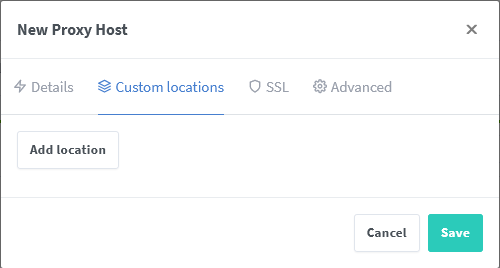
|
||||
|
||||
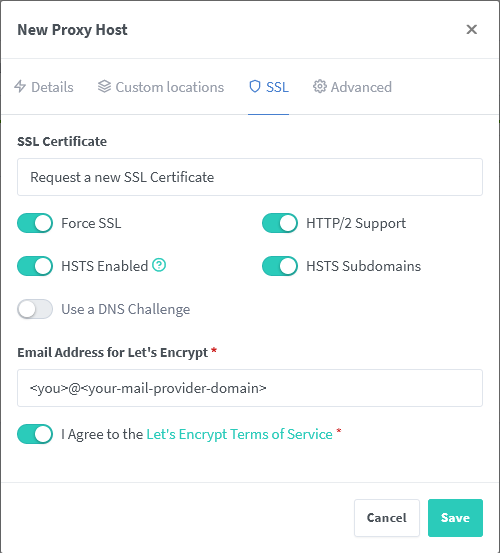
|
||||

|
||||
|
||||
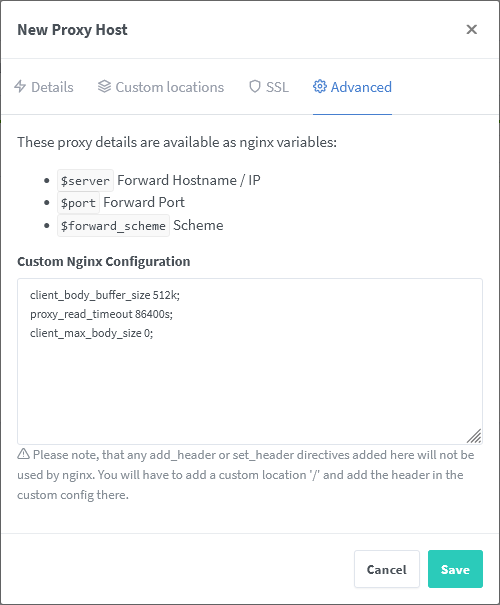
|
||||
|
||||
@@ -375,7 +393,9 @@ proxy_read_timeout 86400s;
|
||||
client_max_body_size 0;
|
||||
```
|
||||
|
||||
Of course you need to modify `<your-nc-domain>` to the domain on which you want to run Nextcloud. Also change `<you>@<your-mail-provider-domain>` to a mail address of yours. Also make sure to adjust the port 11000 to match the chosen `APACHE_PORT`. **Please note:** The above configuration will only work if your reverse proxy is running directly on the host that is running the docker daemon. If the reverse proxy is running in a docker container, you can use the `--network host` option (or `network_mode: host` for docker-compose) when starting the reverse proxy container in order to connect the reverse proxy container to the host network (if you are using a firewall on the server, you need to open ports 80 and 443 for the reverse proxy in that case manually). ***If that is not an option or not possible for you (like e.g. on Windows or if the reverse proxy is running on a different host), you can alternatively instead of `localhost` use the private ip-address of the host that is running the docker daemon. If you are not sure how to retrieve that, you can run: `ip a | grep "scope global" | head -1 | awk '{print $2}' | sed 's|/.*||'`. If the command returns a public ip-address, use `ip a | grep "scope global" | grep docker0 | awk '{print $2}' | sed 's|/.*||'` instead (the commands only work on Linux)***
|
||||
⚠️ **Please note:** Look into [this](#adaptation-of-the-respective-sample-configuration) to adapt the above example configuration.
|
||||
|
||||
Also change `<you>@<your-mail-provider-domain>` to a mail address of yours.
|
||||
|
||||
</details>
|
||||
|
||||
@@ -477,8 +497,7 @@ httpServer.on('upgrade', (req, socket, head) => {
|
||||
});
|
||||
```
|
||||
|
||||
Of course you need to modify `<your-nc-domain>` to the domain on which you want to run Nextcloud. Also make sure to adjust the port 11000 to match the chosen `APACHE_PORT`.
|
||||
**Please note:** The above configuration will only work if your reverse proxy is running directly on the host that is running the docker daemon. If the reverse proxy is running in a docker container, you can use the `--network host` option (or `network_mode: host` for docker-compose) when starting the reverse proxy container in order to connect the reverse proxy container to the host network (if you are using a firewall on the server, you need to open ports 80 and 443 for the reverse proxy in that case manually). ***If that is not an option or not possible for you (like e.g. on Windows or if the reverse proxy is running on a different host), you can alternatively instead of `localhost` use the private ip-address of the host that is running the docker daemon. If you are not sure how to retrieve that, you can run: `ip a | grep "scope global" | head -1 | awk '{print $2}' | sed 's|/.*||'`. If the command returns a public ip-address, use `ip a | grep "scope global" | grep docker0 | awk '{print $2}' | sed 's|/.*||'` instead (the commands only work on Linux)***
|
||||
⚠️ **Please note:** Look into [this](#adaptation-of-the-respective-sample-configuration) to adapt the above example configuration.
|
||||
|
||||
</details>
|
||||
|
||||
@@ -496,7 +515,7 @@ See these screenshots for a working config:
|
||||
|
||||
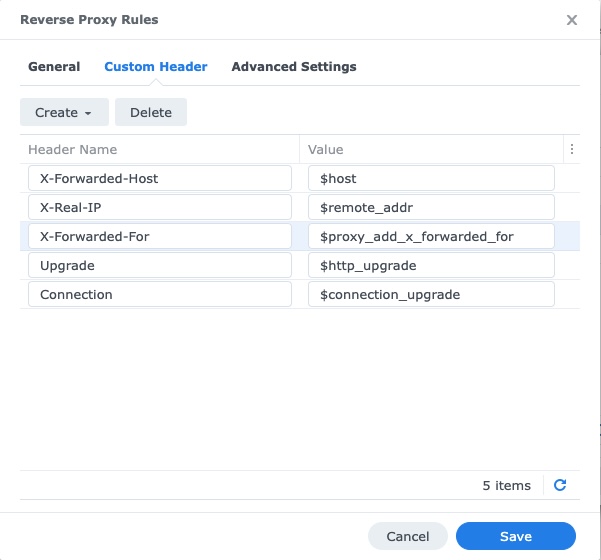
|
||||
|
||||
Of course you need to modify `<your-nc-domain>` to the domain on which you want to run Nextcloud. Also make sure to adjust the port 11000 to match the chosen `APACHE_PORT`. **Please note:** The above configuration will only work if your reverse proxy is running directly on the host that is running the docker daemon. If the reverse proxy is running in a docker container, you can use the `--network host` option (or `network_mode: host` for docker-compose) when starting the reverse proxy container in order to connect the reverse proxy container to the host network (if you are using a firewall on the server, you need to open ports 80 and 443 for the reverse proxy in that case manually). ***If that is not an option or not possible for you (like e.g. on Windows or if the reverse proxy is running on a different host), you can alternatively instead of `localhost` use the private ip-address of the host that is running the docker daemon. If you are not sure how to retrieve that, you can run: `ip a | grep "scope global" | head -1 | awk '{print $2}' | sed 's|/.*||'`. If the command returns a public ip-address, use `ip a | grep "scope global" | grep docker0 | awk '{print $2}' | sed 's|/.*||'` instead (the commands only work on Linux)***
|
||||
⚠️ **Please note:** Look into [this](#adaptation-of-the-respective-sample-configuration) to adapt the above example configuration.
|
||||
|
||||
</details>
|
||||
|
||||
@@ -577,9 +596,7 @@ The examples below define the dynamic configuration in YAML files. If you rather
|
||||
|
||||
---
|
||||
|
||||
Of course you need to modify `<your-nextcloud-domain>` in the `nextcloud.yml` to the domain on which you want to run Nextcloud. Also make sure to adjust the port `11000` to match the chosen `APACHE_PORT`.
|
||||
|
||||
**Please note:** The above configuration will only work if your reverse proxy is running directly on the host that is running the docker daemon. If the reverse proxy is running in a docker container, you can use the `--network host` option (or `network_mode: host` for docker-compose) when starting the reverse proxy container in order to connect the reverse proxy container to the host network (if you are using a firewall on the server, you need to open ports 80 and 443 for the reverse proxy in that case manually). ***If that is not an option or not possible for you (like e.g. on Windows or if the reverse proxy is running on a different host), you can alternatively instead of `localhost` use the private ip-address of the host that is running the docker daemon. If you are not sure how to retrieve that, you can run: `ip a | grep "scope global" | head -1 | awk '{print $2}' | sed 's|/.*||'`. If the command returns a public ip-address, use `ip a | grep "scope global" | grep docker0 | awk '{print $2}' | sed 's|/.*||'` instead (the commands only work on Linux)***
|
||||
⚠️ **Please note:** Look into [this](#adaptation-of-the-respective-sample-configuration) to adapt the above example configuration.
|
||||
|
||||
**Hint**: see https://www.youtube.com/watch?v=VLPSRrLMDmA for a video on configuring Traefik.
|
||||
|
||||
@@ -672,8 +689,7 @@ https://<your-nc-domain>:8443 {
|
||||
}
|
||||
}
|
||||
```
|
||||
|
||||
Of course you need to modify `<your-nc-domain>` to the domain on which you want to run Nextcloud. **Please note:** The above configuration will only work if your reverse proxy is running directly on the host that is running the docker daemon. If the reverse proxy is running in a docker container, you can use the `--network host` when starting the reverse proxy container in order to connect the reverse proxy container to the host network. If that is not an option or not possible for you (like e.g. on Windows or if the reverse proxy is running on a different host), you can alternatively instead of `localhost` use the private ip-address of the host that is running the docker daemon. If you are not sure how to retrieve that, you can run: `ip a | grep "scope global" | head -1 | awk '{print $2}' | sed 's|/.*||'`. If the command returns a public ip-address, use `ip a | grep "scope global" | grep docker0 | awk '{print $2}' | sed 's|/.*||'` instead (the commands only work on Linux)
|
||||
⚠️ **Please note:** Look into [this](#adaptation-of-the-respective-sample-configuration) to adapt the above example configuration.
|
||||
|
||||
Afterwards should the AIO interface be accessible via `https://ip.address.of.the.host:8443`. You can alternatively change the domain to a different subdomain by using `https://<your-alternative-domain>:443` instead of `https://<your-nc-domain>:8443` in the Caddyfile and use that to access the AIO interface.
|
||||
|
||||
@@ -683,7 +699,7 @@ If something does not work, follow the steps below:
|
||||
1. Make sure that you used the docker run command that is described in this reverse proxy documentation. **Hint:** make sure that you have set the `APACHE_PORT` via e.g. `--env APACHE_PORT=11000` during the docker run command!
|
||||
1. Make sure to set the `APACHE_IP_BINDING` variable correctly. If in doubt, set it to `--env APACHE_IP_BINDING=0.0.0.0`
|
||||
1. Make sure that all ports to which your reverse proxy is pointing match the chosen `APACHE_PORT`.
|
||||
1. Make sure that the reverse proxy is running on the host OS or if running in a container, connected to the host network. If that is not possible (e.g. on Windows or if the reverse proxy is running on a different host), substitute `localhost` or `127.0.0.1` in the default configurations by the private ip-address of the host that is running the docker daemon. If you are not sure how to retrieve that, you can run: `ip a | grep "scope global" | head -1 | awk '{print $2}' | sed 's|/.*||'`. If the command returns a public ip-address, use `ip a | grep "scope global" | grep docker0 | awk '{print $2}' | sed 's|/.*||'` instead (the commands only work on Linux)
|
||||
1. Make sure to follow [this](#adaptation-of-the-respective-sample-configuration) to adapt the example configurations to your specific setup
|
||||
1. Make sure that the mastercontainer is able to spawn other containers. You can do so by checking that the mastercontainer indeed has access to the Docker socket which might not be positioned in one of the suggested directories like `/var/run/docker.sock` but in a different directory, based on your OS and the way how you installed Docker. The mastercontainer logs should help figuring this out. You can have a look at them by running `sudo docker logs nextcloud-aio-mastercontainer` after the container is started the first time.
|
||||
1. Check if after the mastercontainer was started, the reverse proxy if running inside a container, can reach the provided apache port. You can test this by running `nc -z localhost 11000; echo $?` from inside the reverse proxy container. If the output is `0`, everything works. Alternatively you can of course use instead of `localhost` the ip-address of the host here for the test.
|
||||
1. Make sure that you are not behind CGNAT. If that is the case, you will not be able to open ports properly. In that case you might use a Cloudflare Tunnel.
|
||||
@@ -692,4 +708,3 @@ If something does not work, follow the steps below:
|
||||
1. Check if you have a public IPv4- and public IPv6-address. If you only have a public IPv6-address (e.g. due to DS-Lite), make sure to enable IPv6 in Docker and your whole networking infrastructure (e.g. also by adding an AAAA DNS-entry to your domain).
|
||||
1. Try to configure everything from scratch if it still does not work by following https://github.com/nextcloud/all-in-one#how-to-properly-reset-the-instance.
|
||||
1. As last resort, you may disable the domain validation by adding `--env SKIP_DOMAIN_VALIDATION=true` to the docker run command. But only use this if you are completely sure that you've correctly configured everything!
|
||||
|
||||
|
||||
Reference in New Issue
Block a user