mirror of
https://github.com/nextcloud/all-in-one.git
synced 2026-05-21 10:50:10 +00:00
Compare commits
137 Commits
| Author | SHA1 | Date | |
|---|---|---|---|

|
4ae556422a | ||
|
|
3de963c238 | ||
|
|
effeb44690 | ||
|
|
4dc2400a87 | ||
|
|
b5d5b1f4bc | ||
|
|
14dbc49863 | ||
|
|
dc4e251b05 | ||
|
|
06779d09ba | ||
|
|
686128c9d4 | ||
|
|
ae056c8c06 | ||
|
|
538f5e5bd3 | ||
|
|
ad751595a8 | ||
|
|
9b1e734efc | ||
|
|
44f6cc0d16 | ||
|
|
aed1cd9700 | ||
|
|
56948a8140 | ||
|
|
66484803c3 | ||
|
|
f0ddf95a3e | ||
|
|
6fe4b99306 | ||
|
|
145d83c000 | ||
|
|
9f6f638d1b | ||
|
|
5d0f344839 | ||
|
|
334c879a5e | ||
|
|
61e1939de4 | ||
|
|
c2c4698119 | ||
|
|
69382b638a | ||
|
|
d5afe84c78 | ||
|
|
bfab40f0d8 | ||
|
|
565f77759f | ||
|
|
bdc07b940f | ||
|
|
9f6821c703 | ||
|
|
ca0371f1f1 | ||
|
|
ad9eadb7f9 | ||
|
|
80d3d71ae9 | ||
|
|
45bb084ae5 | ||
|
|
620ef5ad7f | ||
|
|
a1a9db3404 | ||
|
|
6590f1d12e | ||
|
|
bad431984e | ||
|
|
f5d942f4c9 | ||
|
|
a80f56bb17 | ||
|
|
e5fa3e683b | ||
|
|
8a43baf837 | ||
|
|
b575bf4028 | ||
|
|
ace4410e78 | ||
|
|
f3bd9eba66 | ||
|
|
3c14cc2676 | ||
|
|
bbdb874f90 | ||
|
|
a1a85dde8d | ||
|
|
f73d1e39b4 | ||
|
|
2d9a1afa33 | ||
|
|
3db57c6290 | ||
|
|
3f079bd0f3 | ||
|
|
cf0a5c9cbc | ||
|
|
8764824870 | ||
|
|
703bfa9335 | ||
|
|
141887c635 | ||
|
|
5e9069c450 | ||
|
|
3ff65dda79 | ||
|
|
f470cd8fb5 | ||
|
|
bb4f3e34db | ||
|
|
a1c58d9189 | ||
|
|
fc9d0ce7a3 | ||
|
|
603c980f00 | ||
|
|
f2f816257d | ||
|
|
3358f53b84 | ||
|
|
d15e2d7637 | ||
|
|
39b5925d07 | ||
|
|
12d54ff260 | ||
|
|
81d2a660ec | ||
|
|
a42349f8ec | ||
|
|
1f6b8d48a9 | ||
|
|
7ba10559fd | ||
|
|
af43635fea | ||
|
|
a60ac1bbf4 | ||
|
|
00964ae824 | ||
|
|
f7011b2459 | ||
|
|
c6a356714d | ||
|
|
6240e2e44e | ||
|
|
8dc83171d6 | ||
|
|
709a1315dd | ||
|
|
10d686a44f | ||
|
|
0c2177bead | ||
|
|
4238044199 | ||
|
|
5e1c252b2a | ||
|
|
bdd8f87763 | ||
|
|
66995c9c7b | ||
|
|
f7b04cda0e | ||
|
|
3f5f11dfd9 | ||
|
|
8be1816f92 | ||
|
|
20080daa71 | ||
|
|
abfc70b71d | ||
|
|
22b702f23d | ||
|
|
a53c8442fd | ||
|
|
9e62e7f135 | ||
|
|
56b6425f46 | ||
|
|
f618460a9f | ||
|
|
13ca4c164a | ||
|
|
4740ff1370 | ||
|
|
b371a30531 | ||
|
|
dd18312f68 | ||
|
|
f17ea0f8e4 | ||
|
|
39a40b153a | ||
|
|
331bced264 | ||
|
|
dc8ec276f2 | ||
|
|
76bdd92c7f | ||
|
|
8669f49811 | ||
|
|
f2f70904d1 | ||
|
|
1e82bd757a | ||
|
|
f47a45b07a | ||
|
|
74cdcd27bb | ||
|
|
24c970b184 | ||
|
|
cb24213a31 | ||
|
|
82dd888109 | ||
|
|
4c4080077e | ||
|
|
307d6e0228 | ||
|
|
d42800a7a4 | ||
|
|
3c6cb85c74 | ||
|
|
b4a8322a1a | ||
|
|
3e019d25f2 | ||
|
|
a3d676b408 | ||
|
|
981166d218 | ||
|
|
0498e05f25 | ||
|
|
081f6830f5 | ||
|
|
d0c569ba2f | ||
|
|
3beba0e1a8 | ||
|
|
c8eea9397f | ||
|
|
7a0c9a7f52 | ||
|
|
46ddf8fb86 | ||
|
|
3bf0a769c7 | ||
|
|
c9d7db4dc4 | ||
|
|
216f0a8e9e | ||
|
|
ccddef46b5 | ||
|
|
2b58c544ff | ||
|
|
c64bfd7253 | ||
|
|
d284812c6b | ||
|
|
8d0a2d3199 |
3
.github/dependabot.yml
vendored
3
.github/dependabot.yml
vendored
@@ -92,6 +92,9 @@ updates:
|
||||
schedule:
|
||||
interval: "daily"
|
||||
time: "12:00"
|
||||
ignore:
|
||||
- dependency-name: "redis"
|
||||
update-types: ["version-update:semver-major"]
|
||||
open-pull-requests-limit: 10
|
||||
labels:
|
||||
- 3. to review
|
||||
|
||||
2
.github/workflows/json-validator.yml
vendored
2
.github/workflows/json-validator.yml
vendored
@@ -3,6 +3,8 @@ name: Json Validator
|
||||
on:
|
||||
pull_request:
|
||||
push:
|
||||
branches:
|
||||
- main
|
||||
|
||||
jobs:
|
||||
psalm:
|
||||
|
||||
48
.github/workflows/lint-php.yml
vendored
Normal file
48
.github/workflows/lint-php.yml
vendored
Normal file
@@ -0,0 +1,48 @@
|
||||
# This workflow is provided via the organization template repository
|
||||
#
|
||||
# https://github.com/nextcloud/.github
|
||||
# https://docs.github.com/en/actions/learn-github-actions/sharing-workflows-with-your-organization
|
||||
|
||||
name: Lint
|
||||
|
||||
on:
|
||||
pull_request:
|
||||
push:
|
||||
branches:
|
||||
- main
|
||||
- master
|
||||
- stable*
|
||||
|
||||
jobs:
|
||||
php-lint:
|
||||
runs-on: ubuntu-latest
|
||||
strategy:
|
||||
matrix:
|
||||
php-versions: ["8.0"]
|
||||
|
||||
name: php-lint
|
||||
|
||||
steps:
|
||||
- name: Checkout
|
||||
uses: actions/checkout@v3
|
||||
|
||||
- name: Set up php ${{ matrix.php-versions }}
|
||||
uses: shivammathur/setup-php@v2
|
||||
with:
|
||||
php-version: ${{ matrix.php-versions }}
|
||||
coverage: none
|
||||
|
||||
- name: Lint
|
||||
run: cd php && composer run lint
|
||||
|
||||
summary:
|
||||
runs-on: ubuntu-latest
|
||||
needs: php-lint
|
||||
|
||||
if: always()
|
||||
|
||||
name: php-lint-summary
|
||||
|
||||
steps:
|
||||
- name: Summary status
|
||||
run: if ${{ needs.php-lint.result != 'success' && needs.php-lint.result != 'skipped' }}; then exit 1; fi
|
||||
22
.github/workflows/psalm-analysis.yml
vendored
22
.github/workflows/psalm-analysis.yml
vendored
@@ -3,16 +3,26 @@ name: Psalm Analysis
|
||||
on:
|
||||
pull_request:
|
||||
push:
|
||||
branches:
|
||||
- main
|
||||
|
||||
jobs:
|
||||
psalm:
|
||||
name: Psalm
|
||||
runs-on: ubuntu-latest
|
||||
steps:
|
||||
- name: Checkout code
|
||||
uses: actions/checkout@v3
|
||||
- name: Psalm
|
||||
uses: docker://ghcr.io/nextcloud/all-in-one-psalm
|
||||
- uses: actions/checkout@v3
|
||||
- name: Set up php8.0
|
||||
uses: shivammathur/setup-php@v2
|
||||
with:
|
||||
composer_ignore_platform_reqs: false
|
||||
relative_dir: php
|
||||
php-version: 8.0
|
||||
extensions: apcu
|
||||
coverage: none
|
||||
|
||||
- name: Run script
|
||||
run: |
|
||||
set -x
|
||||
cd php
|
||||
composer global require vimeo/psalm --prefer-dist --no-progress --dev
|
||||
composer install
|
||||
composer run psalm
|
||||
|
||||
2
.github/workflows/shellcheck.yml
vendored
2
.github/workflows/shellcheck.yml
vendored
@@ -3,6 +3,8 @@ name: Shellcheck
|
||||
on:
|
||||
pull_request:
|
||||
push:
|
||||
branches:
|
||||
- main
|
||||
|
||||
jobs:
|
||||
shellcheck:
|
||||
|
||||
2
.github/workflows/spellcheck.yml
vendored
2
.github/workflows/spellcheck.yml
vendored
@@ -3,6 +3,8 @@ name: 'Spellcheck'
|
||||
on:
|
||||
pull_request:
|
||||
push:
|
||||
branches:
|
||||
- main
|
||||
|
||||
jobs:
|
||||
spellcheck:
|
||||
|
||||
@@ -11,24 +11,34 @@
|
||||
# Notify Push
|
||||
route /push/* {
|
||||
uri strip_prefix /push
|
||||
reverse_proxy {$NEXTCLOUD_HOST}:7867
|
||||
reverse_proxy {$NEXTCLOUD_HOST}:7867 {
|
||||
# trusted_proxies placeholder
|
||||
}
|
||||
}
|
||||
|
||||
# Talk
|
||||
route /standalone-signaling/* {
|
||||
uri strip_prefix /standalone-signaling
|
||||
reverse_proxy {$TALK_HOST}:8081
|
||||
reverse_proxy {$TALK_HOST}:8081 {
|
||||
# trusted_proxies placeholder
|
||||
}
|
||||
}
|
||||
|
||||
# Collabora
|
||||
route /browser/* {
|
||||
reverse_proxy {$COLLABORA_HOST}:9980
|
||||
reverse_proxy {$COLLABORA_HOST}:9980 {
|
||||
# trusted_proxies placeholder
|
||||
}
|
||||
}
|
||||
route /hosting/* {
|
||||
reverse_proxy {$COLLABORA_HOST}:9980
|
||||
reverse_proxy {$COLLABORA_HOST}:9980 {
|
||||
# trusted_proxies placeholder
|
||||
}
|
||||
}
|
||||
route /cool/* {
|
||||
reverse_proxy {$COLLABORA_HOST}:9980
|
||||
reverse_proxy {$COLLABORA_HOST}:9980 {
|
||||
# trusted_proxies placeholder
|
||||
}
|
||||
}
|
||||
|
||||
# Onlyoffice
|
||||
@@ -37,6 +47,7 @@
|
||||
reverse_proxy {$ONLYOFFICE_HOST}:80 {
|
||||
header_up X-Forwarded-Host {http.request.host}/onlyoffice
|
||||
header_up X-Forwarded-Proto https
|
||||
# trusted_proxies placeholder
|
||||
}
|
||||
}
|
||||
|
||||
@@ -45,7 +56,10 @@
|
||||
rewrite /.well-known/carddav /remote.php/dav
|
||||
rewrite /.well-known/caldav /remote.php/dav
|
||||
header Strict-Transport-Security max-age=31536000;
|
||||
reverse_proxy localhost:8000
|
||||
reverse_proxy localhost:8000 {
|
||||
# See https://github.com/nextcloud/all-in-one/issues/828
|
||||
# trusted_proxies placeholder
|
||||
}
|
||||
}
|
||||
|
||||
# TLS options
|
||||
|
||||
@@ -1,7 +1,7 @@
|
||||
# Caddy is a requirement
|
||||
FROM caddy:2.5.1-alpine as caddy
|
||||
|
||||
FROM debian:bullseye-20220509-slim
|
||||
FROM debian:bullseye-20220527-slim
|
||||
|
||||
EXPOSE 80
|
||||
|
||||
@@ -65,8 +65,7 @@ COPY start.sh /usr/bin/
|
||||
COPY supervisord.conf /
|
||||
RUN chmod +x /usr/bin/start.sh; \
|
||||
chmod +r /supervisord.conf; \
|
||||
chmod a+w /Caddyfile; \
|
||||
chmod 777 /; \
|
||||
chown www-data:www-data /Caddyfile; \
|
||||
chmod +r -R /etc/apache2
|
||||
|
||||
# Give root a random password
|
||||
|
||||
@@ -21,15 +21,30 @@ if [ -z "$APACHE_PORT" ]; then
|
||||
export APACHE_PORT="443"
|
||||
fi
|
||||
|
||||
# Change variables in case of reverse proxies
|
||||
if [ "$APACHE_PORT" != '443' ]; then
|
||||
export PROTOCOL="http"
|
||||
export NC_DOMAIN=""
|
||||
sed -i 's|auto_https.*|auto_https off|' /Caddyfile
|
||||
else
|
||||
export PROTOCOL="https"
|
||||
sed -i 's|auto_https.*|auto_https disable_redirects|' /Caddyfile
|
||||
fi
|
||||
|
||||
# Change the auto_https in case of reverse proxies
|
||||
if [ "$APACHE_PORT" != '443' ]; then
|
||||
CADDYFILE="$(sed 's|auto_https.*|auto_https off|' /Caddyfile)"
|
||||
else
|
||||
CADDYFILE="$(sed 's|auto_https.*|auto_https disable_redirects|' /Caddyfile)"
|
||||
fi
|
||||
echo "$CADDYFILE" > /Caddyfile
|
||||
|
||||
# Change the trusted_proxies in case of reverse proxies
|
||||
if [ "$APACHE_PORT" != '443' ]; then
|
||||
CADDYFILE="$(sed 's|# trusted_proxies placeholder|trusted_proxies private_ranges|' /Caddyfile)"
|
||||
else
|
||||
CADDYFILE="$(sed 's|trusted_proxies private_ranges|# trusted_proxies placeholder|' /Caddyfile)"
|
||||
fi
|
||||
echo "$CADDYFILE" > /Caddyfile
|
||||
|
||||
# Add caddy path
|
||||
mkdir -p /mnt/data/caddy/
|
||||
|
||||
|
||||
@@ -1,4 +1,4 @@
|
||||
FROM debian:bullseye-20220509-slim
|
||||
FROM debian:bullseye-20220527-slim
|
||||
|
||||
RUN set -ex; \
|
||||
\
|
||||
|
||||
@@ -37,13 +37,11 @@ if [ "$BORG_MODE" != backup ] && [ "$BORG_MODE" != test ] && ! [ -f "$BORG_BACKU
|
||||
exit 1
|
||||
fi
|
||||
|
||||
# Break the borg lock if it exists
|
||||
if [ -f "$BORG_BACKUP_DIRECTORY/lock.roster" ]; then
|
||||
echo "Breaking the borg lock..."
|
||||
if ! borg break-lock "$BORG_BACKUP_DIRECTORY"; then
|
||||
echo "Could not break the borg lock!"
|
||||
exit 1
|
||||
fi
|
||||
# Do not continue if this file exists (needed for simple external blocking)
|
||||
if [ -f "$BORG_BACKUP_DIRECTORY/aio-lockfile" ]; then
|
||||
echo "Not continuing because aio-lockfile exists - it seems like a script is externally running which is locking the backup archive."
|
||||
echo "If this should not be the case, you can fix this by deleting the 'aio-lockfile' file from the backup archive directory."
|
||||
exit 1
|
||||
fi
|
||||
|
||||
# Create lockfile
|
||||
|
||||
@@ -1,5 +1,6 @@
|
||||
# Probably from this file: https://github.com/Cisco-Talos/clamav/blob/main/Dockerfile
|
||||
FROM clamav/clamav:0.104.2-3
|
||||
|
||||
RUN apk add --update --no-cache tzdata
|
||||
COPY clamav.conf /tmp/
|
||||
RUN cat /tmp/clamav.conf >> /etc/clamav/clamd.conf
|
||||
|
||||
@@ -1,2 +1,15 @@
|
||||
# From a file located probably somewhere here: https://github.com/CollaboraOnline/online/tree/master/docker
|
||||
FROM collabora/code:21.11.4.2.1
|
||||
FROM collabora/code:21.11.5.3.1
|
||||
|
||||
USER root
|
||||
|
||||
RUN set -ex; \
|
||||
\
|
||||
apt-get update; \
|
||||
export DEBIAN_FRONTEND=noninteractive; \
|
||||
apt-get install -y --no-install-recommends \
|
||||
tzdata \
|
||||
; \
|
||||
rm -rf /var/lib/apt/lists/*
|
||||
|
||||
USER 104
|
||||
|
||||
@@ -1,4 +1,6 @@
|
||||
{
|
||||
# auto_https will create redirects for https://{host}:8443 instead of https://{host}
|
||||
# https redirects are added manually in the http://:80 block
|
||||
auto_https disable_redirects
|
||||
|
||||
storage file_system {
|
||||
@@ -6,6 +8,10 @@
|
||||
}
|
||||
}
|
||||
|
||||
http://:80 {
|
||||
redir https://{host}{uri}
|
||||
}
|
||||
|
||||
https://:8443 {
|
||||
|
||||
reverse_proxy localhost:8000
|
||||
|
||||
@@ -1,11 +1,11 @@
|
||||
# Docker CLI is a requirement
|
||||
FROM docker:20.10.16-dind-alpine3.15 as dind
|
||||
FROM docker:20.10.17-dind-alpine3.16 as dind
|
||||
|
||||
# Caddy is a requirement
|
||||
FROM caddy:2.5.1-alpine as caddy
|
||||
|
||||
# From https://github.com/docker-library/php/blob/master/8.0/bullseye/apache/Dockerfile
|
||||
FROM php:8.0.19-apache-bullseye
|
||||
FROM php:8.0.20-apache-bullseye
|
||||
|
||||
EXPOSE 80
|
||||
EXPOSE 8080
|
||||
|
||||
@@ -20,7 +20,7 @@ while true; do
|
||||
# Allow to continue directly if e.g. the mastercontainer was updated. Otherwise wait for the next execution
|
||||
if [ "$LOCK_FILE_PRESENT" = 0 ]; then
|
||||
while [ "$(date +%H:%M)" != "$BACKUP_TIME" ]; do
|
||||
sleep 1
|
||||
sleep 30
|
||||
done
|
||||
fi
|
||||
|
||||
@@ -93,4 +93,7 @@ while true; do
|
||||
|
||||
# Remove dangling images
|
||||
sudo -u www-data docker image prune -f
|
||||
|
||||
# Wait 60s so that the whole loop will not be executed again
|
||||
sleep 60
|
||||
done
|
||||
|
||||
@@ -78,7 +78,9 @@ fi
|
||||
|
||||
# Check for other options
|
||||
if [ -n "$NEXTCLOUD_DATADIR" ]; then
|
||||
if ! echo "$NEXTCLOUD_DATADIR" | grep -q "^/" || [ "$NEXTCLOUD_DATADIR" = "/" ]; then
|
||||
if [ "$NEXTCLOUD_DATADIR" = "nextcloud_aio_nextcloud_datadir" ]; then
|
||||
echo "NEXTCLOUD_DATADIR is set to $NEXTCLOUD_DATADIR"
|
||||
elif ! echo "$NEXTCLOUD_DATADIR" | grep -q "^/" || [ "$NEXTCLOUD_DATADIR" = "/" ]; then
|
||||
echo "You've set NEXTCLOUD_DATADIR but not to an allowed value.
|
||||
The string must start with '/' and must not be equal to '/'.
|
||||
It is set to '$NEXTCLOUD_DATADIR'."
|
||||
@@ -112,6 +114,14 @@ It is set to '$APACHE_PORT'."
|
||||
exit 1
|
||||
fi
|
||||
fi
|
||||
if [ -n "$DOCKER_SOCKET_PATH" ]; then
|
||||
if ! echo "$DOCKER_SOCKET_PATH" | grep -q "^/" || echo "$DOCKER_SOCKET_PATH" | grep -q "/$"; then
|
||||
echo "You've set DOCKER_SOCKET_PATH but not to an allowed value.
|
||||
The string must start with '/' and must not end with '/'.
|
||||
It is set to '$DOCKER_SOCKET_PATH'."
|
||||
exit 1
|
||||
fi
|
||||
fi
|
||||
|
||||
# Check DNS resolution
|
||||
# Prevents issues like https://github.com/nextcloud/all-in-one/discussions/565
|
||||
|
||||
@@ -1,5 +1,5 @@
|
||||
# From https://github.com/nextcloud/docker/blob/master/23/fpm-alpine/Dockerfile
|
||||
FROM php:8.0.19-fpm-alpine3.15
|
||||
FROM php:8.0.20-fpm-alpine3.15
|
||||
|
||||
# Custom: change id of www-data user as it needs to be the same like on old installations
|
||||
RUN set -ex; \
|
||||
@@ -85,7 +85,7 @@ RUN set -ex; \
|
||||
# set recommended PHP.ini settings
|
||||
# see https://docs.nextcloud.com/server/stable/admin_manual/configuration_server/server_tuning.html#enable-php-opcache
|
||||
RUN { \
|
||||
echo 'opcache.interned_strings_buffer=16'; \
|
||||
echo 'opcache.interned_strings_buffer=32'; \
|
||||
echo 'opcache.save_comments=1'; \
|
||||
echo 'opcache.revalidate_freq=60'; \
|
||||
} > /usr/local/etc/php/conf.d/opcache-recommended.ini; \
|
||||
@@ -105,7 +105,7 @@ RUN { \
|
||||
VOLUME /var/www/html
|
||||
|
||||
|
||||
ENV NEXTCLOUD_VERSION 23.0.5
|
||||
ENV NEXTCLOUD_VERSION 23.0.6
|
||||
|
||||
RUN set -ex; \
|
||||
apk add --no-cache --virtual .fetch-deps \
|
||||
@@ -198,6 +198,7 @@ RUN set -ex; \
|
||||
gnupg \
|
||||
git \
|
||||
postgresql-client \
|
||||
tzdata \
|
||||
; \
|
||||
rm -rf /var/lib/apt/lists/*
|
||||
|
||||
@@ -221,8 +222,6 @@ RUN set -ex; \
|
||||
chown www-data:root -R /usr/local/etc/php/conf.d && \
|
||||
chown www-data:root -R /var/log/supervisord/ && \
|
||||
chown www-data:root -R /var/run/supervisord/ && \
|
||||
mkdir -p /var/log/nextcloud/ && \
|
||||
chown -R www-data:root /var/log/nextcloud/ && \
|
||||
rm -r /usr/src/nextcloud/apps/updatenotification
|
||||
|
||||
COPY start.sh /
|
||||
|
||||
@@ -170,10 +170,10 @@ if ! [ -f "/mnt/ncdata/skip.update" ]; then
|
||||
mkdir -p /var/www/html/data
|
||||
php /var/www/html/occ config:system:set loglevel --value=2
|
||||
php /var/www/html/occ config:system:set log_type --value=file
|
||||
php /var/www/html/occ config:system:set logfile --value="/var/log/nextcloud/nextcloud.log"
|
||||
php /var/www/html/occ config:system:set logfile --value="/var/www/html/data/nextcloud.log"
|
||||
php /var/www/html/occ config:system:set log_rotate_size --value="10485760"
|
||||
php /var/www/html/occ app:enable admin_audit
|
||||
php /var/www/html/occ config:app:set admin_audit logfile --value="/var/log/nextcloud/audit.log"
|
||||
php /var/www/html/occ config:app:set admin_audit logfile --value="/var/www/html/data/audit.log"
|
||||
php /var/www/html/occ config:system:set log.condition apps 0 --value="admin_audit"
|
||||
|
||||
# Apply preview settings
|
||||
@@ -272,6 +272,11 @@ echo "Applying one-click-instance settings..."
|
||||
php /var/www/html/occ config:system:set one-click-instance --value=true --type=bool
|
||||
php /var/www/html/occ config:system:set one-click-instance.user-limit --value=100 --type=int
|
||||
|
||||
# Adjusting log files to be stored on a volume
|
||||
echo "Adjusting log files..."
|
||||
php /var/www/html/occ config:system:set logfile --value="/var/www/html/data/nextcloud.log"
|
||||
php /var/www/html/occ config:app:set admin_audit logfile --value="/var/www/html/data/audit.log"
|
||||
|
||||
# Apply network settings
|
||||
echo "Applying network settings..."
|
||||
php /var/www/html/occ config:system:set trusted_domains 1 --value="$NC_DOMAIN"
|
||||
@@ -302,6 +307,7 @@ else
|
||||
php /var/www/html/occ app:update notify_push
|
||||
fi
|
||||
php /var/www/html/occ config:system:set trusted_proxies 0 --value="127.0.0.1"
|
||||
php /var/www/html/occ config:system:set trusted_proxies 1 --value="::1"
|
||||
php /var/www/html/occ config:app:set notify_push base_endpoint --value="https://$NC_DOMAIN/push"
|
||||
|
||||
# Collabora
|
||||
|
||||
@@ -1,2 +1,2 @@
|
||||
# From https://github.com/ONLYOFFICE/Docker-DocumentServer/blob/master/Dockerfile
|
||||
FROM onlyoffice/documentserver:7.1.0.215
|
||||
FROM onlyoffice/documentserver:7.1.1.23
|
||||
|
||||
@@ -1,5 +1,5 @@
|
||||
# From https://github.com/docker-library/redis/blob/master/6.2/alpine/Dockerfile
|
||||
FROM redis:6.2.6-alpine3.15
|
||||
FROM redis:6.2.7-alpine
|
||||
|
||||
RUN apk add --update --no-cache openssl bash
|
||||
|
||||
|
||||
@@ -1,4 +1,4 @@
|
||||
FROM ubuntu:focal-20220426
|
||||
FROM ubuntu:focal-20220531
|
||||
|
||||
EXPOSE 3478
|
||||
|
||||
|
||||
@@ -31,5 +31,5 @@ Go to https://github.com/nextcloud-releases/all-in-one/actions/workflows/repo-sy
|
||||
1. Verify that no job is running here: https://github.com/nextcloud-releases/all-in-one/actions/workflows/promote-to-beta.yml
|
||||
2. Go to https://github.com/nextcloud-releases/all-in-one/actions/workflows/promote-to-latest.yml, click on `Run workflow`.
|
||||
|
||||
## Where to find the VPS builds?
|
||||
## Where to find the VPS and other builds?
|
||||
This is documented here: https://github.com/nextcloud-releases/all-in-one/tree/main/.build
|
||||
|
||||
@@ -2,16 +2,16 @@ version: "3.8"
|
||||
|
||||
volumes:
|
||||
nextcloud_aio_mastercontainer:
|
||||
name: nextcloud_aio_mastercontainer
|
||||
name: nextcloud_aio_mastercontainer # This line is not allowed to be changed
|
||||
|
||||
services:
|
||||
nextcloud:
|
||||
image: nextcloud/all-in-one:latest # Must be changed to 'nextcloud/all-in-one:latest-arm64' when used with an arm64 CPU
|
||||
restart: always
|
||||
container_name: nextcloud-aio-mastercontainer
|
||||
container_name: nextcloud-aio-mastercontainer # This line is not allowed to be changed
|
||||
volumes:
|
||||
- nextcloud_aio_mastercontainer:/mnt/docker-aio-config
|
||||
- /var/run/docker.sock:/var/run/docker.sock:ro
|
||||
- nextcloud_aio_mastercontainer:/mnt/docker-aio-config # This line is not allowed to be changed
|
||||
- /var/run/docker.sock:/var/run/docker.sock:ro # May be changed on macOS, Windows or docker rootless. See the applicable documentation
|
||||
ports:
|
||||
- 80:80 # Can be removed when running behind a reverse proxy. See https://github.com/nextcloud/all-in-one/blob/main/reverse-proxy.md
|
||||
- 8080:8080
|
||||
@@ -20,6 +20,7 @@ services:
|
||||
# - APACHE_PORT=11000 # Is needed when running behind a reverse proxy. See https://github.com/nextcloud/all-in-one/blob/main/reverse-proxy.md
|
||||
# - NEXTCLOUD_DATADIR=/mnt/ncdata # Allows to set the host directory for Nextcloud's datadir. See https://github.com/nextcloud/all-in-one#how-to-change-the-default-location-of-nextclouds-datadir
|
||||
# - NEXTCLOUD_MOUNT=/mnt/ # Allows the Nextcloud container to access the chosen directory on the host. See https://github.com/nextcloud/all-in-one#how-to-allow-the-nextcloud-container-to-access-directories-on-the-host
|
||||
# - DOCKER_SOCKET_PATH=/var/run/docker.sock # Needs to be specified if the docker socket on the host is not located in the default '/var/run/docker.sock'. Otherwise mastercontainer updates will fail.
|
||||
|
||||
# # Optional: Caddy reverse proxy. See https://github.com/nextcloud/all-in-one/blob/main/reverse-proxy.md
|
||||
# # You can find further examples here: https://github.com/nextcloud/all-in-one/discussions/588
|
||||
|
||||
12
docker-rootless.md
Normal file
12
docker-rootless.md
Normal file
@@ -0,0 +1,12 @@
|
||||
# Docker rootless
|
||||
|
||||
You can run AIO with docker rootless by following the steps below.
|
||||
|
||||
0. If docker is already installed, you should consider disabling it first: (`sudo systemctl disable --now docker.service docker.socket`)
|
||||
1. Install docker rootless by following the official documentation: https://docs.docker.com/engine/security/rootless/#install. The easiest way is installing it **Without packages**. Further limitations, distribution specific hints, etc. are discussed on the same site. Also do not forget to enable the systemd service, which may not be enabled always by default. See https://docs.docker.com/engine/security/rootless/#usage. (`systemctl --user enable docker`)
|
||||
1. Do not forget to set the mentioned environmental variables and in best case add them to your `~/.bashrc` file as shown!
|
||||
1. Expose the privileged ports by following https://docs.docker.com/engine/security/rootless/#exposing-privileged-ports. (`sudo setcap cap_net_bind_service=ep $(which rootlesskit); systemctl --user restart docker`)
|
||||
1. Use the official AIO startup command but use `--volume $XDG_RUNTIME_DIR/docker.sock:/var/run/docker.sock:ro` instead of `--volume /var/run/docker.sock:/var/run/docker.sock:ro` and also add `-e DOCKER_SOCKET_PATH=$XDG_RUNTIME_DIR/docker.sock` to the initial container startup (which is needed for mastercontainer updates to work correctly).
|
||||
1. Now everything should work like without docker rootless. You can consider using docker-compose for this or running it behind a reverse proxy. Basically the only thing that needs to be adjusted always in the startup command or docker-compose file (after installing docker rootles) are things that are mentioned in point 3.
|
||||
|
||||
**Please note:** All files outside the containers get created, written to and accessed as the user that is running the docker daemon or a subuid of it. So for the built-in backup to work you need to allow this user to write to the target directory. For changing Nextcloud's datadir, you need to adjust the permissions of the chosen folders to be accessible/writeable by the userid `100032:100032` (if running `grep ^$(whoami): /etc/subuid` as the user that is running the docker daemon returns 100000 as first value). This logically also applies to the NEXTCLOUD_MOUNT option.
|
||||
@@ -16,6 +16,7 @@ services:
|
||||
- COLLABORA_HOST=nextcloud-aio-collabora
|
||||
- TALK_HOST=nextcloud-aio-talk
|
||||
- APACHE_PORT=${APACHE_PORT}
|
||||
- TZ=${TIMEZONE}
|
||||
volumes:
|
||||
- nextcloud_aio_nextcloud:/var/www/html:ro
|
||||
- nextcloud_aio_apache:/mnt/data:rw
|
||||
@@ -34,6 +35,8 @@ services:
|
||||
- POSTGRES_PASSWORD=${DATABASE_PASSWORD}
|
||||
- POSTGRES_DB=nextcloud_database
|
||||
- POSTGRES_USER=nextcloud
|
||||
- TZ=${TIMEZONE}
|
||||
- PGTZ=${TIMEZONE}
|
||||
stop_grace_period: 1800s
|
||||
restart: unless-stopped
|
||||
networks:
|
||||
@@ -71,6 +74,7 @@ services:
|
||||
- COLLABORA_HOST=nextcloud-aio-collabora
|
||||
- TALK_ENABLED=${TALK_ENABLED}
|
||||
- DAILY_BACKUP_RUNNING=${DAILY_BACKUP_RUNNING}
|
||||
- TZ=${TIMEZONE}
|
||||
stop_grace_period: 10s
|
||||
restart: unless-stopped
|
||||
networks:
|
||||
@@ -81,6 +85,7 @@ services:
|
||||
image: nextcloud/aio-redis:latest-arm64
|
||||
environment:
|
||||
- REDIS_HOST_PASSWORD=${REDIS_PASSWORD}
|
||||
- TZ=${TIMEZONE}
|
||||
stop_grace_period: 10s
|
||||
restart: unless-stopped
|
||||
networks:
|
||||
@@ -92,6 +97,7 @@ services:
|
||||
environment:
|
||||
- aliasgroup1=https://${NC_DOMAIN}:443
|
||||
- extra_params=--o:ssl.enable=false --o:ssl.termination=true --o:logging.level=warning
|
||||
- TZ=${TIMEZONE}
|
||||
stop_grace_period: 10s
|
||||
restart: unless-stopped
|
||||
networks:
|
||||
@@ -108,6 +114,7 @@ services:
|
||||
- TURN_SECRET=${TURN_SECRET}
|
||||
- SIGNALING_SECRET=${SIGNALING_SECRET}
|
||||
- JANUS_API_KEY=${JANUS_API_KEY}
|
||||
- TZ=${TIMEZONE}
|
||||
stop_grace_period: 10s
|
||||
restart: unless-stopped
|
||||
networks:
|
||||
|
||||
@@ -19,6 +19,7 @@ services:
|
||||
- TALK_HOST=nextcloud-aio-talk
|
||||
- APACHE_PORT=${APACHE_PORT}
|
||||
- ONLYOFFICE_HOST=nextcloud-aio-onlyoffice
|
||||
- TZ=${TIMEZONE}
|
||||
volumes:
|
||||
- nextcloud_aio_nextcloud:/var/www/html:ro
|
||||
- nextcloud_aio_apache:/mnt/data:rw
|
||||
@@ -37,6 +38,8 @@ services:
|
||||
- POSTGRES_PASSWORD=${DATABASE_PASSWORD}
|
||||
- POSTGRES_DB=nextcloud_database
|
||||
- POSTGRES_USER=nextcloud
|
||||
- TZ=${TIMEZONE}
|
||||
- PGTZ=${TIMEZONE}
|
||||
stop_grace_period: 1800s
|
||||
restart: unless-stopped
|
||||
networks:
|
||||
@@ -78,6 +81,7 @@ services:
|
||||
- TALK_ENABLED=${TALK_ENABLED}
|
||||
- ONLYOFFICE_HOST=nextcloud-aio-onlyoffice
|
||||
- DAILY_BACKUP_RUNNING=${DAILY_BACKUP_RUNNING}
|
||||
- TZ=${TIMEZONE}
|
||||
stop_grace_period: 10s
|
||||
restart: unless-stopped
|
||||
networks:
|
||||
@@ -88,6 +92,7 @@ services:
|
||||
image: nextcloud/aio-redis:latest
|
||||
environment:
|
||||
- REDIS_HOST_PASSWORD=${REDIS_PASSWORD}
|
||||
- TZ=${TIMEZONE}
|
||||
stop_grace_period: 10s
|
||||
restart: unless-stopped
|
||||
networks:
|
||||
@@ -99,6 +104,7 @@ services:
|
||||
environment:
|
||||
- aliasgroup1=https://${NC_DOMAIN}:443
|
||||
- extra_params=--o:ssl.enable=false --o:ssl.termination=true --o:logging.level=warning
|
||||
- TZ=${TIMEZONE}
|
||||
stop_grace_period: 10s
|
||||
restart: unless-stopped
|
||||
networks:
|
||||
@@ -115,6 +121,7 @@ services:
|
||||
- TURN_SECRET=${TURN_SECRET}
|
||||
- SIGNALING_SECRET=${SIGNALING_SECRET}
|
||||
- JANUS_API_KEY=${JANUS_API_KEY}
|
||||
- TZ=${TIMEZONE}
|
||||
stop_grace_period: 10s
|
||||
restart: unless-stopped
|
||||
networks:
|
||||
@@ -123,6 +130,8 @@ services:
|
||||
nextcloud-aio-clamav:
|
||||
container_name: nextcloud-aio-clamav
|
||||
image: nextcloud/aio-clamav:latest
|
||||
environment:
|
||||
- TZ=${TIMEZONE}
|
||||
volumes:
|
||||
- nextcloud_aio_clamav:/var/lib/clamav:rw
|
||||
stop_grace_period: 10s
|
||||
@@ -133,6 +142,8 @@ services:
|
||||
nextcloud-aio-onlyoffice:
|
||||
container_name: nextcloud-aio-onlyoffice
|
||||
image: nextcloud/aio-onlyoffice:latest
|
||||
environment:
|
||||
- TZ=${TIMEZONE}
|
||||
volumes:
|
||||
- nextcloud_aio_onlyoffice:/var/lib/onlyoffice:rw
|
||||
stop_grace_period: 10s
|
||||
|
||||
@@ -14,4 +14,5 @@ ONLYOFFICE_ENABLED=no # Setting this to "yes" enables the option in Nex
|
||||
REDIS_PASSWORD= # TODO! This needs to be a unique and good password!
|
||||
SIGNALING_SECRET= # TODO! This needs to be a unique and good password!
|
||||
TALK_ENABLED=yes # Setting this to "yes" enables the option in Nextcloud automatically.
|
||||
TIMEZONE=Europe/Berlin # TODO! This is the timezone that your containers will use.
|
||||
TURN_SECRET= # TODO! This needs to be a unique and good password!
|
||||
|
||||
@@ -67,6 +67,7 @@ sed -i 's|AIO_TOKEN=|AIO_TOKEN=123456 # Has no function but needs to be
|
||||
sed -i 's|AIO_URL=|AIO_URL=localhost # Has no function but needs to be set!|' sample.conf
|
||||
sed -i 's|NC_DOMAIN=|NC_DOMAIN=yourdomain.com # TODO! Needs to be changed to the domain that you want to use for Nextcloud.|' sample.conf
|
||||
sed -i 's|NEXTCLOUD_PASSWORD=|NEXTCLOUD_PASSWORD= # TODO! This is the password of the initially created Nextcloud admin with username "admin".|' sample.conf
|
||||
sed -i 's|TIMEZONE=|TIMEZONE=Europe/Berlin # TODO! This is the timezone that your containers will use.|' sample.conf
|
||||
sed -i 's|=$|= # TODO! This needs to be a unique and good password!|' sample.conf
|
||||
|
||||
cat sample.conf
|
||||
|
||||
@@ -20,6 +20,7 @@
|
||||
},
|
||||
"scripts": {
|
||||
"psalm": "psalm --threads=1",
|
||||
"psalm:update-baseline": "psalm --threads=1 --update-baseline"
|
||||
"psalm:update-baseline": "psalm --threads=1 --update-baseline",
|
||||
"lint": "find . -name \\*.php -not -path './vendor/*' -print0 | xargs -0 -n1 php -l"
|
||||
}
|
||||
}
|
||||
|
||||
70
php/composer.lock
generated
70
php/composer.lock
generated
@@ -8,22 +8,22 @@
|
||||
"packages": [
|
||||
{
|
||||
"name": "guzzlehttp/guzzle",
|
||||
"version": "7.4.2",
|
||||
"version": "7.4.5",
|
||||
"source": {
|
||||
"type": "git",
|
||||
"url": "https://github.com/guzzle/guzzle.git",
|
||||
"reference": "ac1ec1cd9b5624694c3a40be801d94137afb12b4"
|
||||
"reference": "1dd98b0564cb3f6bd16ce683cb755f94c10fbd82"
|
||||
},
|
||||
"dist": {
|
||||
"type": "zip",
|
||||
"url": "https://api.github.com/repos/guzzle/guzzle/zipball/ac1ec1cd9b5624694c3a40be801d94137afb12b4",
|
||||
"reference": "ac1ec1cd9b5624694c3a40be801d94137afb12b4",
|
||||
"url": "https://api.github.com/repos/guzzle/guzzle/zipball/1dd98b0564cb3f6bd16ce683cb755f94c10fbd82",
|
||||
"reference": "1dd98b0564cb3f6bd16ce683cb755f94c10fbd82",
|
||||
"shasum": ""
|
||||
},
|
||||
"require": {
|
||||
"ext-json": "*",
|
||||
"guzzlehttp/promises": "^1.5",
|
||||
"guzzlehttp/psr7": "^1.8.3 || ^2.1",
|
||||
"guzzlehttp/psr7": "^1.9 || ^2.4",
|
||||
"php": "^7.2.5 || ^8.0",
|
||||
"psr/http-client": "^1.0",
|
||||
"symfony/deprecation-contracts": "^2.2 || ^3.0"
|
||||
@@ -112,7 +112,7 @@
|
||||
],
|
||||
"support": {
|
||||
"issues": "https://github.com/guzzle/guzzle/issues",
|
||||
"source": "https://github.com/guzzle/guzzle/tree/7.4.2"
|
||||
"source": "https://github.com/guzzle/guzzle/tree/7.4.5"
|
||||
},
|
||||
"funding": [
|
||||
{
|
||||
@@ -128,7 +128,7 @@
|
||||
"type": "tidelift"
|
||||
}
|
||||
],
|
||||
"time": "2022-03-20T14:16:28+00:00"
|
||||
"time": "2022-06-20T22:16:13+00:00"
|
||||
},
|
||||
{
|
||||
"name": "guzzlehttp/promises",
|
||||
@@ -216,16 +216,16 @@
|
||||
},
|
||||
{
|
||||
"name": "guzzlehttp/psr7",
|
||||
"version": "2.2.1",
|
||||
"version": "2.4.0",
|
||||
"source": {
|
||||
"type": "git",
|
||||
"url": "https://github.com/guzzle/psr7.git",
|
||||
"reference": "c94a94f120803a18554c1805ef2e539f8285f9a2"
|
||||
"reference": "13388f00956b1503577598873fffb5ae994b5737"
|
||||
},
|
||||
"dist": {
|
||||
"type": "zip",
|
||||
"url": "https://api.github.com/repos/guzzle/psr7/zipball/c94a94f120803a18554c1805ef2e539f8285f9a2",
|
||||
"reference": "c94a94f120803a18554c1805ef2e539f8285f9a2",
|
||||
"url": "https://api.github.com/repos/guzzle/psr7/zipball/13388f00956b1503577598873fffb5ae994b5737",
|
||||
"reference": "13388f00956b1503577598873fffb5ae994b5737",
|
||||
"shasum": ""
|
||||
},
|
||||
"require": {
|
||||
@@ -249,7 +249,7 @@
|
||||
"type": "library",
|
||||
"extra": {
|
||||
"branch-alias": {
|
||||
"dev-master": "2.2-dev"
|
||||
"dev-master": "2.4-dev"
|
||||
}
|
||||
},
|
||||
"autoload": {
|
||||
@@ -311,7 +311,7 @@
|
||||
],
|
||||
"support": {
|
||||
"issues": "https://github.com/guzzle/psr7/issues",
|
||||
"source": "https://github.com/guzzle/psr7/tree/2.2.1"
|
||||
"source": "https://github.com/guzzle/psr7/tree/2.4.0"
|
||||
},
|
||||
"funding": [
|
||||
{
|
||||
@@ -327,7 +327,7 @@
|
||||
"type": "tidelift"
|
||||
}
|
||||
],
|
||||
"time": "2022-03-20T21:55:58+00:00"
|
||||
"time": "2022-06-20T21:43:11+00:00"
|
||||
},
|
||||
{
|
||||
"name": "http-interop/http-factory-guzzle",
|
||||
@@ -1433,16 +1433,16 @@
|
||||
},
|
||||
{
|
||||
"name": "symfony/polyfill-ctype",
|
||||
"version": "v1.25.0",
|
||||
"version": "v1.26.0",
|
||||
"source": {
|
||||
"type": "git",
|
||||
"url": "https://github.com/symfony/polyfill-ctype.git",
|
||||
"reference": "30885182c981ab175d4d034db0f6f469898070ab"
|
||||
"reference": "6fd1b9a79f6e3cf65f9e679b23af304cd9e010d4"
|
||||
},
|
||||
"dist": {
|
||||
"type": "zip",
|
||||
"url": "https://api.github.com/repos/symfony/polyfill-ctype/zipball/30885182c981ab175d4d034db0f6f469898070ab",
|
||||
"reference": "30885182c981ab175d4d034db0f6f469898070ab",
|
||||
"url": "https://api.github.com/repos/symfony/polyfill-ctype/zipball/6fd1b9a79f6e3cf65f9e679b23af304cd9e010d4",
|
||||
"reference": "6fd1b9a79f6e3cf65f9e679b23af304cd9e010d4",
|
||||
"shasum": ""
|
||||
},
|
||||
"require": {
|
||||
@@ -1457,7 +1457,7 @@
|
||||
"type": "library",
|
||||
"extra": {
|
||||
"branch-alias": {
|
||||
"dev-main": "1.23-dev"
|
||||
"dev-main": "1.26-dev"
|
||||
},
|
||||
"thanks": {
|
||||
"name": "symfony/polyfill",
|
||||
@@ -1495,7 +1495,7 @@
|
||||
"portable"
|
||||
],
|
||||
"support": {
|
||||
"source": "https://github.com/symfony/polyfill-ctype/tree/v1.25.0"
|
||||
"source": "https://github.com/symfony/polyfill-ctype/tree/v1.26.0"
|
||||
},
|
||||
"funding": [
|
||||
{
|
||||
@@ -1511,20 +1511,20 @@
|
||||
"type": "tidelift"
|
||||
}
|
||||
],
|
||||
"time": "2021-10-20T20:35:02+00:00"
|
||||
"time": "2022-05-24T11:49:31+00:00"
|
||||
},
|
||||
{
|
||||
"name": "symfony/polyfill-mbstring",
|
||||
"version": "v1.25.0",
|
||||
"version": "v1.26.0",
|
||||
"source": {
|
||||
"type": "git",
|
||||
"url": "https://github.com/symfony/polyfill-mbstring.git",
|
||||
"reference": "0abb51d2f102e00a4eefcf46ba7fec406d245825"
|
||||
"reference": "9344f9cb97f3b19424af1a21a3b0e75b0a7d8d7e"
|
||||
},
|
||||
"dist": {
|
||||
"type": "zip",
|
||||
"url": "https://api.github.com/repos/symfony/polyfill-mbstring/zipball/0abb51d2f102e00a4eefcf46ba7fec406d245825",
|
||||
"reference": "0abb51d2f102e00a4eefcf46ba7fec406d245825",
|
||||
"url": "https://api.github.com/repos/symfony/polyfill-mbstring/zipball/9344f9cb97f3b19424af1a21a3b0e75b0a7d8d7e",
|
||||
"reference": "9344f9cb97f3b19424af1a21a3b0e75b0a7d8d7e",
|
||||
"shasum": ""
|
||||
},
|
||||
"require": {
|
||||
@@ -1539,7 +1539,7 @@
|
||||
"type": "library",
|
||||
"extra": {
|
||||
"branch-alias": {
|
||||
"dev-main": "1.23-dev"
|
||||
"dev-main": "1.26-dev"
|
||||
},
|
||||
"thanks": {
|
||||
"name": "symfony/polyfill",
|
||||
@@ -1578,7 +1578,7 @@
|
||||
"shim"
|
||||
],
|
||||
"support": {
|
||||
"source": "https://github.com/symfony/polyfill-mbstring/tree/v1.25.0"
|
||||
"source": "https://github.com/symfony/polyfill-mbstring/tree/v1.26.0"
|
||||
},
|
||||
"funding": [
|
||||
{
|
||||
@@ -1594,20 +1594,20 @@
|
||||
"type": "tidelift"
|
||||
}
|
||||
],
|
||||
"time": "2021-11-30T18:21:41+00:00"
|
||||
"time": "2022-05-24T11:49:31+00:00"
|
||||
},
|
||||
{
|
||||
"name": "symfony/polyfill-php81",
|
||||
"version": "v1.25.0",
|
||||
"version": "v1.26.0",
|
||||
"source": {
|
||||
"type": "git",
|
||||
"url": "https://github.com/symfony/polyfill-php81.git",
|
||||
"reference": "5de4ba2d41b15f9bd0e19b2ab9674135813ec98f"
|
||||
"reference": "13f6d1271c663dc5ae9fb843a8f16521db7687a1"
|
||||
},
|
||||
"dist": {
|
||||
"type": "zip",
|
||||
"url": "https://api.github.com/repos/symfony/polyfill-php81/zipball/5de4ba2d41b15f9bd0e19b2ab9674135813ec98f",
|
||||
"reference": "5de4ba2d41b15f9bd0e19b2ab9674135813ec98f",
|
||||
"url": "https://api.github.com/repos/symfony/polyfill-php81/zipball/13f6d1271c663dc5ae9fb843a8f16521db7687a1",
|
||||
"reference": "13f6d1271c663dc5ae9fb843a8f16521db7687a1",
|
||||
"shasum": ""
|
||||
},
|
||||
"require": {
|
||||
@@ -1616,7 +1616,7 @@
|
||||
"type": "library",
|
||||
"extra": {
|
||||
"branch-alias": {
|
||||
"dev-main": "1.23-dev"
|
||||
"dev-main": "1.26-dev"
|
||||
},
|
||||
"thanks": {
|
||||
"name": "symfony/polyfill",
|
||||
@@ -1657,7 +1657,7 @@
|
||||
"shim"
|
||||
],
|
||||
"support": {
|
||||
"source": "https://github.com/symfony/polyfill-php81/tree/v1.25.0"
|
||||
"source": "https://github.com/symfony/polyfill-php81/tree/v1.26.0"
|
||||
},
|
||||
"funding": [
|
||||
{
|
||||
@@ -1673,7 +1673,7 @@
|
||||
"type": "tidelift"
|
||||
}
|
||||
],
|
||||
"time": "2021-09-13T13:58:11+00:00"
|
||||
"time": "2022-05-24T11:49:31+00:00"
|
||||
},
|
||||
{
|
||||
"name": "twig/twig",
|
||||
|
||||
@@ -24,7 +24,8 @@
|
||||
"COLLABORA_HOST=nextcloud-aio-collabora",
|
||||
"TALK_HOST=nextcloud-aio-talk",
|
||||
"APACHE_PORT=%APACHE_PORT%",
|
||||
"ONLYOFFICE_HOST=nextcloud-aio-onlyoffice"
|
||||
"ONLYOFFICE_HOST=nextcloud-aio-onlyoffice",
|
||||
"TZ=%TIMEZONE%"
|
||||
],
|
||||
"volumes": [
|
||||
{
|
||||
@@ -68,7 +69,9 @@
|
||||
"environmentVariables": [
|
||||
"POSTGRES_PASSWORD=%DATABASE_PASSWORD%",
|
||||
"POSTGRES_DB=nextcloud_database",
|
||||
"POSTGRES_USER=nextcloud"
|
||||
"POSTGRES_USER=nextcloud",
|
||||
"TZ=%TIMEZONE%",
|
||||
"PGTZ=%TIMEZONE%"
|
||||
],
|
||||
"maxShutdownTime": 1800,
|
||||
"restartPolicy": "unless-stopped"
|
||||
@@ -134,7 +137,8 @@
|
||||
"COLLABORA_HOST=nextcloud-aio-collabora",
|
||||
"TALK_ENABLED=%TALK_ENABLED%",
|
||||
"ONLYOFFICE_HOST=nextcloud-aio-onlyoffice",
|
||||
"DAILY_BACKUP_RUNNING=%DAILY_BACKUP_RUNNING%"
|
||||
"DAILY_BACKUP_RUNNING=%DAILY_BACKUP_RUNNING%",
|
||||
"TZ=%TIMEZONE%"
|
||||
],
|
||||
"maxShutdownTime": 10,
|
||||
"restartPolicy": "unless-stopped"
|
||||
@@ -149,7 +153,8 @@
|
||||
"6379"
|
||||
],
|
||||
"environmentVariables": [
|
||||
"REDIS_HOST_PASSWORD=%REDIS_PASSWORD%"
|
||||
"REDIS_HOST_PASSWORD=%REDIS_PASSWORD%",
|
||||
"TZ=%TIMEZONE%"
|
||||
],
|
||||
"volumes": [],
|
||||
"secrets": [
|
||||
@@ -169,7 +174,8 @@
|
||||
],
|
||||
"environmentVariables": [
|
||||
"aliasgroup1=https://%NC_DOMAIN%:443",
|
||||
"extra_params=--o:ssl.enable=false --o:ssl.termination=true --o:logging.level=warning"
|
||||
"extra_params=--o:ssl.enable=false --o:ssl.termination=true --o:logging.level=warning",
|
||||
"TZ=%TIMEZONE%"
|
||||
],
|
||||
"volumes": [],
|
||||
"secrets": [],
|
||||
@@ -192,7 +198,8 @@
|
||||
"NC_DOMAIN=%NC_DOMAIN%",
|
||||
"TURN_SECRET=%TURN_SECRET%",
|
||||
"SIGNALING_SECRET=%SIGNALING_SECRET%",
|
||||
"JANUS_API_KEY=%JANUS_API_KEY%"
|
||||
"JANUS_API_KEY=%JANUS_API_KEY%",
|
||||
"TZ=%TIMEZONE%"
|
||||
],
|
||||
"volumes": [],
|
||||
"secrets": [
|
||||
@@ -276,7 +283,7 @@
|
||||
],
|
||||
"volumes": [
|
||||
{
|
||||
"name": "/var/run/docker.sock",
|
||||
"name": "%DOCKER_SOCKET_PATH%",
|
||||
"location": "/var/run/docker.sock",
|
||||
"writeable": false
|
||||
}
|
||||
@@ -314,7 +321,9 @@
|
||||
"internalPorts": [
|
||||
"3310"
|
||||
],
|
||||
"environmentVariables": [],
|
||||
"environmentVariables": [
|
||||
"TZ=%TIMEZONE%"
|
||||
],
|
||||
"volumes": [
|
||||
{
|
||||
"name": "nextcloud_aio_clamav",
|
||||
@@ -335,7 +344,9 @@
|
||||
"internalPorts": [
|
||||
"80"
|
||||
],
|
||||
"environmentVariables": [],
|
||||
"environmentVariables": [
|
||||
"TZ=%TIMEZONE%"
|
||||
],
|
||||
"volumes": [
|
||||
{
|
||||
"name": "nextcloud_aio_onlyoffice",
|
||||
|
||||
@@ -12,7 +12,7 @@
|
||||
}
|
||||
lastError = toast
|
||||
body.prepend(toast)
|
||||
setTimeout(toast.remove.bind(toast), 7000)
|
||||
setTimeout(toast.remove.bind(toast), 10000)
|
||||
}
|
||||
|
||||
function handleEvent(e) {
|
||||
|
||||
@@ -96,6 +96,7 @@ $app->get('/containers', function ($request, $response, $args) use ($container)
|
||||
'borg_restore_password' => $configurationManager->GetBorgRestorePassword(),
|
||||
'daily_backup_time' => $configurationManager->GetDailyBackupTime(),
|
||||
'is_daily_backup_running' => $configurationManager->isDailyBackupRunning(),
|
||||
'timezone' => $configurationManager->GetTimezone(),
|
||||
]);
|
||||
})->setName('profile');
|
||||
$app->get('/login', function ($request, $response, $args) use ($container) {
|
||||
|
||||
@@ -7792,7 +7792,7 @@ class PasswordGenerator
|
||||
if($password !== '') {
|
||||
$password = $password . ' ';
|
||||
}
|
||||
$password = $password . $this->words[random_int(0, 2047)];
|
||||
$password = $password . $this->words[random_int(0, 7775)];
|
||||
}
|
||||
|
||||
return $password;
|
||||
|
||||
@@ -101,8 +101,13 @@ class ContainerDefinitionFetcher
|
||||
if ($value['name'] === '') {
|
||||
continue;
|
||||
}
|
||||
} elseif ($value['name'] === '%DOCKER_SOCKET_PATH%') {
|
||||
$value['name'] = $this->configurationManager->GetDockerSocketPath();
|
||||
if($value['name'] === '') {
|
||||
continue;
|
||||
}
|
||||
}
|
||||
if($value['location'] === '%NEXTCLOUD_MOUNT%') {
|
||||
if ($value['location'] === '%NEXTCLOUD_MOUNT%') {
|
||||
$value['location'] = $this->configurationManager->GetNextcloudMount();
|
||||
if($value['location'] === '') {
|
||||
continue;
|
||||
|
||||
@@ -52,6 +52,15 @@ class ConfigurationController
|
||||
$this->configurationManager->DeleteDailyBackupTime();
|
||||
}
|
||||
|
||||
if (isset($request->getParsedBody()['delete_timezone'])) {
|
||||
$this->configurationManager->DeleteTimezone();
|
||||
}
|
||||
|
||||
if (isset($request->getParsedBody()['timezone'])) {
|
||||
$timezone = $request->getParsedBody()['timezone'] ?? '';
|
||||
$this->configurationManager->SetTimezone($timezone);
|
||||
}
|
||||
|
||||
if (isset($request->getParsedBody()['options-form'])) {
|
||||
if (isset($request->getParsedBody()['collabora']) && isset($request->getParsedBody()['onlyoffice'])) {
|
||||
throw new InvalidSettingConfigurationException("Collabora and Onlyoffice are not allowed to be enabled at the same time!");
|
||||
|
||||
@@ -132,6 +132,10 @@ class DockerController
|
||||
$uri = $request->getUri();
|
||||
$host = $uri->getHost();
|
||||
$port = $uri->getPort();
|
||||
if ($port === 8000) {
|
||||
error_log('The AIO_URL-port was discovered to be 8000 which is not expected. It is now set to 443.');
|
||||
$port = 443;
|
||||
}
|
||||
|
||||
$config = $this->configurationManager->GetConfig();
|
||||
// set AIO_URL
|
||||
|
||||
@@ -190,7 +190,7 @@ class ConfigurationManager
|
||||
public function SetDomain(string $domain) : void {
|
||||
// Validate domain
|
||||
if (!filter_var($domain, FILTER_VALIDATE_DOMAIN, FILTER_FLAG_HOSTNAME)) {
|
||||
throw new InvalidSettingConfigurationException("Domain is not in a valid format!");
|
||||
throw new InvalidSettingConfigurationException("Domain is not a valid domain!");
|
||||
}
|
||||
|
||||
// Validate that it is not an IP-address
|
||||
@@ -199,17 +199,25 @@ class ConfigurationManager
|
||||
}
|
||||
|
||||
$dnsRecordIP = gethostbyname($domain);
|
||||
if ($dnsRecordIP === $domain) {
|
||||
$dnsRecordIP = '';
|
||||
}
|
||||
|
||||
// Validate IP
|
||||
if(!filter_var($dnsRecordIP, FILTER_VALIDATE_IP)) {
|
||||
throw new InvalidSettingConfigurationException("DNS config is not set or domain is not in a valid format!");
|
||||
throw new InvalidSettingConfigurationException("DNS config is not set for this domain or the domain is not a valid domain! (It was found to be set to '" . $dnsRecordIP . "')");
|
||||
}
|
||||
|
||||
$connection = @fsockopen($domain, 443, $errno, $errstr, 0.1);
|
||||
if (!filter_var($dnsRecordIP, FILTER_VALIDATE_IP, FILTER_FLAG_NO_PRIV_RANGE | FILTER_FLAG_NO_RES_RANGE)) {
|
||||
throw new InvalidSettingConfigurationException("It seems like the ip-address is set to an internal or reserved ip-address. This is not supported. (It was found to be set to '" . $dnsRecordIP . "')");
|
||||
}
|
||||
|
||||
// Check if port 443 is open
|
||||
$connection = @fsockopen($domain, 443, $errno, $errstr, 10);
|
||||
if ($connection) {
|
||||
fclose($connection);
|
||||
} else {
|
||||
throw new InvalidSettingConfigurationException("The server is not reachable on Port 443.");
|
||||
throw new InvalidSettingConfigurationException("The server is not reachable on Port 443. You can verify this e.g. with 'https://portchecker.co/' by entering your domain there as ip-address and port 443 as port.");
|
||||
}
|
||||
|
||||
// Get Instance ID
|
||||
@@ -223,15 +231,18 @@ class ConfigurationManager
|
||||
$protocol = 'http://';
|
||||
}
|
||||
|
||||
// Check if response is correct
|
||||
$ch = curl_init();
|
||||
curl_setopt($ch, CURLOPT_URL, $protocol . $domain . ':443');
|
||||
$testUrl = $protocol . $domain . ':443';
|
||||
curl_setopt($ch, CURLOPT_URL, $testUrl);
|
||||
curl_setopt($ch, CURLOPT_RETURNTRANSFER, true);
|
||||
$response = (string)curl_exec($ch);
|
||||
# Get rid of trailing \n
|
||||
$response = str_replace("\n", "", $response);
|
||||
|
||||
if($response !== $instanceID) {
|
||||
throw new InvalidSettingConfigurationException("Domain does not point to this server or reverse proxy not configured correctly.");
|
||||
if ($response !== $instanceID) {
|
||||
error_log('The response of the connection attempt to "' . $testUrl . '" was: ' . $response);
|
||||
throw new InvalidSettingConfigurationException("Domain does not point to this server or the reverse proxy is not configured correctly. See the mastercontainer logs for more details. ('sudo docker logs -f nextcloud-aio-mastercontainer')");
|
||||
}
|
||||
|
||||
// Write domain
|
||||
@@ -285,6 +296,8 @@ class ConfigurationManager
|
||||
$isValidPath = false;
|
||||
if (str_starts_with($location, '/') && !str_ends_with($location, '/')) {
|
||||
$isValidPath = true;
|
||||
} elseif ($location === 'nextcloud_aio_backupdir') {
|
||||
$isValidPath = true;
|
||||
}
|
||||
|
||||
if (!$isValidPath) {
|
||||
@@ -308,6 +321,8 @@ class ConfigurationManager
|
||||
$isValidPath = false;
|
||||
if (str_starts_with($location, '/') && !str_ends_with($location, '/')) {
|
||||
$isValidPath = true;
|
||||
} elseif ($location === 'nextcloud_aio_backupdir') {
|
||||
$isValidPath = true;
|
||||
}
|
||||
|
||||
if (!$isValidPath) {
|
||||
@@ -445,6 +460,13 @@ class ConfigurationManager
|
||||
return $this->GetEnvironmentalVariableOrConfig($envVariableName, $configName, $defaultValue);
|
||||
}
|
||||
|
||||
public function GetDockerSocketPath() : string {
|
||||
$envVariableName = 'DOCKER_SOCKET_PATH';
|
||||
$configName = 'docker_socket_path';
|
||||
$defaultValue = '/var/run/docker.sock';
|
||||
return $this->GetEnvironmentalVariableOrConfig($envVariableName, $configName, $defaultValue);
|
||||
}
|
||||
|
||||
/**
|
||||
* @throws InvalidSettingConfigurationException
|
||||
*/
|
||||
@@ -479,4 +501,36 @@ class ConfigurationManager
|
||||
}
|
||||
return false;
|
||||
}
|
||||
|
||||
public function GetTimezone() : string {
|
||||
$config = $this->GetConfig();
|
||||
if(!isset($config['timezone'])) {
|
||||
$config['timezone'] = '';
|
||||
}
|
||||
|
||||
return $config['timezone'];
|
||||
}
|
||||
|
||||
/**
|
||||
* @throws InvalidSettingConfigurationException
|
||||
*/
|
||||
public function SetTimezone(string $timezone) : void {
|
||||
if ($timezone === "") {
|
||||
throw new InvalidSettingConfigurationException("The timezone must not be empty!");
|
||||
}
|
||||
|
||||
if (!preg_match("#^[a-zA-Z0-9_\-\/\+]+$#", $timezone)) {
|
||||
throw new InvalidSettingConfigurationException("The entered timezone does not seem to be a valid timezone!");
|
||||
}
|
||||
|
||||
$config = $this->GetConfig();
|
||||
$config['timezone'] = $timezone;
|
||||
$this->WriteConfig($config);
|
||||
}
|
||||
|
||||
public function DeleteTimezone() : void {
|
||||
$config = $this->GetConfig();
|
||||
$config['timezone'] = '';
|
||||
$this->WriteConfig($config);
|
||||
}
|
||||
}
|
||||
|
||||
@@ -185,6 +185,10 @@ class DockerActionManager
|
||||
'/',
|
||||
];
|
||||
|
||||
if ($volume->name === 'nextcloud_aio_nextcloud_datadir' || $volume->name === 'nextcloud_aio_backupdir') {
|
||||
return;
|
||||
}
|
||||
|
||||
$firstChar = substr($volume->name, 0, 1);
|
||||
if(!in_array($firstChar, $forbiddenChars)) {
|
||||
$this->guzzleClient->request(
|
||||
@@ -280,6 +284,12 @@ class DockerActionManager
|
||||
} else {
|
||||
$replacements[1] = '';
|
||||
}
|
||||
} elseif ($out[1] === 'TIMEZONE') {
|
||||
if ($this->configurationManager->GetTimezone() === '') {
|
||||
$replacements[1] = 'UTC';
|
||||
} else {
|
||||
$replacements[1] = $this->configurationManager->GetTimezone();
|
||||
}
|
||||
} else {
|
||||
$replacements[1] = $this->configurationManager->GetSecret($out[1]);
|
||||
}
|
||||
@@ -421,6 +431,13 @@ class DockerActionManager
|
||||
$tagArray = explode(':', $output['Config']['Image']);
|
||||
$tag = $tagArray[1];
|
||||
apcu_add($cacheKey, $tag);
|
||||
/**
|
||||
* @psalm-suppress TypeDoesNotContainNull
|
||||
*/
|
||||
if ($tag === null) {
|
||||
error_log("No tag was found when getting the current channel. You probably did not follow the documentation correctly. Changing the channel to the default 'latest'.");
|
||||
$tag = 'latest';
|
||||
}
|
||||
return $tag;
|
||||
} catch (\Exception $e) {
|
||||
error_log('Could not get current channel ' . $e->getMessage());
|
||||
@@ -530,9 +547,13 @@ class DockerActionManager
|
||||
$url,
|
||||
[
|
||||
'json' => [
|
||||
'name' => 'nextcloud-aio',
|
||||
'checkDuplicate' => true,
|
||||
'internal' => true,
|
||||
'Name' => 'nextcloud-aio',
|
||||
'CheckDuplicate' => true,
|
||||
'Driver' => 'bridge',
|
||||
'Internal' => false,
|
||||
'Options' => [
|
||||
'com.docker.network.bridge.enable_icc' => 'true'
|
||||
]
|
||||
]
|
||||
]
|
||||
);
|
||||
|
||||
@@ -16,7 +16,7 @@
|
||||
</header>
|
||||
|
||||
<div class="content">
|
||||
<h1>Nextcloud AIO v1.2.1</h1>
|
||||
<h1>Nextcloud AIO v1.4.2</h1>
|
||||
|
||||
{% set isAnyRunning = false %}
|
||||
{% set isAnyRestarting = false %}
|
||||
@@ -68,7 +68,7 @@
|
||||
{% if is_backup_container_running == false and domain == "" %}
|
||||
{% if is_mastercontainer_update_available == true %}
|
||||
<h2>Mastercontainer update</h2>
|
||||
⚠ A mastercontainer update is available. Please click on the button below to update it. Afterwards, you will be able to proceed with the setup.<br><br>
|
||||
⚠️ A mastercontainer update is available. Please click on the button below to update it. Afterwards, you will be able to proceed with the setup.<br><br>
|
||||
<form method="POST" action="/api/docker/watchtower" class="xhr">
|
||||
<input type="hidden" name="{{csrf.keys.name}}" value="{{csrf.name}}">
|
||||
<input type="hidden" name="{{csrf.keys.value}}" value="{{csrf.value}}">
|
||||
@@ -144,8 +144,8 @@
|
||||
The folder path that you enter must start with <b>/</b> and must <b>not</b> end with <b>/</b>.<br><br>
|
||||
An example for Linux is <b>/mnt/backup</b>.<br>
|
||||
For macOS it may be <b>/var/backup</b>.<br>
|
||||
On Windows it might be <b>/host_mnt/c/backup</b>. (This Windows example would be equivalent to 'C:\backup' on the Windows host. So you need to translate the path that you want to use into the correct format.)<br><br>
|
||||
⚠ Note that the backup archive must be located in a subfolder of the folder that you enter here and the subfolder which contains the archive must be named 'borg'. Otherwise will the backup container not find the backup archive!<br><br>
|
||||
On Windows it must be <b>nextcloud_aio_backupdir</b>. You need to create the 'nextcloud_aio_backupdir' volume beforehand by following this documentation: <a href="https://github.com/nextcloud/all-in-one#how-to-run-it-on-windows"><b>click here</b></a><br><br>
|
||||
⚠️ Note that the backup archive must be located in a subfolder of the folder that you enter here and the subfolder which contains the archive must be named 'borg'. Otherwise will the backup container not find the backup archive!<br><br>
|
||||
{% endif %}
|
||||
{% else %}
|
||||
<b>Everything set!</b> Click on the button below to test the path and password:<br/><br/>
|
||||
@@ -223,7 +223,7 @@
|
||||
|
||||
{% if has_update_available == true %}
|
||||
{% if is_mastercontainer_update_available == false %}
|
||||
⚠ Container updates are available. Click on 'Stop Containers' and 'Start Containers' to update them. You should consider creating a backup first.<br><br>
|
||||
⚠️ Container updates are available. Click on 'Stop Containers' and 'Start Containers' to update them. You should consider creating a backup first.<br><br>
|
||||
{% endif %}
|
||||
{% else %}
|
||||
{% if is_mastercontainer_update_available == false %}
|
||||
@@ -235,7 +235,7 @@
|
||||
{% if isAnyRunning == true %}
|
||||
{% if isApacheStarting != true %}
|
||||
{% if is_mastercontainer_update_available == true %}
|
||||
⚠ A mastercontainer update is available. Please click on the button below to stop your containers in order to be able to update the mastercontainer.<br /><br />
|
||||
⚠️ A mastercontainer update is available. Please click on the button below to stop your containers in order to be able to update the mastercontainer.<br /><br />
|
||||
{% if current_channel starts with 'latest' %}
|
||||
You can find the changelog <a href="https://github.com/nextcloud/all-in-one/releases/latest"><b>here</b></a><br><br>
|
||||
{% elseif current_channel starts with 'beta' %}
|
||||
@@ -260,7 +260,7 @@
|
||||
Clicking on the button below will download all docker containers and start them. This can take a lot of time depending on your internect connection. Since the overall size is a few GB, this will take around 5-10 min or more. So be aware and patient!<br><br>
|
||||
{% endif %}
|
||||
{% if is_mastercontainer_update_available == true %}
|
||||
⚠ A mastercontainer update is available. Please click on the button below to update it.<br><br>
|
||||
⚠️ A mastercontainer update is available. Please click on the button below to update it.<br><br>
|
||||
<form method="POST" action="/api/docker/watchtower" class="xhr">
|
||||
<input type="hidden" name="{{csrf.keys.name}}" value="{{csrf.name}}">
|
||||
<input type="hidden" name="{{csrf.keys.value}}" value="{{csrf.value}}">
|
||||
@@ -298,7 +298,7 @@
|
||||
The folder path that you enter must start with <b>/</b> and must <b>not</b> end with <b>/</b>.<br><br>
|
||||
An example for Linux is <b>/mnt/backup</b>.<br>
|
||||
For macOS it may be <b>/var/backup</b>.<br>
|
||||
On Windows it might be <b>/host_mnt/c/backup</b>. (This Windows example would be equivalent to 'C:\backup' on the Windows host. So you need to translate the path that you want to use into the correct format.)<br><br>
|
||||
On Windows it must be <b>nextcloud_aio_backupdir</b>. You need to create the 'nextcloud_aio_backupdir' volume beforehand by following this documentation: <a href="https://github.com/nextcloud/all-in-one#how-to-run-it-on-windows"><b>click here</b></a><br><br>
|
||||
{% endif %}
|
||||
|
||||
{% if borg_backup_host_location != "" %}
|
||||
@@ -359,7 +359,7 @@
|
||||
<input class="button" type="submit" value="Restore selected backup" onclick="return confirm('Restore the selected backup? Are you sure that you want to restore the selected backup? This will stop all running containers and restore the selected backup. It is recommended to create a backup first. You might also want to check the backup integrity.')" />
|
||||
</form>
|
||||
|
||||
<h3>Daily backup</h3>
|
||||
<h3>Daily backup and automatic updates</h3>
|
||||
{% if daily_backup_time == "" %}
|
||||
By entering a time below, you can enable daily backups. It will create them at the entered time in 24h format. E.g. <b>04:00</b> will create backups at 4 am UTC and <b>16:00</b> at 4 pm UTC.<br><br/>
|
||||
<form method="POST" action="/api/configuration" class="xhr">
|
||||
@@ -399,7 +399,7 @@
|
||||
<input type="hidden" name="{{csrf.keys.value}}" value="{{csrf.value}}">
|
||||
<input class="button" type="submit" value="Submit" />
|
||||
</form>
|
||||
The new password needs to be at least 24 characters long. Allowed characters are the <a href="https://en.wikipedia.org/wiki/Latin_alphabet#/media/File:Abecedarium.png"><b>latin characters</b></a> <b>a-z</b>, <b>A-Z</b>, <b>0-9</b> and <b>spaces</b>.
|
||||
The new password needs to be at least 24 characters long. Allowed characters are the <a href="https://en.wikipedia.org/wiki/Latin_alphabet#/media/File:Abecedarium.png"><b>latin characters</b></a> <b>a-z</b>, <b>A-Z</b>, <b>0-9</b> and <b>spaces</b>.<br><br>
|
||||
{% endif %}
|
||||
{% endif %}
|
||||
{% endif %}
|
||||
@@ -444,6 +444,34 @@
|
||||
<script type="text/javascript" src="disable-talk.js"></script>
|
||||
<script type="text/javascript" src="disable-collabora.js"></script>
|
||||
{% endif %}
|
||||
|
||||
<h2>Timezone change</h2>
|
||||
{% if isAnyRunning == true %}
|
||||
{% if timezone != "" %}
|
||||
The timezone for Nextcloud is currently set to <b>{{ timezone }}</b>.<br><br>
|
||||
{% endif %}
|
||||
<b>Note:</b> You can change the timezone when your containers are stopped.<br><br>
|
||||
{% else %}
|
||||
{% if timezone == "" %}
|
||||
In order to get the correct time values for certain Nextcloud features, it makes sense to set the timezone for Nextcloud to the one that your users mainly use. Please note that this setting does not apply to the mastercontainer and any backup option.<br><br>
|
||||
You can configure the timezone for Nextcloud below:<br><br>
|
||||
<form method="POST" action="/api/configuration" class="xhr">
|
||||
<input type="text" name="timezone" placeholder="Europe/Berlin" />
|
||||
<input type="hidden" name="{{csrf.keys.name}}" value="{{csrf.name}}">
|
||||
<input type="hidden" name="{{csrf.keys.value}}" value="{{csrf.value}}">
|
||||
<input class="button" type="submit" value="Submit" />
|
||||
</form>
|
||||
You need to make sure that the timezone that you enter is valid. An example is <b>Europe/Berlin</b>. You can get valid values by looking at the 'TZ database name' column of this list: <a href="https://en.wikipedia.org/wiki/List_of_tz_database_time_zones#List"><b>click here</b></a>.<br><br>
|
||||
{% else %}
|
||||
The timezone for Nextcloud is currently set to <b>{{ timezone }}</b>. You can reset the timezone again by clicking on the button below.<br><br/>
|
||||
<form method="POST" action="/api/configuration" class="xhr">
|
||||
<input type="hidden" name="delete_timezone" value="yes"/>
|
||||
<input type="hidden" name="{{csrf.keys.name}}" value="{{csrf.name}}">
|
||||
<input type="hidden" name="{{csrf.keys.value}}" value="{{csrf.value}}">
|
||||
<input class="button" type="submit" value="Reset the timezone" />
|
||||
</form>
|
||||
{% endif %}
|
||||
{% endif %}
|
||||
{% endif %}
|
||||
{% endif %}
|
||||
{% endif %}
|
||||
|
||||
86
readme.md
86
readme.md
@@ -75,12 +75,10 @@ Only those (if you access the Mastercontainer Interface internally via port 8080
|
||||
- `3478/TCP` and `3478/UDP`: will be used by the Turnserver inside the Talk container and needs to be open in your firewall/router
|
||||
|
||||
### How to run it on macOS?
|
||||
On macOS, there is one specialty in comparison to Linux: instead of using `--volume /var/run/docker.sock:/var/run/docker.sock:ro`, you need to use `--volume /var/run/docker.sock.raw:/var/run/docker.sock:ro` to run it after you installed [Docker Desktop](https://www.docker.com/products/docker-desktop/). Apart from that it should work and behave the same like on Linux.
|
||||
On macOS, there are two things different in comparison to Linux: instead of using `--volume /var/run/docker.sock:/var/run/docker.sock:ro`, you need to use `--volume /var/run/docker.sock.raw:/var/run/docker.sock:ro` to run it after you installed [Docker Desktop](https://www.docker.com/products/docker-desktop/). You also need to add `-e DOCKER_SOCKET_PATH="/var/run/docker.sock.raw"`to the startup command. Apart from that it should work and behave the same like on Linux.
|
||||
|
||||
### How to run it on Windows?
|
||||
On Windows, the following command should work after you installed [Docker Desktop](https://www.docker.com/products/docker-desktop/):
|
||||
<details>
|
||||
<summary>Click here to show it</summary>
|
||||
On Windows, the following command should work in the command prompt after you installed [Docker Desktop](https://www.docker.com/products/docker-desktop/):
|
||||
|
||||
```
|
||||
docker run -it ^
|
||||
@@ -94,9 +92,26 @@ docker run -it ^
|
||||
nextcloud/all-in-one:latest
|
||||
```
|
||||
|
||||
**Please note:** AIO works on Windows in general but due to a bug in `Docker for Windows`, it currently does not support mounting directories from the host into AIO which means that `NEXTCLOUD_DATADIR`, `NEXTCLOUD_MOUNT` do not work and the built-in backup solution is not able to write to the host OS. See https://github.com/nextcloud/all-in-one/discussions/600.
|
||||
**Please note:** In order to make the built-in backup solution able to back up to the host system, you need to create a volume with the name `nextcloud_aio_backupdir` beforehand:
|
||||
```
|
||||
docker volume create ^
|
||||
--driver local ^
|
||||
--name nextcloud_aio_backupdir ^
|
||||
-o device="/host_mnt/c/your/backup/path" ^
|
||||
-o type="none" ^
|
||||
-o o="bind"
|
||||
```
|
||||
(The value `/host_mnt/c/your/backup/path` in this example would be equivalent to `C:\your\backup\path` on the Windows host. So you need to translate the path that you want to use into the correct format.) ⚠️️ **Attention**: Make sure that the path exists on the host before you create the volume! Otherwise everything will bug out!
|
||||
|
||||
</details>
|
||||
### How to resolve firewall problems with Fedora Linux, RHEL OS, CentOS, SUSE Linux and others?
|
||||
It is known that Linux distros that use [firewalld](https://firewalld.org) as their firewall daemon have problems with docker networks. In case the containers are not able to communicate with each other, you may change your firewalld to use the iptables backend by running:
|
||||
```
|
||||
sudo sed -i 's/FirewallBackend=nftables/FirewallBackend=iptables/g' /etc/firewalld/firewalld.conf
|
||||
sudo systemctl restart firewalld docker
|
||||
```
|
||||
Afterwards it should work.<br>
|
||||
|
||||
See https://dev.to/ozorest/fedora-32-how-to-solve-docker-internal-network-issue-22me for more details on this. This limitation is even mentioned on the official firewalld website: https://firewalld.org/#who-is-using-it
|
||||
|
||||
### How to run `occ` commands?
|
||||
Simply run the following: `sudo docker exec -it nextcloud-aio-nextcloud php occ your-command`. Of course `your-command` needs to be exchanged with the command that you want to run.
|
||||
@@ -120,6 +135,23 @@ Additionally, there is a cronjob that runs once a day that checks for container
|
||||
### How to easily log in to the AIO interface?
|
||||
If your Nextcloud is running and you are logged in as admin in your Nextcloud, you can easily log in to the AIO interface by opening `https://yourdomain.tld/settings/admin/overview` which will show a button on top that enables you to log in to the AIO interface by just clicking on this button. **Note:** You can change the domain/ip-address/port of the button by simply stopping the containers, visiting the AIO interface from the correct and desired domain/ip-address/port and clicking once on `Start containers`.
|
||||
|
||||
### How to properly reset the instance?
|
||||
If something goes unexpected routes during the initial installation, you might want to reset the AIO installation to be able to start from scratch.
|
||||
|
||||
**Please note**: if you already have it running and have data on your instance, you should not follow these instructions as it will delete all data that is coupled to your AIO instance.
|
||||
|
||||
Here is how to reset the AIO instance properly:
|
||||
1. Stop all containers if they are running from the AIO interface
|
||||
1. Stop the mastercontainer with `sudo docker stop nextcloud-aio-mastercontainer`
|
||||
1. If the domaincheck container is still running, stop it with `sudo docker stop nextcloud-aio-domaincheck`
|
||||
1. Check which containers are stopped: `sudo docker ps --filter "status=exited"`
|
||||
1. Now remove all these stopped containers with `sudo docker container prune`
|
||||
1. Delete the docker network with `sudo docker network rm nextcloud-aio`
|
||||
1. Check which volumes are dangling with `sudo docker volume ls --filter "dangling=true"`
|
||||
1. Now remove all these dangling volumes: `sudo docker volume prune` (on Windows you might need to remove some volumes afterwards manually with `docker volume rm nextcloud_aio_backupdir`, `docker volume rm nextcloud_aio_nextcloud_datadir`)
|
||||
1. Optional: You can remove all docker images with `sudo docker image prune -a`.
|
||||
1. And you are done! Now feel free to start over with the recommended docker run command!
|
||||
|
||||
### Backup solution
|
||||
Nextcloud AIO provides a local backup solution based on [BorgBackup](https://github.com/borgbackup/borg#what-is-borgbackup). These backups act as a local restore point in case the installation gets corrupted.
|
||||
|
||||
@@ -261,11 +293,21 @@ if ! [ -d "$TARGET_DIRECTORY" ]; then
|
||||
exit 1
|
||||
fi
|
||||
|
||||
if [ -f "$SOURCE_DIRECTORY/aio-lockfile" ]; then
|
||||
echo "Not continuing because aio-lockfile already exists."
|
||||
exit 1
|
||||
fi
|
||||
|
||||
touch "$SOURCE_DIRECTORY/aio-lockfile"
|
||||
|
||||
if ! rsync --stats --archive --human-readable --delete "$SOURCE_DIRECTORY/" "$TARGET_DIRECTORY"; then
|
||||
echo "Failed to sync the backup repository to the target directory."
|
||||
exit 1
|
||||
fi
|
||||
|
||||
rm "$SOURCE_DIRECTORY/aio-lockfile"
|
||||
rm "$TARGET_DIRECTORY/aio-lockfile"
|
||||
|
||||
umount "$DRIVE_MOUNTPOINT"
|
||||
|
||||
if docker ps --format "{{.Names}}" | grep "^nextcloud-aio-nextcloud$"; then
|
||||
@@ -278,14 +320,12 @@ fi
|
||||
|
||||
</details>
|
||||
|
||||
You can simply copy and past the script into a file e.g. named `backup-script.sh` e.g. here: `/root/backup-script.sh`. Do not forget to modify the variables to your needings though!
|
||||
You can simply copy and past the script into a file e.g. named `backup-script.sh` e.g. here: `/root/backup-script.sh`. Do not forget to modify the variables to your requirements!
|
||||
|
||||
Afterwards apply the correct permissions with `sudo chown root:root /root/backup-script.sh` and `sudo chmod 700 /root/backup-script.sh`. Then you can create a cronjob that runs e.g. at `20:00` each week on sundays like this:
|
||||
Afterwards apply the correct permissions with `sudo chown root:root /root/backup-script.sh` and `sudo chmod 700 /root/backup-script.sh`. Then you can create a cronjob that runs e.g. at `20:00` each week on Sundays like this:
|
||||
1. Open the cronjob with `sudo crontab -u root -e` (and choose your editor of choice if not already done. I'd recommend nano).
|
||||
1. Add the following new line to the crontab if not alreaddy present: `0 20 * * 7 /root/backup-script.sh` which will run the script at 20:00 on sundays each week.
|
||||
1. save and close the crontab (when using nano are the shortcouts for this `Ctrl + o` -> `Enter` and close the editor with `Ctrl + x`).
|
||||
|
||||
⚠ **Attention:** Make sure that the execution of the script does not collidate with the daily backups from AIO (if configured) since the target backup repository might get into an inconsistent state. (There is no check in place that checks this.)
|
||||
1. Add the following new line to the crontab if not already present: `0 20 * * 7 /root/backup-script.sh` which will run the script at 20:00 on Sundays each week.
|
||||
1. save and close the crontab (when using nano are the shortcuts for this `Ctrl + o` -> `Enter` and close the editor with `Ctrl + x`).
|
||||
|
||||
### How to change the default location of Nextcloud's Datadir?
|
||||
You can configure the Nextcloud container to use a specific directory on your host as data directory. You can do so by adding the environmental variable `NEXTCLOUD_DATADIR` to the initial startup of the mastercontainer. Allowed values for that variable are strings that start with `/` and are not equal to `/`.
|
||||
@@ -293,30 +333,42 @@ You can configure the Nextcloud container to use a specific directory on your ho
|
||||
- An example for Linux is `-e NEXTCLOUD_DATADIR="/mnt/ncdata"`.
|
||||
- On macOS it might be `-e NEXTCLOUD_DATADIR="/var/nextcloud-data"`
|
||||
- For Synology it may be `-e NEXTCLOUD_DATADIR="/volume1/docker/nextcloud/data"`.
|
||||
- On Windows it might be `-e NEXTCLOUD_DATADIR="/host_mnt/c/your/data/path"` (This Windows example would be equivalent to `C:\your\data\path` on the Windows host. So you need to translate the path that you want to use into the correct format.)
|
||||
- On Windows it must be `-e NEXTCLOUD_DATADIR="nextcloud_aio_nextcloud_datadir"`. In order to use this, you need to create the `nextcloud_aio_nextcloud_datadir` volume beforehand:
|
||||
```
|
||||
docker volume create ^
|
||||
--driver local ^
|
||||
--name nextcloud_aio_nextcloud_datadir ^
|
||||
-o device="/host_mnt/c/your/data/path" ^
|
||||
-o type="none" ^
|
||||
-o o="bind"
|
||||
```
|
||||
(The value `/host_mnt/c/your/data/path` in this example would be equivalent to `C:\your\data\path` on the Windows host. So you need to translate the path that you want to use into the correct format.) ⚠️️ **Attention**: Make sure that the path exists on the host before you create the volume! Otherwise everything will bug out!
|
||||
|
||||
⚠ Please make sure to apply the correct permissions to the chosen directory before starting Nextcloud the first time (not needed on Windows).
|
||||
⚠️ Please make sure to apply the correct permissions to the chosen directory before starting Nextcloud the first time (not needed on Windows).
|
||||
|
||||
- In this example for Linux, the command for this would be `sudo chown -R 33:0 /mnt/ncdata` and `sudo chmod -R 750 /mnt/ncdata`.
|
||||
- On macOS, the command for this would be `sudo chown -R 33:0 /var/nextcloud-data` and `sudo chmod -R 750 /var/nextcloud-data`.
|
||||
- For Synology, the command for this example would be `sudo chown -R 33:0 /volume1/docker/nextcloud/data` and `sudo chmod -R 750 /volume1/docker/nextcloud/data`
|
||||
- On Windows, this command is not needed.
|
||||
|
||||
⚠ **Attention:** It is very important to change the datadir **before** Nextcloud is installed/started the first time and not to change it afterwards!
|
||||
⚠️ **Attention:** It is very important to change the datadir **before** Nextcloud is installed/started the first time and not to change it afterwards!
|
||||
|
||||
### How to allow the Nextcloud container to access directories on the host?
|
||||
By default, the Nextcloud container is confined and cannot access directories on the host OS. You might want to change this when you are planning to use local external storage in Nextcloud to store some files outside the data directory and can do so by adding the environmental variable `NEXTCLOUD_MOUNT` to the initial startup of the mastercontainer. Allowed values for that variable are strings that start with `/` and are not equal to `/`.
|
||||
|
||||
- Two examples for Linux are `-e NEXTCLOUD_MOUNT="/mnt/"` and `-e NEXTCLOUD_MOUNT="/media/"`.
|
||||
- For Synology it may be `-e NEXTCLOUD_MOUNT="/volume1/"`.
|
||||
- On Windows it might be `-e NEXTCLOUD_MOUNT="/host_mnt/c"` (This Windows example would be equivalent to `C:\` on the Windows host. So you need to translate the path that you want to use into the correct format.)
|
||||
- On Windows is this option not supported.
|
||||
|
||||
After using this option, please make sure to apply the correct permissions to the directories that you want to use in Nextcloud (not needed on Windows). E.g. `sudo chown -R 33:0 /mnt/your-drive-mountpoint` and `sudo chmod -R 750 /mnt/your-drive-mountpoint` should make it work on Linux when you have used `-e NEXTCLOUD_MOUNT="/mnt/"`.
|
||||
After using this option, please make sure to apply the correct permissions to the directories that you want to use in Nextcloud. E.g. `sudo chown -R 33:0 /mnt/your-drive-mountpoint` and `sudo chmod -R 750 /mnt/your-drive-mountpoint` should make it work on Linux when you have used `-e NEXTCLOUD_MOUNT="/mnt/"`.
|
||||
|
||||
You can then navigate to the apps management page, activate the external storage app, navigate to `https://your-nc-domain.com/settings/admin/externalstorages` and add a local external storage directory that will be accessible inside the container at the same place that you've entered. E.g. `/mnt/your-drive-mountpoint` will be mounted to `/mnt/your-drive-mountpoint` inside the container, etc.
|
||||
|
||||
Be aware though that these locations will not be covered by the built-in backup solution!
|
||||
|
||||
### How to run this with docker rootless?
|
||||
You can run AIO also with docker rootless. How to do this is documented here: [docker-rootless.md](https://github.com/nextcloud/all-in-one/blob/main/docker-rootless.md)
|
||||
|
||||
### Huge docker logs
|
||||
When your containers run for a few days without a restart, the container logs that you can view from the AIO interface can get really huge. You can limit the loge sizes by enabling logrotate for docker container logs. Feel free to enable this by following those instructions: https://sandro-keil.de/blog/logrotate-for-docker-container/
|
||||
|
||||
|
||||
@@ -14,7 +14,66 @@ In order to run Nextcloud behind a reverse proxy, you need to specify the port t
|
||||
|
||||
**Please note:** Since the Apache container gets spawned by the mastercontainer, there is **NO** way to provide custom docker labels or custom environmental variables for the Apache container. So please do not attempt to do this because you will fail! Only the documented way will work!
|
||||
|
||||
### Caddy
|
||||
### Apache
|
||||
|
||||
<details>
|
||||
|
||||
<summary>click here to expand</summary>
|
||||
|
||||
**Disclaimer:** It might be possible that the config below is not working 100% correctly, yet. Improvements to it are very welcome!
|
||||
|
||||
Add this as a new Apache site config:
|
||||
|
||||
(The config below assumse that you are using certbot to get your certificates. You need to create them first in order to make it work.)
|
||||
|
||||
```
|
||||
<VirtualHost *:80>
|
||||
ServerName <your-nc-domain>
|
||||
|
||||
RewriteEngine On
|
||||
RewriteCond %{HTTPS} off
|
||||
RewriteRule (.*) https://%{HTTP_HOST}%{REQUEST_URI}
|
||||
RewriteCond %{SERVER_NAME} =<your-nc-domain>
|
||||
RewriteRule ^ https://%{SERVER_NAME}%{REQUEST_URI} [END,NE,R=permanent]
|
||||
</VirtualHost>
|
||||
|
||||
<VirtualHost *:443>
|
||||
ServerName <your-nc-domain>
|
||||
|
||||
# Reverse proxy
|
||||
RewriteEngine On
|
||||
ProxyPreserveHost On
|
||||
RewriteCond %{HTTP:Upgrade} websocket [NC]
|
||||
RewriteCond %{HTTP:Connection} upgrade [NC]
|
||||
RewriteRule .* "ws://localhost:11000/$1" [P,L]
|
||||
ProxyPass / http://localhost:11000/
|
||||
ProxyPassReverse / http://localhost:11000/
|
||||
|
||||
# Enable h2, h2c and http1.1
|
||||
Protocols h2 h2c http/1.1
|
||||
|
||||
# SSL
|
||||
SSLEngine on
|
||||
Include /etc/letsencrypt/options-ssl-apache.conf
|
||||
SSLCertificateFile /etc/letsencrypt/live/<your-nc-domain>/fullchain.pem
|
||||
SSLCertificateKeyFile /etc/letsencrypt/live/<your-nc-domain>/privkey.pem
|
||||
|
||||
# Disable HTTP TRACE method.
|
||||
TraceEnable off
|
||||
<Files ".ht*">
|
||||
Require all denied
|
||||
</Files>
|
||||
</VirtualHost>
|
||||
```
|
||||
|
||||
Of course you need to modify `<your-nc-domain>` to the domain on which you want to run Nextcloud. **Please note:** The above configuration will only work if your reverse proxy is running directly on the host that is running the docker daemon. If the reverse proxy is running in a docker container, you can use the `--network host` option (or `network_mode: host` for docker-compose) when starting the reverse proxy container in order to connect the reverse proxy container to the host network. If that is not an option for you, you can alternatively instead of `localhost` use the ip-address that is displayed after running the following command on the host OS: `ip a | grep "scope global" | head -1 | awk '{print $2}' | sed 's|/.*||'` (the command only works on Linux)
|
||||
|
||||
To make the config work you can run the following command:
|
||||
`sudo a2enmod rewrite proxy proxy_http proxy_wstunnel ssl headers http2`
|
||||
|
||||
</details>
|
||||
|
||||
### Caddy (Recommended)
|
||||
|
||||
<details>
|
||||
|
||||
@@ -24,12 +83,11 @@ Add this to your Caddyfile:
|
||||
|
||||
```
|
||||
https://<your-nc-domain>:443 {
|
||||
header Strict-Transport-Security max-age=31536000;
|
||||
reverse_proxy localhost:11000
|
||||
}
|
||||
```
|
||||
|
||||
Of course you need to modify `<your-nc-domain>` to the domain on which you want to run Nextcloud. **Please note:** The above configuration will only work if your reverse proxy is running directly on the host that is running the docker daemon. If the reverse proxy is running in a docker container, you can use the `--network host` when starting the reverse proxy container in order to connect the reverse proxy container to the host network. If that is not an option for you, you can alternatively instead of `locahost` use the ip-address that is displayed after running the following command on the host OS: `ip a | grep "scope global" | head -1 | awk '{print $2}' | sed 's|/.*||'` (the command only works on Linux)
|
||||
Of course you need to modify `<your-nc-domain>` to the domain on which you want to run Nextcloud. **Please note:** The above configuration will only work if your reverse proxy is running directly on the host that is running the docker daemon. If the reverse proxy is running in a docker container, you can use the `--network host` option (or `network_mode: host` for docker-compose) when starting the reverse proxy container in order to connect the reverse proxy container to the host network. If that is not an option for you, you can alternatively instead of `localhost` use the ip-address that is displayed after running the following command on the host OS: `ip a | grep "scope global" | head -1 | awk '{print $2}' | sed 's|/.*||'` (the command only works on Linux)
|
||||
|
||||
</details>
|
||||
|
||||
@@ -58,7 +116,7 @@ location / {
|
||||
}
|
||||
```
|
||||
|
||||
Of course you need to modify `<your-nc-domain>` to the domain on which you want to run Nextcloud. **Please note:** The above configuration will only work if your reverse proxy is running directly on the host that is running the docker daemon. If the reverse proxy is running in a docker container, you can use the `--network host` when starting the reverse proxy container in order to connect the reverse proxy container to the host network. If that is not an option for you, you can alternatively instead of `locahost` use the ip-address that is displayed after running the following command on the host OS: `ip a | grep "scope global" | head -1 | awk '{print $2}' | sed 's|/.*||'` (the command only works on Linux)
|
||||
Of course you need to modify `<your-nc-domain>` to the domain on which you want to run Nextcloud. **Please note:** The above configuration will only work if your reverse proxy is running directly on the host that is running the docker daemon. If the reverse proxy is running in a docker container, you can use the `--network host` option (or `network_mode: host` for docker-compose) when starting the reverse proxy container in order to connect the reverse proxy container to the host network. If that is not an option for you, you can alternatively instead of `localhost` use the ip-address that is displayed after running the following command on the host OS: `ip a | grep "scope global" | head -1 | awk '{print $2}' | sed 's|/.*||'` (the command only works on Linux)
|
||||
|
||||
</details>
|
||||
|
||||
@@ -77,6 +135,26 @@ Apart from that, there is this: [manual-install](https://github.com/nextcloud/al
|
||||
|
||||
</details>
|
||||
|
||||
### Nginx-Proxy-Manager
|
||||
|
||||
<details>
|
||||
|
||||
<summary>click here to expand</summary>
|
||||
|
||||
See these screenshots for a working config:
|
||||
|
||||
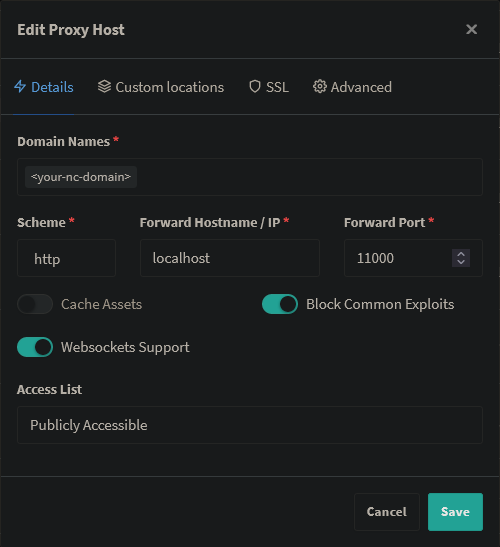
|
||||
|
||||
|
||||
|
||||
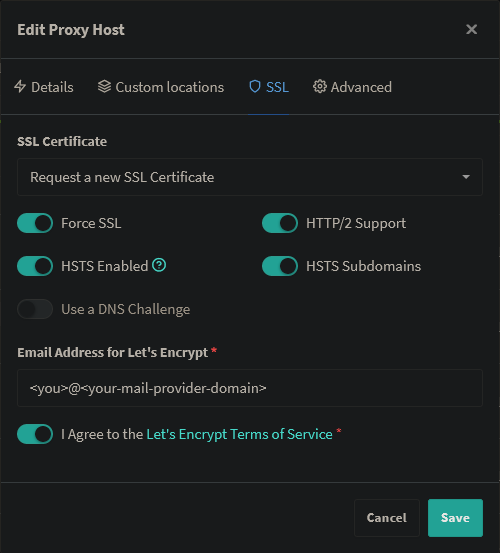
|
||||
|
||||
|
||||
|
||||
Of course you need to modify `<your-nc-domain>` to the domain on which you want to run Nextcloud. Also change `<you>@<your-mail-provider-domain>` to a mail address of yours. **Please note:** The above configuration will only work if your reverse proxy is running directly on the host that is running the docker daemon. If the reverse proxy is running in a docker container, you can use the `--network host` option (or `network_mode: host` for docker-compose) when starting the reverse proxy container in order to connect the reverse proxy container to the host network. If that is not an option for you, you can alternatively instead of `localhost` use the ip-address that is displayed after running the following command on the host OS: `ip a | grep "scope global" | head -1 | awk '{print $2}' | sed 's|/.*||'` (the command only works on Linux)
|
||||
|
||||
</details>
|
||||
|
||||
### Traefik 2
|
||||
|
||||
<details>
|
||||
@@ -102,7 +180,7 @@ Apart from that, there is this: [manual-install](https://github.com/nextcloud/al
|
||||
[http.services.nc-svc.loadBalancer]
|
||||
passHostHeader = true
|
||||
[[http.services.nc-svc.loadBalancer.servers]]
|
||||
url = "http://locahost:11000"
|
||||
url = "http://localhost:11000"
|
||||
```
|
||||
|
||||
2. Add to the bottom of the `middlewares.toml` file in the Treafik rules folder the following content:
|
||||
@@ -112,10 +190,6 @@ Apart from that, there is this: [manual-install](https://github.com/nextcloud/al
|
||||
[http.middlewares.nc-middlewares-secure-headers.headers]
|
||||
hostsProxyHeaders = ["X-Forwarded-Host"]
|
||||
sslRedirect = true
|
||||
stsSeconds = 63072000
|
||||
stsIncludeSubdomains = true
|
||||
stsPreload = true
|
||||
forceSTSHeader = true
|
||||
referrerPolicy = "same-origin"
|
||||
X-Robots-Tag = "none"
|
||||
```
|
||||
@@ -130,7 +204,7 @@ Apart from that, there is this: [manual-install](https://github.com/nextcloud/al
|
||||
|
||||
---
|
||||
|
||||
Of course you need to modify `<your-nc-domain>` in the nextcloud.toml to the domain on which you want to run Nextcloud. **Please note:** The above configuration will only work if your reverse proxy is running directly on the host that is running the docker daemon. If the reverse proxy is running in a docker container, you can use the `--network host` when starting the reverse proxy container in order to connect the reverse proxy container to the host network. If that is not an option for you, you can alternatively instead of `locahost` use the ip-address that is displayed after running the following command on the host OS: `ip a | grep "scope global" | head -1 | awk '{print $2}' | sed 's|/.*||'` (the command only works on Linux)
|
||||
Of course you need to modify `<your-nc-domain>` in the nextcloud.toml to the domain on which you want to run Nextcloud. **Please note:** The above configuration will only work if your reverse proxy is running directly on the host that is running the docker daemon. If the reverse proxy is running in a docker container, you can use the `--network host` option (or `network_mode: host` for docker-compose) when starting the reverse proxy container in order to connect the reverse proxy container to the host network. If that is not an option for you, you can alternatively instead of `localhost` use the ip-address that is displayed after running the following command on the host OS: `ip a | grep "scope global" | head -1 | awk '{print $2}' | sed 's|/.*||'` (the command only works on Linux)
|
||||
|
||||
</details>
|
||||
|
||||
@@ -222,7 +296,7 @@ https://<your-nc-domain>:8443 {
|
||||
}
|
||||
```
|
||||
|
||||
Of course you need to modify `<your-nc-domain>` in the nextcloud.toml to the domain on which you want to run Nextcloud. **Please note:** The above configuration will only work if your reverse proxy is running directly on the host that is running the docker daemon. If the reverse proxy is running in a docker container, you can use the `--network host` when starting the reverse proxy container in order to connect the reverse proxy container to the host network. If that is not an option for you, you can alternatively instead of `locahost` use the ip-address that is displayed after running the following command on the host OS: `ip a | grep "scope global" | head -1 | awk '{print $2}' | sed 's|/.*||'` (the command only works on Linux)
|
||||
Of course you need to modify `<your-nc-domain>` in the nextcloud.toml to the domain on which you want to run Nextcloud. **Please note:** The above configuration will only work if your reverse proxy is running directly on the host that is running the docker daemon. If the reverse proxy is running in a docker container, you can use the `--network host` when starting the reverse proxy container in order to connect the reverse proxy container to the host network. If that is not an option for you, you can alternatively instead of `localhost` use the ip-address that is displayed after running the following command on the host OS: `ip a | grep "scope global" | head -1 | awk '{print $2}' | sed 's|/.*||'` (the command only works on Linux)
|
||||
|
||||
Afterwards should the AIO interface be accessible via `https://ip.address.of.the.host:8443`. You can alternatively change the domain to a different subdomain by using `https://<your-alternative-domain>:443` instead of `https://<your-nc-domain>:8443` in the Caddyfile and use that to access the AIO interface.
|
||||
|
||||
@@ -231,5 +305,5 @@ If something does not work, follow the steps below:
|
||||
1. Make sure to exactly follow the whole reverse proxy documentation step-for-step from top to bottom!
|
||||
1. Make sure that the reverse proxy is running on the host OS or if running in a container, connected to the host network. If that is not possible, substitute `localhost` in the default configurations by the ip-address that you can easily get when running the following command on the host OS: `ip a | grep "scope global" | head -1 | awk '{print $2}' | sed 's|/.*||'` (The command only works on Linux)
|
||||
1. Make sure that the mastercontainer is able to spawn other containers. You can do so by checking that the mastercontainer indeed has access to the Docker socket which might not be positioned in one of the suggested directories like `/var/run/docker.sock` but in a different directory, based on your OS and the way how you installed Docker. The mastercontainer logs should help figuring this out. You can have a look at them by running `sudo docker logs nextcloud-aio-mastercontainer` after the container is started the first time.
|
||||
1. Check if after the mastercontainer was started, the reverse proxy if running inside a container, can reach the provided apache port. You can test this by running `nc -z locahost 11000; echo $?` from inside the reverse proxy container. If the output is `0`, everything works. Alternatively you can of course use instead of `locahost` the ip-address of the host here for the test.
|
||||
1. Check if after the mastercontainer was started, the reverse proxy if running inside a container, can reach the provided apache port. You can test this by running `nc -z localhost 11000; echo $?` from inside the reverse proxy container. If the output is `0`, everything works. Alternatively you can of course use instead of `localhost` the ip-address of the host here for the test.
|
||||
1. Try to configure everything from scratch if it still does not work!
|
||||
|
||||
@@ -1,6 +1,6 @@
|
||||
# Optional addons
|
||||
|
||||
- [ ] At the bottom of the page in the AIO interface, you should see the optional addons section
|
||||
- [ ] Close to the bottom of the page in the AIO interface, you should see the optional addons section
|
||||
- [ ] You should be able to change optional addons when containers are stopped and not change them when containers are running
|
||||
- [ ] Enabling either of the options should start a new container with the same or comparable name and should also list them in the containers section
|
||||
- [ ] After all containers are started with the new config active, you should verify that the options were automatically activated/deactivated.
|
||||
|
||||
@@ -3,4 +3,7 @@
|
||||
- [ ] When starting the mastercontainer with `-e APACHE_PORT=11000` on a clean instance, the domaincheck container should be started with that same port published. That makes sure that also the Apache container will use that port later on. Using a value here that is not a port will not allow the mastercontainer to start correctly.
|
||||
- [ ] Make also sure that reverse proxies work by following https://github.com/nextcloud/all-in-one/blob/main/reverse-proxy.md#reverse-proxy-documentation and following [001-initial-setup.md](./001-initial-setup.md) and [002-new-instance.md](./002-new-instance.md)
|
||||
- [ ] When starting the mastercontainer with `-e NEXTCLOUD_DATADIR="/mnt/testdata"` it should map that location from `/mnt/testdata` to `/mnt/ncdata` inside the Nextcloud container. Not having adjusted the permissions correctly before starting the Nextcloud container the first time will not allow the Nextcloud container to start correctly. See https://github.com/nextcloud/all-in-one#how-to-change-the-default-location-of-nextclouds-datadir for allowed values.
|
||||
- [ ] When starting the mastercontainer with `-e NEXTCLOUD_MOUNT="/mnt/"` it should map `/mnt/` to `/mnt/` inside the Nextcloud container. See https://github.com/nextcloud/all-in-one#how-to-allow-the-nextcloud-container-to-access-directories-on-the-host for allowed values.
|
||||
- [ ] When starting the mastercontainer with `-e NEXTCLOUD_MOUNT="/mnt/"` it should map `/mnt/` to `/mnt/` inside the Nextcloud container. See https://github.com/nextcloud/all-in-one#how-to-allow-the-nextcloud-container-to-access-directories-on-the-host for allowed values.
|
||||
- [ ] When starting the mastercontainer with `-e DOCKER_SOCKET_PATH="/var/run/docker.sock.raw"` it should map `/var/run/docker.sock.raw` to `/var/run/docker.sock` inside the watchtower container which allow to update the mastercontainer on macos and with docker rootless.
|
||||
|
||||
You can now continue with [070-timezone-change.md](./070-timezone-change.md)
|
||||
|
||||
8
tests/QA/070-timezone-change.md
Normal file
8
tests/QA/070-timezone-change.md
Normal file
@@ -0,0 +1,8 @@
|
||||
# Timezone change
|
||||
|
||||
- [ ] At the very bottom of the page you should see the timezone change section
|
||||
- [ ] When the containers are stopped, you should be able to change it and set/reset it
|
||||
- [ ] If not already set, it should show an input field where you can enter a timezone
|
||||
- [ ] `Europe/Berlin` should be accepted, e.g. `Europe Berlin` not
|
||||
- [ ] When it is set, it should show that it is set to which timezone and display a button that allows to reset it again which does this on a press
|
||||
- [ ] When it is set, running `date` inside Nextcloud releated containers should return the correct timezone
|
||||
Reference in New Issue
Block a user